UNITED STATES
SECURITIES AND EXCHANGE COMMISSION
Washington, DC 20549
FORM
(Mark One)
For the fiscal year ended
OR
For the transition period from to
Commission File Number:

(Exact Name of Registrant as Specified in Its Charter)
| (State or Other Jurisdiction of Incorporation or Organization) | (IRS Employer Identification No.) | |
| , | ||
| (Address of Principal Executive Offices) | (Zip Code) |
(Registrant’s Telephone Number, Including Area Code)
Securities registered pursuant to Section 12(b) of the Act:
| Title of each class | Trading Symbol(s) | Name of each exchange on which registered | ||
| The |
Securities registered pursuant to Section 12(g) of the Act: None
Indicate by check mark if the registrant is a
well-known seasoned issuer, as defined in Rule 405 of the Securities Act. Yes ☐
Indicate by check mark if the registrant is not
required to file reports pursuant to Section 13 or Section 15(d) of the Act. Yes ☐
Indicate by check mark whether the registrant
(1) has filed all reports required to be filed by Section 13 or 15(d) of the Securities Exchange Act of 1934 during the preceding 12 months
(or for such shorter period that the registrant was required to file such reports), and (2) has been subject to such filing requirements
for the past 90 days.
Indicate by check mark whether the registrant
has submitted electronically every Interactive Data File required to be submitted pursuant to Rule 405 of Regulation S-T (§ 232.405
of this chapter) during the preceding 12 months (or for such shorter period that the registrant was required to submit such files).
Indicate by check mark whether the registrant is a large accelerated filer, an accelerated filer, a non-accelerated filer, a smaller reporting company, or an emerging growth company. See the definitions of “large accelerated filer”, “accelerated filer”, “smaller reporting company”, and “emerging growth company” in Rule 12b-2 of the Exchange Act.
| Large accelerated filer ☐ | Accelerated filer ☐ | Smaller reporting company | ||||
| Emerging growth company |
If an emerging growth company, indicate by check
mark if the registrant has elected not to use the extended transition period for complying with any new or revised financial accounting
standards provided pursuant to Section 13(a) of the Exchange Act.
Indicate by check mark whether the registrant
has filed a report on and attestation to its management’s assessment of the effectiveness of its internal control over financial
reporting under Section 404(b) of the Sarbanes-Oxley Act (15 U.S.C. 7262(b)) by the registered public accounting firm that prepared or
issued its audit report.
If securities are registered pursuant to Section
12(b) of the Act, indicate by check mark whether the financial statements of the registrant included in the filing reflect the correction
of an error to previously issued financial statements.
Indicate by check mark whether any of those error corrections are restatements that required a recovery analysis of incentive-based compensation received by any of the registrant’s executive officers during the relevant recovery period pursuant to §240.10D-1(b). ☐
Indicate by check mark whether the registrant
is a shell company (as defined in Rule 12b-2 of the Act). Yes ☐ No
The aggregate market value of voting and non-voting common equity held
by non-affiliates of the registrant as of June 30, 2025, the last business day of the registrant’s most recently completed second
fiscal quarter, was approximately $
As of March 15, 2026, there were
ACTELIS NETWORKS, INC.
FORM 10-K
FOR THE FISCAL YEAR ENDED DECEMBER 31, 2025
TABLE OF CONTENTS
i
CAUTIONARY NOTE REGARDING FORWARD-LOOKING STATEMENTS
This Annual Report on Form 10-K (the “Annual Report”) contains forward-looking statements. The forward-looking statements are contained principally in the sections entitled “Risk Factors,” “Management’s Discussion and Analysis of Financial Condition and Results of Operations,” and “Business.” These forward-looking statements involve a number of risks and uncertainties. We caution readers that any forward-looking statement is not a guarantee of future performance and that actual results could differ materially from those contained in the forward-looking statement. These statements are based on current expectations of future events. Such statements include, but are not limited to, statements about future financial and operating results, plans, objectives, expectations and intentions, costs and expenses, interest rates, outcome of contingencies, financial condition, results of operations, liquidity, cost savings, objectives of management, business strategies, financing, potential growth and market opportunities, products, and other statements that are not historical facts.
In some cases, you can identify forward-looking statements by terms such as “may,” “will,” “should,” “would,” “expect,” “anticipate” “plan,” “anticipate,” “could,” “intend,” “target,” “project,” “contemplate,” “believe,” “estimate,” “predict,” “potential” “possible” or “continue” or the negative of these terms or other similar expressions. Forward-looking statements contained in this Annual Report include, but are not limited to, statements about:
| ● | our history of losses and need for additional capital to fund our operations and our ability to obtain additional capital on acceptable terms, or at all; | |
| ● | our ability to protect our intellectual property and continue to innovate; | |
| ● | our success in retaining or recruiting, or changes required in, our officers, key employees or directors; | |
| ● | the potential insufficiency of our disclosure controls and procedures to detect errors or acts of fraud; | |
| ● | the accuracy of our estimates regarding expenses, future revenues, and capital requirements; | |
| ● | the success of competing products or technologies that are or may become available; | |
| ● | our ability to grow the business due to the uncertainty resulting from any future pandemic; | |
| ● | our ability to comply with complex and increasing regulations by governmental authorities; | |
| ● | our ability to regain and maintain compliance with continued listing requirements of the Nasdaq Capital Market; | |
| ● | our ability to continue as a going concern; |
| ● | statements as to the impact of the political and security situation in Israel and the Middle East on our business, including due to the number of armed conflicts between Israel and Hamas (an Islamist terror and political group in the Gaza Strip) and Hezbollah (an Islamist terror and political group in Lebanon) and Iran including its accomplices; |
| ● | our public securities’ potential liquidity and trading; and | |
| ● | our expectations regarding the period during which we qualify as an emerging growth company under the JOBS Act. |
Forward-looking statements are based on our management’s current expectations, estimates, forecasts and projections about our business and the industry in which we operate and our management’s beliefs and assumptions, and are not guarantees of future performance or development and involve known and unknown risks, uncertainties and other factors that are in some cases beyond our control. As a result, any or all of our forward-looking statements in this Annual Report may turn out to be inaccurate. Important factors that may cause actual results to differ materially from current expectations include, among other things, those listed under “Risk Factors,” Use of Discussion and Analysis of Financial Condition and Results of Operations,” “Business” and elsewhere in this Annual Report. Potential investors are urged to consider these factors carefully in evaluating the forward-looking statements. You should read thoroughly this Annual Report and the documents that we refer to with the understanding that our actual future results may be materially different from and worse than what we expect. We qualify all of our forward-looking statements by these cautionary statements.
The forward-looking statements included in this Annual Report speak only as of the date of this Annual Report. Although we believe that the expectations reflected in the forward-looking statements are reasonable, we cannot guarantee that future results, levels of activity, performance and events and circumstances reflected in the forward-looking statements will be achieved or will occur. Except as required by law, we assume no obligation to update or revise these forward-looking statements for any reason, even if new information becomes available in the future. You should, however, review the factors and risks we describe in the reports we will file from time to time with the SEC after the date of this Annual Report. See “Where You Can Find More Information.”
On November 18, 2025, we effected a reverse stock split of our shares of common stock at the ratio of 1-for-10. Unless indicated otherwise by the context, all common stock, option, warrant and per share amounts as well as share prices appearing this Annual Report on Form 10-K have been adjusted to give retroactive effect to the stock split for all periods presented.
ii
Item 1. Business
Company Overview
Actelis Networks, Inc. (“Actelis,” “we,” “us,” “our,” “the Company,” “our company”) is a market leader in cyber-hardened, rapid-deployment networking solutions for wide-area applications including federal and military, state and local government, intelligent traffic systems (“ITS”), and additional IoT environments such as utility and rail. We also provide Multi-Dwelling Units (“MDU”) both inside and outside of building solutions to modernize and protect infrastructure using existing infrastructure. Through our “Cyber Aware Networking” initiative, we provide AI-based cyber monitoring and protection software for all edge devices, enhancing cyber security and resilience. Our unique portfolio of hybrid fiber, cyber hardened aggregation switches, high density Ethernet devices, advanced management software and cyber-protection capabilities, unlocks the hidden value of essential networks, delivering safer connectivity for rapid, cost-effective deployment.
Critical Trends Affecting Communication Needs Today
Three significant global shifts are affecting the world today, and particularly the need for vast and rapid modernization of communication and networking infrastructure.
The first major shift is the accelerating rise of AI adoption, which demands ever-expanding computational resources to sustain its growth. As this trend continues, AI as an automation capability is becoming increasingly fluid, moving across the cloud, the data center, and the network edge where users and devices are directly served. This redistribution is driven both by the intolerance for latency and by the resource constraints within centralized data centers. The network becomes the essential conduit enabling this movement, carrying the data and intelligence required to position AI workloads wherever they can operate most effectively.
The second shift is to defense and advanced defense technologies, shaped by current geopolitical tension and realizations many countries, including the United States, are making. This defense which includes homeland security, cyber security and operational continuity are requiring critical modernization of networking as well. For example, the recent 2025 outages experienced in Air Traffic Control in New Jersey and Pennsylvania drove an urgent approval of over $12 billion dollars of modernization budget for the FAA (Federal Aviation Administration) networks. Similarly, military environments are modernizing rapidly to be ready for development.
The third shift, albeit not new, is cyber security as a pillar of operations in general. As the network may typically be the weakest link, its criticality as a cyber-safe medium is obvious.
These trends receive vast budgets, require very rapid progress and as such, the use of existing infrastructure. Actelis offers its solutions right in the center of such intersection, we explain hereafter how this is done.
Our networking solutions use a combination of newly deployed fiber infrastructure and existing copper and coaxial lines which our patented technology can upgrade to Fiber-grade to jointly create what we believe to be a highly cost-effective, secure, and quick-to-deploy network. Our patent protected hybrid fiber networking solutions deliver excellent communication over fiber to locations that may be easy to reach with new fiber. However, for locations that are difficult, or too costly to reach with fiber, we can upgrade existing copper lines to deliver cyber-hardened, high-speed connectivity without needing to replace the existing copper infrastructure with new fiber. We believe that such hybrid fiber copper networking solution has distinct advantages in most real-life installations, while providing significant budget savings and accelerating deployment of modern IoT networks. Based on our experience, most IoT projects have challenging, hard to reach with fiber locations which may explode such projects’ timeline and budgets. We believe that our solutions can provide connectivity over either fiber or copper with speeds of up to multi-Gigabit communication, while supporting Fiber-grade reliability and quality.
A primary focus of ours is to provide our customers with a cyber-secure network solution. We currently offer Triple-Shield protection of data delivered with coding, scrambling and encryption of the network traffic. We also provide secure, encrypted access to our network management software, and are working to further enhance system-level and device-level software protection. We are also working to introduce additional capabilities for network-wide cyber protection software as an additional SW and license-based services.
When high speed, long reach, reliable and secure connectivity is required, network operators usually resort to using wireline communication over physical communication lines such as fiber, coax, and copper, rather than wireless communication that is more limited in performance, reliability, reach and security. However, new fiber wireline infrastructure is costly to deploy, involves lengthy civil works to install, and, based on our internal calculations, often accounts for more than 50% of total cost of ownership and time to deploy wide-area IoT projects.
Providing new fiber connectivity to hard-to-reach locations is especially costly and time-consuming, often requiring permits for boring, trenching, and right-of-way, sometimes done over many miles. Connecting such hard-to-reach locations may cause significant delays and budget overruns in IoT projects. Our solutions aim to solve these challenges by instantly enhancing performance of such existing copper and coax infrastructure to fiber-grade performance, through the use of advanced signal processing and unique, patented network architecture, without the need to run new fiber to hard-to-reach locations; thus, effectively accelerating deployment of many IoT projects, as we estimate, sometimes from many months to only days. The result for the network owner is a hybrid network that optimizes the use of both new Fiber (where available) as well as upgraded, fiber-grade copper and coax that is now modernized, digitized and cyber-hardened. This unique hybrid network approach is making IoT projects often significantly more affordable, fast to deploy and predictable to plan and budget.
1
In addition, our solutions can also provide power over existing copper and coax lines to remotely power up network elements and components connected to them (like cameras, small cell and Wi-Fi base stations sensors etc.). Connecting power lines to millions of locations can be costly and very time consuming as well (similar to data connectivity, for the same reason — need for civil works). By offering the ability to combine power delivery over the same existing copper and coax lines that we use for high-speed data, we believe our solutions are solving yet another important challenge in connecting hard-to-reach locations. We believe that combining communication and power over the same existing lines is particularly important to help connect many fifth generation, or 5G, small cells and Wi-Fi base stations, as high cost of connectivity and power is often slowing their deployment.
Since our inception, our business was focused on serving telecommunication service providers, also known as Telcos, to provide connectivity for enterprises and residential customers. Our products and solutions have been deployed with hundreds of telecommunication service providers worldwide, in enterprise, residential and mobile base station connectivity applications. In recent years, as we have further developed our technology and introduced additional products, we turned our focus on serving the wide-area IoT, federal and U.S. Department of War (“DoW”) markets, as well as multi-dwelling units, and introduced, in 2024, our cyber-aware networking solutions for IoT markets as well.
In December 2024, we launched our MetaShield AI-Powered SaaS solution, under Actelis’ ‘Cyber Aware Networking’ initiative. This includes a software based platform designed as an intelligence layer integrated into Actelis’ networking devices, leverages the network’s power and proximity to IoT devices to monitor and protect physical assets such as cameras, sensors, and other devices at the edge, enabling corrective actions before issues propagate throughout the network.
We derive a majority of our revenues from our existing and new IoT (including federal and DoW) customers. For the years ended December 31, 2025 and December 31, 2024, our IoT customers in the aggregate accounted for approximately 73% and 72% of our revenues, respectively.
We derive a significant portion of our revenues from a limited number of our customers. For the years ended December 31, 2025 and December 31, 2024, our top ten customers in the aggregate accounted for approximately 62% and 74% of our revenues.
We have incurred significant losses and negative cash flows from operations and as of December 31, 2025, we had an accumulated deficit of $52 million. We have funded our operations to date through equity and debt financing and we had cash on hand (including short term bank deposits and restricted cash equivalents) of $4.4 million and long-term restricted cash and cash equivalents and restricted bank deposits of $0.2 million as of December 31, 2025. We continue to invest in sales and marketing resources to fuel our growth.
Our technology is both powerful and compact and is built as a relatively small set of feature-rich network elements, that serve as building block in the verticals we serve, namely Federal and Military, Intelligent Transportation, and MDUs. These elements include switches, typically enhanced with signal processing software, concentrators, reach extenders, data encryption elements, power sources and a smart networking software that allows for remote management and monitoring down to the single element and line performance, configuration management making complex network topologies easy to deploy, analyze, debug and remote software download to help with remote handling of large and small networks, on any wired infrastructure – be it Fiber, Copper or Coax. At the same time, we continue to serve our long-standing Telco customers in their hybrid communications needs. As cyber security standards tighten worldwide, in second half of 2025, we started offering customers on-going monitoring of vulnerabilities through our scanning and analysis tools for new developments in this industry, to keep and safeguard their networks when new threats become known or existing threats become relevant to their environment.
Our cyber-security offerings include various embedded cyber-hardening features, such as encryption, our SaaS-based MetaShield platform, as well as vulnerability monitoring and analytics services, and embedded software improvements offered to existing customers in the form of software upgrades. As such, we allow continuous protection through learning of both the network elements as well as the devices connected to them, delivering constant alerting and review against external data bases of known threats, and offer software upgrades that overcome newly known or identified vulnerabilities, creating a repeatable, ever-improving protection cycle.
Rapid Deployment and Lower Cost of Critical Connectivity
We aim to become the global leading provider of cyber-secure, cost-effective and quick-to-deploy hybrid networking for all wide-area applications. Our products work over all types of wireline media on the global data network, whether owned or operated by telecom service providers or a private network operated by enterprises or government organizations as well as MDU buildings. Our products are structured as building blocks especially for Intelligent Transportation Systems (ITS), including roads, rail and airport applications that are feature-rich. This allows for one Actelis platform to often replace multiple other platforms available in the market, allowing for space-saving installation, energy conservation (which we believe results in a more environmentally sustainable network, through the avoidance of need to add new physical infrastructure), and making network planning easier for our customers. We aim at having our products installed and help accelerate deployment of wire-area IoT projects and applications everywhere.
2
For example, in one of the projects where our solutions are deployed, we found that 70% of locations are easy-to-reach with new fiber optic installation. Connectivity for such easy-to-reach locations may, as we believe, average $26,000 per mile for new fiber laid on poles, and can take between days to weeks to connect. However, the remaining 30% of locations were hard-to-reach with new fiber optics, and accordingly may require boring or trenching to reach IoT sensors or camera locations. Getting fiber to those 30% of hard-to-reach would require potentially connecting over obstacles, roads, long distances, and may also require obtaining the right of way and permits for extensive civil works. We believe this aspect of the deployment of new fiber optics may cost up to $400,000 per mile, which for this particular project would have impacted thousands of miles of roads, resulting in enormous cost, delay and interruption to traffic.
In another project, we have been selected to provide networking for a major city that has fiber installed to 15% of its traffic junctions, however 85% of its junctions are connected to low performance copper lines susceptible for bad actors to tamper with. Upgrading the entire city’s infrastructure to Fiber would have involved major civil works, permit delays and traffic interruptions for months or years, with a cost that would greatly exceed city’s budget. Our hybrid fiber network allowed for the city to use its 15% fiber deployment, upgrade instantly the performance of its existing 85% copper lines to fiber-grade and join the two under a comprehensive management and security software package from Actelis to create one seamless network, while providing major savings of both time and money.
In recent years, we have significantly advanced our product offerings. In 2022, we launched our family of hardened, hybrid, encrypted fiber products with 10Gbps switching capacity. Following that, in 2023 and 2024 we introduced and refined the next-generation “Gigaline” product families, providing hybrid-fiber Gigabit-grade connectivity across fiber, copper, and coax environments, which addressed new challenges for ITS and telecom customers and further enhanced our multi-gigabit products to support a broader range of use-cases. In 2025, we expanded our offering with the launch for large Coax environments, expanded our offering with fiber only solutions and introduced the MetaShield cyber-aware networking product family.
Cybersecurity
Networking systems are vulnerable to cyber-attacks, as they often carry data related to critical processes and applications, such as provision of energy, water, gas and transportation services, to large populations. At the same time, they are often found in the wide range, meaning, in public locations, adding further risks of tampering and break-ins.
In 2024 we signed a strategic partnership with a cyber-security development company, which helped us launch our new cyber-aware networking solution for IoT networks. Later that year, we launched our MetaShield SaaS product as a cyber-security solution that comes from the network itself, and has since then been introduced to our existing and new customers.
Our products all include cyber safety features that we are constantly developing. They currently include network traffic encryption and coding. We have developed and implemented a multi-layered “Triple Shield” technology that includes (i) information coding for resilience and security (for copper wires); (ii) multi-line information scrambling for increased resilience and added security (for copper wires); and (iii) an additional 256-bit hardware-based real-time encryption of data running over fiber, coax or copper — creating end-to-end protection for the entire hybrid network. Our network management software is also cyber-hardened and helps protect the system. Our systems have been selected for deployment in sensitive applications with U.S. DoW and other governments and military organizations, airports, utility companies, oil and gas companies, smart cities, rail and traffic applications globally.
In 2024, we successfully completed the certification of our product lines for Federal Intelligence Protocol Standards (FIPS) 140-2 and were approved by the DoW’s Joint Interoperability Test Command (JITC) for interoperability and cybersecurity, allowing our products to be included in several federal approved product lists (APL). In February 2026 we have deployed the next generation of FIPS standard requirements in our product portfolio (140-3).
3
In 2025, we enhanced our service capabilities in monitoring and analysis of market and industry vulnerabilities, existing and new. This helps us offer such monitoring services to our customers to protect their installed base, while offering embedded and management software upgrades that are in-line with the threats that need mitigation. This further reflects the fact Cybersecurity is central to optimizing and modernizing networking solutions.
Market Verticals We Address
We execute our vision through a multi-channel, global approach that combines our expertise, with the expertise of our trusted business partners, system integrators, distributors, and consultants.
We operate a vertical-based marketing plan where we dedicate efforts and resources to each vertical. The verticals we focus on include: Federal and military, intelligent transportation systems (ITS), smart city, rail, airports. We also address utilities and campuses. .. In 2024, we launched our MDU program , which was further expanded in 2025 to address increasing building sizes as well as arenas. The MDU vertical requires networking solutions for residential buildings with multiple units, such as apartment complexes and condominiums as well as hospitality properties such as hotels and resorts, connecting each unit to high-speed internet, using the infrastructure present, be it Coax, fiber or copper, and tailor it to the size of the building, from a dozen units to hundreds and thousands of them.
Our solutions are utilized within networks deployed by cities such as the City of Los Angeles, the District of Columbia, Montgomery County, MD, the City of Seattle, the Cities of Munich, Frankfurt, Cologne and others in Germany, as well as notable entities such as Highways England, the Federal Aviation Administration, the Autostrada in Italy, the U.S. military, including the Air Force, Navy and National Guard, as well as Stanford University. In 2025, We received our first hotel implementation in the U.S., through a global strategic partnership with a hospitality guest experience platform provider.
Our customers benefit from rapidly and cost-effectively enabling their critical functions such as traffic cameras and smart signaling, security cameras, smart parking meters and ticketing, rail signaling and control, electrical substation management and protection, military operations, and many more. Recently, Actelis Networks has secured significant orders and launched groundbreaking solutions like MetaShield, an AI-based cybersecurity solution, driving SaaS growth and edge infrastructure resilience. To date, we have been most successful in selling to customers in the intelligent transportation systems, rail, federal and military, airports, and MDU markets, primarily in the US, Canada, Europe, and Japan.
Recent Trends in our Markets
State of Connectivity Market, including Federal, Military and MDUs
Edge AI, also covered as edge computing, according to Grandview research is projected to grow from approximately $20 billion in 2024 to nearly $190 billion in 2033. According to US Congress’ budgeting program projections, US military base modernization budgets in 2025 were $37 billion as part of a model projecting the Federal Defense program to grow to over $850 billing in 2029. With that, the already robust cyber-security market, according to Grandview research the global cyber-security market is projected to grow from approximately $240 billion in 2024 to nearly $500 billion in 2033. With these trends, infrastructure network connectivity demand is growing very rapidly. According to Markets and Markets, the Smart Transportation market is projected to grow to over $250 Billion by 2029, largely for intelligent transportation modernization. We believe there is an urgent need to connect tens of millions of locations with a fast and secure connection. A huge challenge for ITS projects is that implementing connectivity between different points in a network can consume the majority of a project’s cost and time to implement, including unpredictable and unanticipated challenges that arise in each individual project.
4
We believe that the number of IoT applications requiring our fast, smart, and secure connectivity is immense and provides us with a great market opportunity to grow our business. From smart transportation systems (smart cameras, smart lights and signals, Vehicle to Everything, or V2X communication) and smart security (cameras and radars), to smart parking, smart rail, as well as airport and air traffic control infrastructure, also manifested by the $12.5 billion budget granted to the FAA in 2025, we believe that we are uniquely positioned to address all of these applications in a versatile and flexible manner.
In the MDU market, which we believe is in dire need for multi-Gigabit connectivity, and is extremely limited in its ability to invest significant funds to enable such objective. According to US Census.gov, there are approximately 20 million buildings above 5 units built by the year 2000, most of which already wired by various infrastructures. The Broadband Equity program or BEAD has allotted $28 billion already to all 50 states to modernize and provide high-speed reliable internet including underserved communities, as part of the Infrastructure Act.
Recent Developments
July 2025 Private Placement
On June 30, 2025, we entered into a securities purchase agreement (the “July 2025 Purchase Agreement”) with certain accredited investors (the “Investors”), pursuant to which we agreed to issue and sell to the Investors in a private placement (the “July 2025 Private Placement” or the “July 2025 Offering”) (a) 162,602 shares of Common Stock, (b) Series A-3 warrants (the “Series A-3 Warrants”) to purchase up to 162,602 shares of Common Stock, and (c) Series A-4 warrants (the “Series A-4 Warrants”, and, with the Series A-3 Warrants, the “July 2025 Common Warrants”) to purchase up to 325,204 shares of Common Stock, for a purchase price of $6.15 per share and related July 2025 Common Warrants, for a total aggregate gross proceeds of approximately $1 million. The July 2025 Private Placement closed on July 2, 2025.
The Series A-3 Warrants have an exercise price of $6.15 per share, are exercisable commencing on the effective date of shareholder approval (the “July 2025 Shareholder Approval Date”) of the issuance of the shares issuable upon exercise of the Common Warrants (“July 2025 Shareholder Approval”) and expire five years following the Shareholder Approval Date. On November 7, 2025, the July 2025 Shareholder Approval was obtained in a special meeting of our shareholders, resulting in the July 2025 Shareholder Approval Date being such date.
The Series A-4 Warrants have an exercise price of $6.15 per share, are exercisable commencing on the July 2025 Shareholder Approval Date and expire eighteen months following the July 2025 Shareholder Approval Date.
Under the terms of the July 2025 Common Warrants, the warrant holders may not exercise the warrants to the extent such exercise would cause the warrant holder, together with its affiliates and attribution parties, to beneficially own a number of shares of common stock which would exceed 4.99% (or, at such Investor’s option upon issuance, 9.99%), of the Company’s then outstanding Common Stock following such exercise, excluding for purposes of such determination shares of Common Stock issuable upon exercise of such warrants which have not been exercised.
H.C. Wainwright & Co., LLC (“HCW”) acted as the placement agent for the issuance and sale of the Securities. The Company has agreed to pay an aggregate cash fee equal to 7.0% of the gross proceeds received by the Company from the July 2025 Offering and $35,000 for accountable expenses to the placement agent. The Company also agreed to issue to the placement agent, or its designees, Placement Agent Warrants to purchase up to 7.0% of the aggregate number of the shares of Common Stock sold to the Investors (or warrants to purchase up to 11,382 shares of Common Stock) at an exercise price per share of $7.688 which will be exercisable commencing on the Shareholder Approval Date and a have term of five years after the July 2025 Shareholder Approval Date (the “July 2025 Placement Agent Warrants,”).
The July 2025 Placement Agent Warrants and the shares of Common Stock issuable upon exercise thereof, will be issued in reliance on the exemption from registration provided by Section 4(a)(2) of the Securities Act as transactions not involving a public offering and in reliance on similar exemptions under applicable state laws.
5
Nasdaq Listing Compliance
On August 25, 2023, we received a notification letter from the Listing Qualifications Staff (the “Staff”) of Nasdaq indicating that we are not in compliance with Nasdaq Listing Rule 5550(b)(1) due to our failure to maintain a minimum of $2,500,000 in shareholders’ equity (the “Minimum Shareholders’ Equity Requirement”) or any alternatives to such requirement. In order to maintain our listing on the Nasdaq Capital Market, we submitted a plan of compliance addressing how we intended to regain compliance. On March 27, 2024, we received a delist determination letter from Nasdaq advising us that the Staff had determined to delist our securities from Nasdaq due to non-compliance with the Minimum Shareholders’ Equity Requirement, unless we timely request a hearing before the Nasdaq Hearings Panel (the “Panel”). We timely requested a hearing before the Panel.
On August 27, 2024, we received formal written notice from Nasdaq confirming that we have evidenced compliance with all applicable criteria for continued listing on Nasdaq as set forth in Nasdaq Listing Rule 5550, including the Minimum Shareholders’ Equity Requirement. In accordance with Nasdaq Listing Rule 5815(d)(4)(B), we remained subject to a panel monitor for equity compliance through August 27, 2025.
On May 12, 2025, Nasdaq notified us (the “Notification Letter”) that we were not in compliance with Nasdaq Listing Rule 5550(a)(2), which requires our Common Stock to maintain a minimum bid price of $1.00 per share (the “Bid Price Rule”). The Notification Letter had no immediate effect on the listing or trading of our Common Stock on Nasdaq and, at this time, the Common Stock will continue to trade on Nasdaq under the symbol “ASNS”. The Notification Letter provided that we have 180 calendar days, or until November 10, 2025, to regain compliance with the Bid Price Rule.
On August 19, 2025, we received written notice from Nasdaq stating that, due to the Company’s non-compliance with the Minimum Shareholders’ Equity Requirement as of June 30, 2025, and because, pursuant to Listing Rule 5815(d)(4)(B), the Company remained subject to a mandatory hearing panel monitor through August 27, 2025, the Company’s securities were subject to delisting from Nasdaq unless the Company timely requests a hearing before the Nasdaq Hearing Panel (the “Panel”). The Company had its hearing with the Panel on September 30, 2025.
At the hearing, the Company presented its plan to evidence compliance with the Equity Rule and all other applicable criteria for continued listing on The Nasdaq Capital Market, and requested to remain listed subject to its plan to regain compliance.
On October 28, 2025, we received a listing decision from Nasdaq notifying us that the Panel determined that the Company evidenced compliance with the Shareholders’ Equity Requirement.
The Panel also granted the Company’s request for continued listing on The Nasdaq Capital Market, pursuant to an exception through December 5, 2025, to regain compliance with the bid price requirement set forth in Nasdaq Listing Rule 5550(a)(1). In order to evidence compliance with the bid price requirement, the Company must evidence a closing bid price of at least $1.00 per share for a minimum of 10, but generally not more than 20, consecutive business days. On November 7, 2025, we held a special meeting of shareholders where our shareholders approved, among other things, the Reverse Split. The Reverse Split was effected on November 18, 2025.
On December 3, 2025, the Company received formal notice from Nasdaq that the Company has regained compliance with the Bid Price Rule and evidenced compliance with all other applicable criteria for continued listing on Nasdaq. Accordingly, the previously disclosed listing matter has been closed.
The Company will remain subject to a one-year “Panel Monitor”, as contemplated by Nasdaq Listing Rule 5815(d)(4)(A), through December 5, 2026. If during that period the Company fails to satisfy any of the criteria for continued listing on Nasdaq, the Staff may not grant the Company additional time to regain compliance. Rather, Nasdaq will issue a delist determination, which the Company may address by requesting a new hearing before the Nasdaq Hearings Panel.
On February 4, 2026, we received a written notice Nasdaq indicating that the Staff has determined to delist the Company’s securities from The Nasdaq Capital Market.
6
As disclosed in the Notice, the Staff determined that the Company’s common stock failed to maintain compliance with the Bid Price Rule. While companies are typically afforded a 180-calendar-day compliance period to comply with the Bid Price Rule, the Staff concluded that the Company is not eligible for the compliance period pursuant to Nasdaq Listing Rule 5810(c)(3)(A)(iv) due to the fact that the Company effected a reverse stock split within the prior one-year period, specifically a 1-for-10 reverse stock split on November 18, 2025, and therefore is subject to immediate delisting.
As further disclosed in the Notice, the Company had the right to request a hearing and that a hearing request would result in a stay of any suspension or delisting action pending the conclusion of the hearings process. Accordingly, on February 11, 2026, the Company requested a hearing before the Panel, which served to stay any further suspension or delisting action through the hearing or any extension the Panel provides following the hearing.
At the hearing, the Company intends to take all reasonable measures available and is going to present a plan to regain compliance with the Bid Price Rule and remain listed on Nasdaq to the Panel. However, there can be no assurance that the Company will be able to regain compliance with the Bid Price Rule or maintain compliance with all other Nasdaq continued listing requirements.
In connection with the Company’s entry into the Common Stock Purchase Agreement with White Lion as described below, if the Company fails to be listed on the Nasdaq Capital Market, the Commitment Fee Amount (as defined below) will increase subject to the terms of the Delisting Penalty Provision in the Common Stock Purchase Agreement. See “Item 1-Business-Recent Developments-Equity Line of Credit Agreement” for additional information.
September 2025 Warrant Inducement
On September 2, 2025, we entered into an inducement agreement (the “Inducement Letter”) with a certain holder (the “Holder”) of certain of the Company’s existing warrants to purchase an aggregate of 427,020 shares of the Company’s common stock, consisting of (i) 127,119 warrants issued on December 20, 2023 with an expiration date of June 20, 2029 at an exercise price of $11.8 per share (ii) 99,967 warrants issued on June 6, 2024 with an expiration date of December 6, 2029 at an exercise price of $20.00 per share and (iii) 199,934 warrants issued on July 2, 2024 with an expiration date of July 2, 2026 at an exercise price of $17.50 per share (the “Existing Warrants”).
Pursuant to the Inducement Letter, the Holder agreed to exercise for cash the Existing Warrants to purchase an aggregate of 427,020 shares of the Company’s common stock at a reduced exercise price of $3.70 per share in consideration of the Company’s agreement to issue new common stock purchase warrants (the “New Warrants”), as descried below, to purchase up to an aggregate of 640,530 shares of the Company’s common stock (the “New Warrant Shares”) at an exercise price of $3.70 per share. The Company received aggregate gross proceeds of approximately $1.6 million from the exercise of the Existing Warrants by the Holder, before deducting financial advisory fees and other offering expenses payable by the Company.
Rodman & Renshaw LLC and HCW acted as financial advisors to the Company in connection with the transactions contemplated by the Inducement Letter. Pursuant to an engagement letter with HCW, the Company has agreed to pay the financial advisors a cash fee equal to 7.0% of the aggregate gross proceeds received from the Holder’s exercise of the Existing Warrants, as well as a management fee equal to 1.0% of the gross proceeds from the exercise of the Existing Warrants and $25,000 paid for non-accountable expenses. The Company has also agreed to issue to the financial advisors or their designees warrants (the “Inducement Placement Agent Warrants”) to purchase up to 29,891 shares of common stock (representing 7.0% of the Existing Warrants being exercised), which will have the same terms as the New Warrants having a term of five years of Stockholder Approval (as defined below) except the Inducement Placement Agent Warrants will have an exercise price equal to $4.625 per share (125% of the exercise price of the Existing Warrants).
The New Warrants have an exercise price equal to $3.70 per share. The New Warrants will be exercisable from the effective date (the “Warrant Stockholder Approval Date”) of shareholder approval (“Stockholder Approval”), until (i) the five-year anniversary of such date for 340,629 of the New Warrants and (ii) the twenty-four-month anniversary of such date for 299,901 of the New Warrants. The exercise price and number of New Warrant Shares issuable upon exercise of the New Warrants is subject to appropriate adjustment in the event of stock dividends, stock splits, subsequent rights offerings, pro rata distributions, reorganizations, or similar events affecting the Company’s common stock and the exercise price. On November 7, 2025, the Warrant Stockholder Approval was obtained in a special meeting of our shareholder, resulting in the Warrant Stockholder Approval Date being such date.
7
The closing of the transactions contemplated pursuant to the Inducement Letter occurred on September 3, 2025.
Provided that the Inducement Letter prohibited the Company from entering into an agreement to effect any issuance by the Company involving a variable rate transaction, the Holder agreed to waive such prohibition with respect to the transactions contemplated by the ELOC Purchase Agreement as described below, and signed an amendment to the Inducement Letter on October 9, 2025. Pursuant to such amendment, the Company issued to the Holder 10,000 warrants to purchase shares of common stock of the Company on similar terms as the Series A-1 Warrants.
Equity Line of Credit Agreement
On September 27, 2025, we entered into a common stock purchase agreement (the “Common Stock Purchase Agreement”), with an effective date of October 1, 2025, and a related registration rights agreement (the “White Lion RRA”) with White Lion Capital, LLC, a Nevada limited liability company (“White Lion”). Pursuant to the Common Stock Purchase Agreement, the Company has the right, but not the obligation to require White Lion to purchase, from time to time, up to $30,000,000 in aggregate gross purchase price (the “Commitment Amount”) of newly issued shares of the Company’s Common Stock, subject to certain limitations and conditions set forth in the Common Stock Purchase Agreement.
The Company is obligated under the Common Stock Purchase Agreement and the White Lion RRA to file a registration statement (the “Resale Registration Statement”) with the SEC to register the Common Stock under the Securities Act of 1933, as amended (the “Securities Act”), for the resale by White Lion of shares of Common Stock that the Company may issue to White Lion under the Common Stock Purchase Agreement and to register the Commitment Shares (as defined below) within five business days of the date of the Common Stock Purchase Agreement.
The maximum number of shares issuable under the Common Stock Purchase Agreement is subject to the Exchange Cap.
The Company agreed to call a special meeting of its shareholders (the “Special Meeting”) to obtain shareholder approval for the issuance of Common Stock under the Common Stock beyond the Exchange Cap (“Shareholder Approval”) within 120 days of October 1, 2025. If the Company failed to call the Special Meeting within this timeframe, it shall pay liquidated damages to White Lion, as more fully described in the Common Stock Purchase Agreement. The Special Meeting was held on January 29, 2026. Shareholder Approval was not obtained due to a failure to reach a quorum. Please see “January 2026 Special Meeting of Shareholders” below for more information.
Because Shareholder Approval was not obtained at the Special Meeting, the Company is obligated to call an additional Special Meeting every ninety (90) days thereafter, for a total period of 360 days, until Shareholder Approval is obtained. The follow-up meeting to obtain Shareholder Approval is scheduled to be held on April 13, 2026.
As consideration for White Lion’s irrevocable commitment to purchase the Company’s Common Stock up to the Commitment Amount, the Company agreed to issue shares of Common Stock to White Lion (the “Commitment Shares”) equal to $750,000 (the “Commitment Fee Amount”) divided by the lowest traded price of the Company’s common stock during the 30 business days prior to the issuance of the Commitment Shares.
If at any point during the term of the Common Stock Purchase Agreement the Company fails to be listed on the Nasdaq Capital Market, the Commitment Fee Amount will increase to $1,000,000 if remedied within six months or less, to $1,250,000 if remedied after six months but before twelve months, and $1,500,000 if not remedied within twelve months (the “Delisting Penalty Provision”). The Delisting Penalty Provision shall automatically be waived on the date that is six (6) months after the later of (A) the date on which Shareholder Approval is Obtained and (B) the date on which the Resale Registration Statement has been declared effective by the SEC.
8
Subject to the satisfaction of certain customary conditions including, without limitation, the effectiveness of a registration statement registering the shares issuable pursuant to the Common Stock Purchase Agreement, the Company’s right to sell shares to White Lion will commence on October 1, 2025 and extend until October 1, 2028, unless the Company has exercised its right in full to sell shares to White Lion under the Common Stock Purchase Agreement prior to such date (the period beginning on the effective date and ending on the earlier of such dates, the “Commitment Period”). During such term, subject to the terms and conditions of the Common Stock Purchase Agreement, the Company shall notify (such notice, a “Purchase Notice”) White Lion when the Company exercises its right to sell shares (the effective date of such notice, a “Notice Date”). The Purchase Notice may be a Regular Purchase Notice or a Rapid Purchase Notice, each as described below.
The number of shares sold pursuant to any such notice may not exceed 40% of the Average Daily Trading Volume for the common stock traded on Nasdaq immediately preceding receipt of the applicable Purchase Notice, and can be increased at any time at the sole discretion of White Lion, up to 9.99% of the outstanding shares of the Company.
Under a Regular Purchase Notice, the purchase price to be paid by White Lion for any such shares will equal 97.5% multiplied by the lower of the (i) lowest daily VWAP of the Common Stock during the Regular Purchase Valuation Period (as such term is defined in the Common Stock Purchase Agreement) or (ii) the closing price of the Common Stock one business day prior to the delivery of the Regular Purchase Notice.
Under a Rapid Purchase Notice, the purchase price to be paid by White Lion for any such shares will equal (i) the lowest traded price of the Common Stock on the Rapid Purchase Notice Date with respect to Rapid Purchase Price Option 1; or (ii) 99% multiplied by the lowest traded price of the Common Stock two hours following written confirmation of the acceptance of the Rapid Purchase Notice by White Lion with respect to Rapid Purchase Price Option 2.
The Company may terminate the Common Stock Purchase Agreement at any time, which shall be effected by written notice being sent by the Company to White Lion. In addition, the Common Stock Purchase Agreement shall automatically terminate on the earlier of (i) the end of the Commitment Period or (ii) the date that, pursuant to or within the meaning of any bankruptcy law, the Company commences a voluntary case or any person commences a proceeding against the Company, a custodian is appointed for the Company or for all or substantially all of its property or the Company makes a general assignment for the benefit of its creditors. Certain provisions of the Common Stock Purchase Agreement survive termination, as described more fully in the text of the agreement.
Concurrently with the execution of the Common Stock Purchase Agreement, the Company entered into the White Lion RRA with White Lion in which the Company has agreed to register the shares of Common Stock purchased by White Lion under the Common Stock Purchase Agreement with the SEC for resale within 30 days of the execution date of the White Lion RRA. The White Lion RRA also contains usual and customary damages provisions for failure to have the registration statement declared effective by the SEC within the time periods specified therein.
The Common Stock Purchase Agreement and the White Lion RRA contain customary representations, warranties, conditions and indemnification obligations of the parties. The representations, warranties and covenants contained in such agreements were made only for purposes of such agreements and as of specific dates, were solely for the benefit of the parties to such agreements and may be subject to limitations agreed upon by the contracting parties.
White Lion Private Placement
Concurrently on September 27, 2025, the Company entered into a securities purchase agreement (the “PIPE Purchase Agreement”) with White Lion, pursuant to which the Company agreed to issue and sell to White Lion in a private placement (the “Offering”) (i) 87,177 shares (the “Shares”) of Common Stock, and (ii) pre-funded warrants to purchase up to 312,823 shares of Common Stock (the “White Lion Pre-Funded Warrants”) for a purchase price of $2.125 per share of Common Stock and $2.124 per White Lion Pre-Funded Warrant, for a total aggregate gross proceeds of approximately $850,000. The Offering closed on September 29, 2025.
9
The Company had a right to redeem 48,826 of the shares of Common Stock at a redemption price of $0.001 per share. The Company and White Lion have agreed that, in lieu of such redemption, on October 20, 2025, the Company reduced the number shares issuable pursuant upon exercise of the White Lion Pre-Funded Warrants by 48,826 shares, to 263,997.
The White Lion Pre-Funded Warrants are immediately exercisable at an exercise price of $0. 001 per share of Common Stock and will not expire until exercised in full. However, the Company may not issue a number of shares of Common Stock pursuant to exercise of the White Lion Pre-Funded Warrants in an amount that will not exceed the Exchange Cap when combined with the number of Shares issued in the Offering, before shareholder approval for further issuance beyond the Exchange Cap is obtained. The Company intends to obtain such shareholder approval concurrently with the Shareholder Approval required for the issuance of shares of Common Stock under the Common Stock Purchase Agreement beyond the Exchange Cap.
The obligation to file the Resale Registration Statement described above also covers the registration of the shares of Common Stock and shares underlying the White Lion Pre-Funded Warrants issued pursuant to the PIPE Purchase Agreement. The Company filed the Resale Registration Statement on October 7, 2025, and such registration statement became effective on November 28, 2025.
December 2025 Offering
On December 17, 2025, we offered and sold in a public offering on a best efforts basis (the “December 2025 Offering”) (i) 4,352,500 shares of the Company’s Common Stock, (ii) 1,897,500 pre-funded warrants to purchase up to 1,897,500 shares of Common Stock (the “December 2025 Pre-Funded Warrants”), and (iii) 6,250,000 common warrants to purchase up to 6,250,000 shares of Common Stock, (the “December 2025 Common Warrants” and together with the Pre-Funded Warrants, the “December 2025 Warrants”), at a purchase price of $0.80 per share of Common Stock and accompanying December 2025 Common Warrant, and $0.7999 per December 2025 Pre-Funded Warrant and accompanying December 2025 Common Warrant. Aggregate gross proceeds from the December 2025 Offering (without taking into account any proceeds from any future exercises of December 2025 Warrants) were approximately $5 million. The Offering closed on December 19, 2025.
The December 2025 Pre-Funded Warrants are immediately exercisable at an exercise price of $0.0001 per share of Common Stock and will not expire until exercised in full.
Each December 2025 Common Warrant has an exercise price of $0.80 per share, is exercisable immediately on upon issuance and will expire on the five-year anniversary of the date of issuance.
A holder of the December 2025 Warrants will not have the right to exercise any portion of its December 2025 Warrants if the holder (together with such holder’s affiliates, and any persons acting as a group together with such holder or any of such holder’s affiliates or any other persons whose beneficial ownership of shares of Common Stock would be aggregated with the holder’s or any of the holder’s affiliates), would beneficially own shares of Common Stock in excess of 4.99% (or, at the election of the holder, 9.99%) of the number of shares of Common Stock outstanding immediately after giving effect to such exercise.
Certain investors in the Offering entered into a definitive securities purchase agreement with the Company (the “December 2025 Purchase Agreement”). The December 2025 Purchase Agreement contains representations, warranties, indemnification and other provisions customary for transactions of this nature. Pursuant to the December 2025 Purchase Agreement, the Company agreed to abide by certain customary standstill restrictions for a period of thirty (30) days following the closing of the December 2025 Offering. In addition, subject to limited exceptions, the December 2025 Purchase Agreement provides that for a period of one year following the closing of the December 2025 Offering, the Company will not effect or enter into an agreement to effect a “variable rate transaction” as defined in the December 2025 Purchase Agreement.
10
HCW acted as the sole placement agent (the “Placement Agent”), on a “best efforts” basis, in connection with the Offering. On March 3, 2025, the Company and the Placement Agent had entered into a letter agreement with the Company to serve as exclusive underwriter, agent or advisor in any offering of securities of the Company for a six-month term (the “Engagement Agreement”). The Engagement Agreement has been extended twice since its initial effectiveness and ran through March 12, 2026 . Under the Engagement Agreement, as extended, the Company agreed to pay the Placement Agent an aggregate cash fee equal to 7.0% of the gross proceeds received by the Company in the Offering, as well as a management fee equal to 1.0% of the gross proceeds raised in the Offering. The Company also agreed under the Engagement Agreement to reimburse the Placement Agent $25,000 for non-accountable expenses and up to $100,000 for fees and expenses of legal counsel and other out-of-pocket expenses of the Placement Agent in connection with the Offering. Pursuant to the Engagement Agreement, the Company will issue to the Placement Agent or its designees 437,500 warrants to purchase up to 437,500 shares of Common Stock, representing 7.0% of the sum of the Shares and Pre-Funded Warrants to be sold in the Offering (the “December 2025 Placement Agent Warrants”). The December 2025 Placement Agent Warrants have an exercise price of $1.00 per share of Common Stock (representing 125% of the public offering price per Share and accompanying Common Warrant), are exercisable for five years from the date of the commencement of sales in this offering, and otherwise reflect substantially the same terms as the December 2025 Common Warrants. The Engagement Agreement contains representations, warranties, indemnification and other provisions customary for transactions of this nature. The Company signed an ATM exclusive engagement with HCW on January 5, 2026 that ending twenty-four months following the first sale under the ATM.
The net proceeds to the Company from the December 2025 Offering are approximately $4.46 million after deducting placement agent fees and estimated offering expenses payable by the Company. The Company intends to use the proceeds from the Offering for general corporate purposes.
January 2026 Special Meeting of Shareholders
On January 29, 2026 we held a special meeting of shareholders where we reviewed the proposal to allow White Lion to purchase more than 19.99% of the company’s shares that were outstanding as of October 1, 2025 which was the ELOC’s effective start date. The meeting did not have a quorum, therefore according to the company’s by-laws and the definitive 14A the meeting was not adjourned, and the proposal was not approved. According to the ELOC Agreement the company will have to bring the same proposal for voting in a meeting of shareholders within 90 days. A special shareholder meeting was scheduled for April 13, 2026 bringing the proposal for voting.
Issuer Purchases of Equity Securities
On November 17, 2022, the Board authorized a stock repurchase program pursuant to which we may repurchase up to $1.0 million of outstanding shares of our common stock. The Board authorized us to purchase our common stock from time to time on a discretionary basis through open market or private transactions, through block trades, and pursuant to any trading plan that may be adopted in accordance with Rule 10b-18 of the Securities Exchange Act, as amended, and other applicable legal requirements. On March 18, 2026, the Board authorized an expansion of the repurchase program, such that the maximum aggregate purchase price under the program will now be $1.5 million. As of the date of this Annual Report, $50,000 worth of repurchases have been made.
Repurchases under the share repurchase program will be made at management’s discretion at prices management considers to be attractive and in the best interests of both the Company and its stockholders, subject to the availability of stock, general market conditions, the trading price of the stock, alternative uses for capital, and our financial performance. The repurchase program may be suspended, terminated or modified at any time for any reason, including market conditions, the cost of repurchasing shares, the availability of alternative investment opportunities, liquidity, and other factors deemed appropriate. These factors may also affect the timing and amount of share repurchases. The repurchase program does not obligate us to purchase any particular number of shares.
Our Solutions
We have invested nearly $100 million over the years to develop our patented, multi-layered “Triple Shield” technology, which can serve all connectivity markets. Our Triple Shield technology includes signal processing software that is implementing optimization of multi-line signal coordination, the elimination of interference to boost connectivity performance, the optimization of coding for resilience and security, multi-line data scrambling for low latency, increased resilience, and added security. Our solutions also offer implementation of 256-bit encryption of transmission for data running over fiber or copper for network-wide protection of data. Our technology is packaged into a small set of compact, hardened, feature-rich network elements (such as switches, concentrators and reach extenders) — the MetaLIGHT product family — that are used as building blocks addressing the needs of most wide-area IoT verticals and applications, in a space-and energy-saving fashion. The ability to drive remote powering and synchronization signals to network ends over existing copper transmission lines provides additional significant cost-and-time benefits to network operators.
In 2023, we introduced the next-generation product families for hybrid-fiber-copper (or in short “hybrid-fiber”) Gigabit grade connectivity under the product family name, “Gigaline” or GL. Under the Gigaline families of hybrid-fiber networking solutions for fiber, copper and coax environments, we solved new challenges faced by our IoT and telecom customers and expanded our offerings.
One such product line, the GL800 aims at extending multi-gigabit fiber-grade connectivity to buildings, enterprises, IoT installations, campuses, and 5G/4G base stations.
A second product line, the GL900, extends Gigabit connectivity from fiber installations outside buildings (“homes passed” by fiber) into individual offices and apartments within MDUs, without the need for landlord investment in re-wiring buildings with fiber. MDU market in the US alone is estimated by the company to include more than 20 million buildings.
11
A third product group, GL5000 and GL6000, that was introduced in 2023 includes over 40 variants of hardened, 10Gbps fiber switches to expand our fiber offering into the IoT market.
Our product offering includes our EMS network management software, providing built-in automation to help configure, manage, monitor, safeguard, install and maintain complex, hybrid networks of thousands of elements remotely. Our EMS management Software was enhanced to support these new products and strengthened with advanced security features to support better cyber production and meet DoW demands. Our products are also built for future integration with enhanced security services we may introduce in the future.
A fourth product group, MetaShield, that was introduced in 2024, is a cyber-security, cyber-aware networking solution, an AI-powered, asset intelligence and threat management that comes as part of our networking solutions. Its objective is to continuously monitor IoT devices for cyber-risks, network behaviors, trends and overall health, to detect cyber attacks and operational anomalies, to document such performance tracking and provide compliance reports, and to automatically-correct the vulnerabilities, anomalies and attacks that it identifies. It is a cloud-base Software-as-a-service solution, that can be a stand-alone solution that works on any network, or, integrated with our networking solutions.
A fifth product group is the Gigaline 9000, addressing large MDUs buildings and hospitality properties in increments of hundreds of units that can scale and provide Coax based modernization to Gigabit connectivity without the need to rewire and rather use existing cable TV infrastructure.
We aim to continue developing our technology to include more system-wide security and further hybridity across all types of infrastructure. We will also seek to include cutting-edge computing capabilities to serve all connectivity needs for our IoT customers, in an effective and easily deployable way, while maintaining our commitment to serve our existing Telco customers.
We believe that our strong reputation as a provider of high-quality solutions, and the trust we gain from being recognized as a solid solution provider by prominent customers (such as the U.S. DoW) help us execute our strategy.
Products
| ● | Gigaline 800/900/5000/6000/9000 Series. Advanced, software managed, temperature and cyber-hardened, layer 2 and layer 3, hybrid-fiber-copper-COAX switching devices, at multi-gigabit speeds of up to 10Gbps. These devices deliver a much broader selection of solutions for large and small networks, at higher speeds, and better security, in support of hybrid-fiber networks that contain more fiber, and covering ITS and MDU markets. In MDU, our Gigaline 900 and 9000 Series allow us to address from small, dozen unit to large, hundreds-to-thousands unit buildings. | 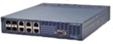 | |
| ● | MetaLight ML500/600/700/Series. EADs (Ethernet Access Devices) are a series of products which are cost efficient, compact and hardened Ethernet switches for long-distance hybrid-fiber networks, located near the IoT devices connected to the network. For example, our EAD is used to connect street traffic lights and nearby controllers, cameras and IoT devices to the traffic control center, where either fiber, copper or coax infrastructure cabling exists. This product family can be installed either indoors or outdoors, including under extreme weather conditions. |  |
12
| ● | MetaShield. is a cyber-security, cyber-aware networking solution, an AI-powered, asset intelligence and threat management that comes as part of the network. Its objective is to continuously monitor IoT devices for cyber-risks, network behaviors, trends and overall health, to detect cyber attacks and operational anomalies, to document such performance tracking and provide compliance reports, and to automatically-correct the vulnerabilities, anomalies and attacks that it identifies. It is a cloud-base Software-as-a-service solution, that can be a stand-alone solution that works on any network, or, integrated with our networking solutions. | 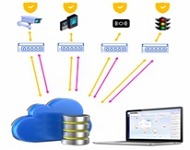 |
| ● | ML2300 Aggregator Series. This product is designed for large, medium, and small aggregation/operating and control centers. Network aggregators can connect hundreds of locations or elements. For example, control centers of highways could use such aggregators to communicate with hundreds of EADs installed in cabinets along highways in order to securely connect IoT devices (e.g. security cameras) to the highway network. | 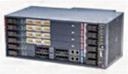 |
| ● | XR239 Series. This product is installed on long copper lines and can be remotely powered from the data lines themselves, while a special algorithm (Dynamic Spectral Software) is ensuring minimal interference with other signals running on adjacent conduits in the same cable. It features a repeater to extend connectivity range to long distances, in some cases up to 100Km. The repeater is installed outdoors and is resistant to cold, hot, rain, ice or snow. Our repeaters have been installed along rail systems in Alaska and Canada and have been safely performing for more than five years. | 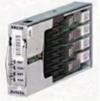 | |
| ● | Advanced MetaLIGHT/Gigaline EMS software. Our EMS (Element Management Systems) software enable remote management, monitoring, maintenance, and configuration of the installed equipment in the network. It is designed to monitor, control and configure our network elements in the field, locally or remotely, for networks of various scales up to thousands of elements. Our implementation during 2021 and 2022 for our end-user customer Highways England, as an example, is using such EMS systems to control thousands of EADs connecting IoT devices along thousands of highway miles. It includes detailed monitoring, logging and tracking of functions both locally and remotely, to allow for easy debugging and configuration of networks, security management, graphical display of network topologies, management of licenses, remote software download, and connectivity to other network and management systems. EMS may also manage other software keys and elements (for example, for encryption or other cyber-safety functions), for which customers may pay separately for the licenses. | 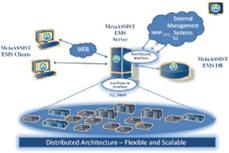 |
We also offer support and maintenance services together with the sales of our product. This includes consulting, telephone troubleshooting and remote support, training, product repairs, and software updates.
13
Product Specifications
Our products use advanced signal processing implemented at the system level, with an approach that treats multiple copper lines as one multi-line channel, which we believe to achieve the following benefits:
| ● | Speeds ranging from 10Mbps to 10Gbps; distances up to 100Km (speeds a lower for longer distances) infrastructure |
Supporting any hybrid combination of new Fiber infrastructure and existing copper and coax infrastructure, supporting data security an encryption protocols, certified for FIPS by US DoW labs; supporting outdoor hardened environmental requirements dense and compact to save space and allow for flexible location setting.
| ● | Automatic calibration tools and automated management software enable hassle-free installation withing hours vs. weeks over existing wiring. | |
| ● | Improve communication reliability even if copper lines are of poor quality, so that network operators can, in most cases, guarantee their customers what we believe are Service Level Availabilities (SLAs) and uptime similar to that of fiber optic infrastructure regardless of the media used, and uptime that allows our customers to support mission-critical applications. |
In addition to these main benefits, we have focused our efforts and implemented technologies in our products in order to achieve the following:
| ● | Transmission in the copper lines to take into account signals in neighboring lines to minimize crosstalk interference and be “Spectrally Friendly”; | |
| ● | Multi-line spatial coding scrambling of data in a way that enhances connection immunity to interference, and makes tapping into the data very difficult; | |
| ● | Integration of remote powering and data on the same copper pairs; | |
| ● | Minimizing transmission delay to support delay-sensitive applications; and | |
| ● | Ability to safely, and accurately transmit clock signals for cellular base station synchronization (not available yet for 5G). |
Since our inception, our business has been focused on serving telecommunication service providers (Telecom), also known as Telcos, for enterprises and residential customers. Our products and solutions have been deployed with more than 100 telecommunication service providers worldwide, in enterprise, residential and mobile base station connectivity applications. In recent years, as we have further developed our technology and rolled out additional products, we turned our focus on serving the IoT markets. Our operations are focused on our fast-growing IoT business while maintaining our commitment to our existing Telecom customers.
Our Competitive Advantage
We have invested heavily and over more than 10 years in the development of copper technologies and hybrid-fiber communication systems to create a solution that enables high-speed communication over real-life networks of mixed media, securely, reliably, and with Gigabit-grade resilience.
Copper and coax lines are readily available in billions of locations. They are often buried in the ground, running in the walls of buildings or hanging from telephone poles, in bundles of tens or hundreds of wires.
Copper wires were never designed for long-reach, secure, high-speed communication. Attempts to deliver high-speed would encounter many problems, including signal attenuation, cross-talk interference from other lines in the Bundle and from any external electrical sources, variable quality and signal interruptions, and variable latency. Such wires are also relatively easy to tap into physically, and the information is also radiated outside of the cable and may be exposed to security threats.
14
In order to correct the issues with providing high speed communications over copper wiring, we developed technologies utilizing a multi-line approach, encoding, scrambling and processing the signals at system level (rather than at the single lines level), and finally also offering data encryption, to combat interference, electromagnetic noise, and issues with copper line quality and data security.
The next step was to integrate our existing technologies into hybrid-fiber building blocks, that provide seamless communication over mixed, real-life fiber-copper-coax networks, and many other advantages.
We believe our products offer a unique solution on the market in terms of value, by providing the following:
| ● | High performance hybrid-fiber communication system: |
| ● | Speeds from 10Mbps to 10Gbps; | |
| ● | Reach of up to 100Km (speed declines over long distances in copper); | |
| ● | Robust connectivity allowing Gigabit-grade service SLAs in various harsh environments over copper, coax or fiber; and | |
| ● | Rapid installation in hours vs. weeks or months if new infrastructure is needed. |
| ● | Cyber-protection on several levels, including Triple Shield Protection: |
| ● | Multi-line data scrambling and coding (copper); | |
| ● | 256-bit system-wide encryption; and | |
| ● | System level protection (encryption and other protections) of management software, operating system and traffic flow. |
Military — grade, DoW certified FIPS cyber protection
| ● | Dense, feature-full design to replace multiple alternative elements in the market, and allow for installation that is compact, lower cost and power saving: |
| ● | Advanced switching functions supporting complex network topologies; | |
| ● | Support for both advanced, digital IoT devices as well as existing analog devices with serial interfaces — to save the need to replace these devices while allowing them to join the digital network; | |
| ● | Power feeding for cameras and other IoT devices with the data cable; | |
| ● | Ability to install our IoT building blocks in remote locations with no power. Power can be provided from the communication line; | |
| ● | Ability to provide precise synchronization over the communication lines to base stations; | |
| ● | Routing functions; and | |
| ● | Support for spectrally-friendly reach extenders up to 100Km with minimal impact on other communication lines. |
| ● | Automated software tools for installation and management (including automated line calibration and configuration recognition during installation to avoid manual work, advanced management systems that allow remote troubleshooting of any line connected to the system to save on operation and management time) |
15
We believe that the combination of these advantages provides our customers with a highly cost-effective solution to quickly obtain IoT connectivity anywhere in their network.
We believe that our hybrid-fiber solutions have a significant competitive advantage in several layers: (a) copper performance (speed, reach, link stability and data security); (b) seamless fiber-copper-coax integration and end-to-end data encryption; (c) overall system cyber-hardened design; (d) versatile, compact and feature-dense products with a good fit to the vast majority of applications; (e) very high product and transmission reliability; automatic configuration tools and advanced management of every element in the field; and (f) highly cost-effective when compared to alternatives. We believe that these advantages lead to very good value for our customers for both rapid deployment to all locations, regardless of whether these locations are hard to reach. We also believe that these characteristics provide us with a competitive advantage against many, if not all, companies in our space, such as Cisco, Rad, Nokia, Siemens, Belden and others.
We have hundreds of large, medium and small network operators as end users of our products, including municipalities, railway, airports, electricity, water infrastructure companies as well as other governmental agencies and military customers. We believe that we enjoy a strong reputation for offering reliable, high-performance and high-end products. We expect that the acceptance process for our new products for existing customers will become simpler due to customers positive accumulated experience working with us. We also have many non-exclusive third-party distributors, resellers and system integrators and partners around the world, located in the U.S., Canada, Philippines, Germany, Italy, Spain, Scandinavian countries, Greece, Netherlands, Japan and India. These non-exclusive third-party distributors are used to selling our products, and we believe that they appreciate the reliability of our products and the quality of service and support that we provide. All of these advantages constitute an entry barrier, which we believe may make it more difficult for a competitor to reach a similar status.
We believe that over the past years, we have built a reputation for providing, according to our customers, reliable, high-quality communication solutions with better copper and hybrid fiber performance than other alternatives on the market. A competitor who wants to enter the market will have to compete with our reputation, which has been acquired over a long period by providing long-term quality service to hundreds of network operators and hundreds of thousands of end customers and IoT elements.
Our Sales and Marketing Strategy
We operate through two regions — Americas and International (consisting of EMEA, or Europe, Middle East and Africa, and APAC, or Asia Pacific) in a matrix with a vertical structure that is described below. Our sales and support teams are currently located in the United States, Mexico, Germany, Israel, and India. We also execute our sales and marketing plan through a multi-channel by vertical global approach that combines our expertise with the expertise of our trusted business partners. Our current business partners, as well as the partners we will seek in the future, are system integrators, distributors, contractors, resellers, and consultants. Our business partners are currently located in North America, Central America, Europe, India, Singapore, China, Australia, Vietnam and Japan. Once we identify a relevant business opportunity in a new territory, we seek to partner with local business partners or agents. We believe our strong brand name of high-quality communication solutions, as well as the credibility we gain with esteemed customers such as the U.S. DoW, enhances our ability to provide our products and services. For example, we maintain UL laboratories compliance with FIPS 140-3 cybersecurity standard required by the DoW and the Joint Interoperability Test Command (JITC) labs approval of the Company’s products for cybersecurity and interoperability, putting the products in the DoW Approved Products List (APL).
We operate a vertical-based marketing plan where we dedicate tailored solutions and individual resources to each specific vertical. Our verticals include Intelligent Traffic Systems (ITS), rail, smart city, Telecom, utilities, federal and military.
16
Federal and Military
Our current and future federal and military federal aviation authorities, US military, Air Force and Navy bases, and other government and military facilities. The Federal and US Military environments operate millions of connection points that are excessively outdated. By addressing them with any infrastructure existing currently, we help them modernize quickly and achieve project completion fast. Since late 2025, we started focusing our sales efforts into the Programs of Record (PoRs) in the Department of War (DoW). These PoRs are running in the various branches of the DoW, and our efforts are aimed at becoming designed into several of them as the default technology for the relevant elements. In addition, we continue to answer to needs raised more tactically in specific locations and bases within the DoW. We believe that such dual approach is effective in order to further support our growth.
ITS
ITS include customers who manage road systems such as departments of traffic on either the municipality, county, state, or national level. The types of applications in this vertical that require communication include road cameras, lane management systems, and road signs.
Smart City
We believe the goal of nearly any city worldwide is to become smarter and better serve its residents and visitors. Smart city customers include such municipalities. The types of applications in this vertical requiring communication include security cameras, parking management, energy and water management, waste management, digital signs, and provision of Wi-Fi connectivity. We currently have projects in more than 100 cities, mostly in North America and Europe.
Rail
Rail systems include customers who own and operate traditional inter-city rail lines as well as light rails. Some applications requiring communication in this vertical are central train control systems, rail signals, safety cameras and alert sensors, and rail station communication. We currently have projects within this vertical in North America, Europe, and Asia Pacific.
Airports
Airports include customers who are either a State or Federal airport agency, or a service provider to the airport industry. The types of applications within this vertical requiring communication are airport security, baggage management, and airport Wi-Fi. Since 2022, we are delivering to our airport integration customer, who is a worldwide market-leader in airport operation technology, with which we signed an agreement to provide our solutions to hundreds of airports in 39 countries.
Energy and Water
Energy and water include customers such as electric utilities, oil companies and water utilities. The types of applications within this vertical that require communication are sub-station monitoring, oil and gas pipeline and refineries, electric and water flow monitoring, and perimeter security. We have projects within this vertical in North America and Europe.
MDU and Telco
MDU include apartment buildings and condominiums, as well as hospitality properties such as hotels and resorts. Existing MDUs (there are 20 million buildings of five units or more in the U.S., who are built before the year 2000), therefore, carrying aged infrastructure, particularly network cabling. We provide MDUs both inside and outside of building solutions to modernize and protect communication using existing infrastructure, reaching Gigabit speed and quality at a fraction of the cost and time.
17
In addition, we serve our legacy Telco customers, by supporting communication service providers of both wired and wireless services (including 4G and 5G). The types of applications within this vertical requiring communication include enterprise offices, branch offices, residential buildings, educational facilities and back-haul for mobile base stations. In 2025, we launched MetaLight 650SV, helping veteran legacy network T1 connections converge with existing fiber networks.
Channel and Territory coverage
The majority of our business is conducted indirectly through various types of business partners, namely system integrators, distributors, contractors, resellers and consultants. Nevertheless, our team often accompanies a channel partner during the selling process to help secure a deal with an end-user. We seek to cover the geographic territories in which we sell, in combination with the target verticals described above. In this effort, we take advantage of existing strong relationships with business partners in the United States, Canada, Europe, Latin America, and Asia Pacific and also seek to recruit new business partners that can help us expand our coverage.
In addition, we maintain a website (at www.actelis.com) tailored to the IoT strategy and is expanding our marketing initiatives (professional organizations, shows, online targeting, online campaigns and lead generation) to grow our opportunity pipeline.
We operate through two main regional sales teams — Americas and International (consisting of EMEA (Europe, Middle East and Africa) and APAC (Asia Pacific)) in a vertical model similar to that which was described in our marketing strategy above and generates its pipeline of leads and opportunities through a combination of channel presence, on-line presence as well as direct touch. Our sales teams are very experienced in the target verticals and have significant competencies in the target networks of decision makers. We intend to invest in expanding this presence and strength.
Software and Services
Our products consist of hardware and an embedded software that function together to deliver the product’s essential functionality. Our products are sold with a two-year warranty for repairs or replacements of the product in the event of damage or failure during the term of the support period, which is accounted for as a standard warranty. Services relating to repair or replacement of hardware beyond the standard warranty period are offered under renewable, fee-based contracts and include telephone support, remote diagnostics, and access to on-site technical support personnel.
We also offer our customers our EMS management software, either as perpetual or term-based. EMS is optional and is being sold separately from our hardware products, and has been sold either as a per-element license, or as a license for a whole network.
Our customers may request added functions and features for their specific need which we can customize for an additional fee.
We also offer our customers product support services which include telephone support, remote diagnostics, and access to on-site technical support personnel. Such support service is sold as a standalone contract or in combination with EMS management software and is offered for a term, usually 12 months with a renewal option.
Additionally, our customers can purchase software support service which allow them to receive some additional features or free upgrades. Such support service is sold as a separate contract.
We offer service contracts at different levels (Silver, Gold, Platinum), which may include different levels of support (remotely or in the field), hardware repairs, spare parts, help with network design, and SW/HW upgrades. Such service contracts are sold separately from the sale of hardware products and may be sold combined with our EMS software licenses. It usually covers periods post the expiration of our warranty period and would be renewed on an annual basis. The cost of the service is derived from the size of the network, and the level of support required.
18
In December 2024, we launched our MetaShield AI-Powered SaaS solution, under Actelis’ ‘Cyber Aware Networking’ initiative. This includes a software based platform designed as an intelligence layer integrated into Actelis’ networking devices, leverages the network’s power and proximity to IoT devices to monitor and protect physical assets such as cameras, sensors, and other devices at the edge, enabling corrective actions before issues propagate throughout the network.
Competition
We compete in markets for networking and communications services and solutions for service providers, businesses, government agencies and other organizations worldwide. While our hybrid-fiber offerings are unique in our opinion, providing the highest value to network operators, our customer may still elect to implement their networks in other ways.
As such we compete with a number of companies in the markets we serve. In ITS, our key competitors include Moxa Technologies, FlexDSL Telecommunications AG, EtherWAN Systems, Inc. and Belden Inc. In the MDU markets, our competition includes companies such as InCoax, Positron and ReadyLinks.
We believe the following competitive attributes are necessary for our solutions to successfully compete in IoT and Telecom networking markets, and likewise we believe that we are providing leading products in all the categories below:
| ● | the performance and reliability of our solutions over any wireline (non-wireless) medium; |
Rapid deployment/implementation
| ● | cost of deployment and return on investment in terms of cost savings; | |
| ● | sophistication, novel and innovative intellectual property and technology, and functionality of our offerings; | |
| ● | cross-platform operability; | |
| ● | security; | |
| ● | ease of implementation and use of service; | |
| ● | management capabilities; | |
| ● | high-quality customer support; and | |
| ● | price. |
We believe that we compare favorably on the basis of the factors listed above. However, many of our competitors have substantially greater financial, technical, and marketing resources; relationships with large vendor partners; larger global presence; larger customer bases; longer operating histories; greater brand recognition; and more established relationships in the industry than we do. Furthermore, new entrants not currently considered to be competitors may enter the market through acquisitions, partnerships, or strategic relationships. See “Item 1.A - Risk Factors — New competitors may enter the marketplace and begin to compete with the Company.”
19
Manufacturing, Procurement and Logistics
We take advantage of the combination of our inhouse skills and those of the third parties we partner with to execute our operational tasks which are planning and manufacturing finished goods inventory, planning and procuring raw materials and delivering products to our customers based on promised delivery schedules.
Our raw material consists of electronic chipsets, FPGA components, modems, and other electronic and mechanical components. Most of those components are procured by our contract manufacturers and we assist them as needed in specific cases. For example, since the breakout of COVID-19, as the world is experiencing shortages of electronic components, we have assisted our manufacturers in acquiring components that are harder to find. We also secure components as have been designated to be the close to end of life by their manufacturers to ensure adequate quantities of future product shipments.
Our products are assembled by various contract manufacturers, located in Israel and in Taiwan who possess the expertise of assembly and quality control required for electronic manufacturing in a turn-key fashion. Some of our products are manufactured to our specifications under an OEM arrangement. The company uses state-of-the-art logistics services from the best providers worldwide and also has in-house expertise in executing such required processes.
We believe that we can add and/or replace our contract manufacturer if necessary. We have successfully transitioned from one contract manufacturer to another in the past, and we believe that a transition would be achievable, if necessary, in the future typically within three to six months.
Warranty
Our products are generally sold with a standard warranty of two years for product defects, as well as technical center support with properly trained personnel, during normal business hours, to address incidents raised customers. Within the warranty agreement, we offer to repair or replace defective products, or software bug fixes. Upon expiration of the warranty period, the customer has an option to purchase an extended warranty contract for an additional fee, typically for one or more periods of 12 months.
Growth Strategy
Global Expansion and Recognition
We intend to leverage (a) the customers, partners, and representatives’ presence in over 30 countries including the Americas, Europe and Asia, (b) brand recognition developed over more than 20 years, and (c) the fact that our products are differentiated, as we believe, offering unique value in IoT verticals, particularly in Federal/Military, Smart Cities, Smart Roads, Utilities and Rail, as well as for Telecom carriers and in particular our differentiation in providing critical Gigabit and fiber grade solutions to Multi-Dwelling Units (“MDU”). Furthermore, we believe our unique package of cyber-hardened communications building blocks for IoT environments coupled with our cyber management solution that comes with the network, will help us increase our presence and recognition as a stand-out solution.
In order to achieve the right level of global coverage, we continue to expand our network of partners and representatives, as well as reputable advisors with unique expertise , and aim increasingly at partnering with larger numbers of companies with global presence. These can be system-integrators, value-added resellers, contractors, distributors, and consultants. For example, over the last year we expanded our network of partners in Italy, France, United States and more, including Federal/Military experts assisting us in growing this vertical.
We are investing in growing our sales, channel management and support teams, and dedicate resources which specialize in specific verticals in each of the theaters. During 2025, we upgraded our capabilities in Federal and Military sales and marketing by hiring a Chief Revenue Officer, Americas and a Director of Federal sales, both veterans of those markets. Our new hires help us implement a new strategy through the US Department of War Programs of Record (PoR) to generate much more scalable growth in this vast market.
20
Expansion of Multi-year deals
Over the past years, we entered into several large multi-year contracts with ITS, military, airports, and more that will generate more predictable sales for the next several years. For example, since the IPO, we announced several new deals we won or started to deliver, such as the worldwide airport technology provider, a provider of energy services to a major European city in a major European country, the city of San Jose, California and Northern Ireland railways. We intend to expand this strategy by investing in sales and marketing presence to extend the length these contracts and add many others.
Expansion in Cybersecurity, Recurring Revenue Model, Cyber monitoring services
Cybersecurity is essential for networking infrastructure. Such security must be addressed at the data traffic, switching, and network management level. Encryption is a fundamental building block to achieve the necessary protection, preferably at a low networking layer. Our products are already capable of delivering sensitive information for many critical applications, and we are investing more in making this a strong differentiator, and to have our products recognized as the most cyber-safe IoT building blocks in the growing secure IoT communication market.
To that end, we launched MetaShield and we offer a SaaS, AI based cyber-security and operational continuity monitoring and mitigation software platform. Additionally, our customers are bound by elevated security standards requiring them to identify new vulnerabilities in the systems they operate, including our networking solutions that are installed in their environments. In 2025 we started to market vulnerability scanning, analytics and monitoring to the customers who require it and believe this initiative will expand further as more and more are required by their parent organizations or authorities to declare such compliance.
United States’ Bipartisan Infrastructure Law
In November 2021, Former President Biden signed the Bipartisan Infrastructure Law to invest approximately $1.2 trillion to significantly upgrade the United States’ infrastructure. Specifically, the Bipartisan Infrastructure Law mandates investing the following amounts: $110 billion to rebuild many of America’s roads and bridges; $39 billion in public transit; $66 billion in high-speed rail; $108 billion to upgrade the nation’s electricity grid; $55 billion to expand access to clean drinking water; $25 billion to modernize several US airports; $650 billion in previous authorized funding for roads including nearly $300 billion for the Highway Trust Fund; and $65 billion to ensure that every American has access to high-speed internet through deploying broadband infrastructure. Part of the latter is the Broadband Equity Access and Deployment Program (the “BEAD”). The BEAD Program provides $42.45 billion to expand high-speed Internet access by funding planning, infrastructure deployment and adoption programs. All 50 states, the District of Columbia, and the five territories participating in the Broadband Equity, Access, and Deployment (BEAD) program have approved Internet for All plans and approximately $28 billion were ear-marked in total for all states. We believe that we have a significant positive contribution of value through our solutions to the BEAD projects, and we are pursuing funded programs where we look to offer our products.
It remains uncertain what actions, if any, the Trump Administration may take to repeal or otherwise modify the the Bipartisan Infrastructure Law or BEAD.
Recent increase and creation of new tariffs by the Trump Administration is not likely to affect the Company significantly, since the Company manufactures its products in Israel and Taiwan, and the procurement of raw material is done directly to these countries. Also, the United States has stable trade agreements with Israel, where our subsidiary manages our operations, and from which exports our products to the Unites States.
We believe that this significant increase in infrastructure spending by the United States Government will likely result in investments in our communication infrastructure solutions, as these spending initiatives are aimed at our targeted verticals.
21
Growth through Mergers and Acquisitions
We continue to evaluate potential growth through mergers and acquisitions opportunities in situations where we believe that a transaction will fill business gaps or add key business operations without requiring us to wait years for marketing and sales cycles to materialize. The resulting combination of our existing products and services, new key personnel, and strategic partnerships through M&A could provide new offerings to our existing market.
If we target businesses in the same sector or location, we hope to combine resources to reduce costs, eliminate duplicate facilities or departments and increase revenue. We still believe this strategy will provide for accelerated growth and maximize investor returns.
Environmental
We are not aware of any environmental laws that have been enacted, nor are we aware of any such laws being contemplated for the future, that impact issues specific to our business.
Human Capital Resources
As of December 31, 2025, we had approximately 51 employees and contractors, of which 39 were full-time employees, including 13 in sales and marketing, 20 in research development, engineering, and operations and 6 in general and administration. We have approximately 34 employees and contractors in Israel, 15 in the U.S., ,1 in Europe and 1 in Asia. Our U.S.-based employees are employed through a Professional Employer Organization, providing employee benefits and services.
We believe our culture and principles enable us to attract, retain, motivate and develop our workforce as well as drive employee engagement. We believe an engaged workforce leads to a more innovative and productive company that serves its customers better. Our employees work to ensure that our products and services connect and protect our customers critical infrastructure. A testament to that is the long-term retention of many of our employees and their loyalty to us. We measure each one through a goal setting and measurement system to maximize our enterprise value and employee career potential.
We support and strive for ethnic and gender diversity.
Legal Proceedings
From time to time, we may be involved in various claims and legal actions arising in the ordinary course of business. To the knowledge of our management, there are no legal proceedings currently pending against us which we believe would have a material adverse effect on our business, financial position, results of operations and, to the best of our knowledge, there are no such legal proceedings contemplated or threatened. Regardless of outcome, litigation can have an adverse impact on us because of defense and settlement costs, diversion of management resources and other factors.
22
Government Regulation
Our products are required to be certified for safety and local standards in each country that we sell in as needed. In the United States, Canada, Europe, and Japan our products are UL certified (safety), EN (emissions Regulation), VCCI (Japanese emissions standard), CISPR (European emission standard), ICES (Canadian radio frequency emissions standards), ETSI (European electromagnetic compatibility standard), CFR (US Federal Broadcasting Regulation), as well as IEC (European Safety Standard). We have also received the JITC (Joint Interoperability Test Command) certification of meeting certain cybersecurity standards required by the DoW.
We are subject to numerous federal, state, provincial, local, and foreign laws and regulations relating to the storage, handling, emission, and discharge of materials into the environment, including the Comprehensive Environmental Response, Compensation, and Liability Act; the Clean Water Act; the Clean Air Act; the Emergency Planning and Community Right-To-Know Act; the Resource Conservation and Recovery Act; and similar laws in the other countries in which we operate. While we believe that our existing environmental control procedures are adequate, we will continue to evaluate and update our procedures as needed to address new or changing aspects of environmental matters.
Intellectual Property
We rely on a combination of trade secrets, patent, trademark and copyright laws in the United States, as well as intellectual property licenses and other contractual rights (including confidentiality procedures, contractual provisions, and non-disclosure and assignment-of-intellectual property agreements with our employees, independent contractors, consultants and companies with which we conduct business) to establish and protect our A.I. technology, intellectual property and proprietary rights, trade secrets, databases, and our brand.
We have registered Actelis Networks as a service trademark in the United States, and we are the registered holder of the domain name Actelis.com that includes “Actelis Networks, Inc.”. Out of 29 patents that we were granted in the United States, 13 are registered and current while the remaining 16 expired. Out of 6 patents we were granted in Europe, 3 are registered and current while the remaining 3 expired, 1 registered patent in Indonesia, one pending application in Brazil, all of which in the general area of high-speed carrier class Ethernet service and transport over bonded VDSL2, G.SHDSL as well as Fiber G.fast and G.hn protocols covering various aspects of our technology. While we continue to consult with counsel on the advisability to seek patent protection of some of our algorithms, we rely heavily on trade secrets to protect our intellectual property around our technology. While we continue to consult with counsel on the advisability to seek patent protection of some of our algorithms, we rely heavily on trade secrets to protect our intellectual property around our technology.
Without accounting for any potential patent term adjustments or extensions or other forms of exclusivity with respect to our U.S. issued patents, three patents expire between 2025 and 2026, five expire between 2027 and 2030, and 8 expire between 2031 and 2038. Any patent issuing from the pending WIPO patent application will begin to expire in 2041. With respect to our European patents, 1 European patent is expected to expire between 2024 and 2026, and 2 European patent are expected to expire between 2027 and 2038. Our Mexican patent is expected to expire in 2026 and our Indonesian patent is expected to expire in 2028.
We continue to maintain our intellectual property and confidential business information in a number of ways. For instance, we have a policy of requiring all employees and consultants to execute confidentiality agreements upon the commencement of an employment or consulting relationship with us. Our employee agreements also require relevant employees to assign to us all rights to any inventions made or conceived during their employment with us in accordance with applicable law. In addition, we have a policy of requiring individuals and entities with which we discuss potential business relationships to sign non-disclosure agreements. Lastly, our agreements with clients include confidentiality and non-disclosure provisions.
Corporate Information
We were incorporated in Delaware in 1998. We completed our initial public offering on May 17, 2022 and our common stock is currently listed on the Nasdaq Capital Market under the symbol “ASNS.” Our principal executive offices are located at 710 Lakeway Drive, Suite 200, Sunnyvale, CA 94085, and our telephone number is (510)-545-1040.
23
Available Information
Our Annual Reports on Form 10-K, Quarterly Reports on Form 10-Q, Current Reports on Form 8-K, and amendments to reports filed pursuant to Sections 13(a) and 15(d) of the Securities Exchange Act of 1934, as amended (the “Exchange Act”), are filed with the U.S. Securities and Exchange Commission (the “SEC”). We are subject to the informational requirements of the Exchange Act and file or furnish reports, proxy statements, and other information with the SEC. Such reports and other information filed by us with the SEC are available free of charge on the SEC’s website at www.sec.gov. or on our website at https://actelis.com/when such reports are available on the SEC’s website. We use our website as a means of disclosing material non-public information and for complying with our disclosure obligations under Regulation FD. The contents of the websites referred to above are not incorporated into this filing.
Item 1A. Risk Factors
Investing in our common stock involves a high degree of risk. You should carefully consider the risks and uncertainties described below, together with all of the other information in this Annual Report, before deciding to invest in our common stock. The risks and uncertainties described below may not be the only ones we face. If any of the risks actually occur, our business, results of operations, financial condition and prospects could be harmed. In that event, the trading price of our common stock could decline, and you could lose part or all of your investment. Additional risks and uncertainties not presently known to us or that we currently deem immaterial may also impair our business operations.
Summary Risk Factors
Our business is subject to numerous risks and uncertainties that you should consider before investing in our company. You should carefully consider all of the risks described more fully in the section titled “Risk Factors” in this Annual Report on page 24, before deciding to invest in our common stock. If any of these risks actually occurs, our business, financial condition and results of operations would likely be materially adversely affected. These key risks, include, but are not limited to, the following:
Risks Related to Our Business
| ● | We have a history of net losses, may incur substantial net losses in the future, and may not achieve or sustain profitability or growth in future periods. If we cannot achieve and sustain profitability, our business, financial condition, and operating results will be adversely affected. | |
| ● | We have negative cash flow from our operations and, given our projected funding needs, our ability to generate positive cash flow is uncertain. | |
| ● | Our shares of common stock could be delisted from the Nasdaq Capital Market if we fail to regain compliance with the Nasdaq’s stockholders’ equity continued listing standards. Our ability to publicly or privately sell equity securities and the liquidity of our shares of common stock could be adversely affected if we are delisted from the Nasdaq Capital Market. | |
| ● | Our financial condition raises substantial doubt as to our ability to continue as a going concern. | |
| ● | Unfavorable global economic or political conditions could adversely affect our business, financial condition or results of operations. | |
| ● | Prolonged inflation rates could negatively impact our revenues and profitability if increases in the prices of our products or a decrease in customer spending results in lower sales. | |
| ● | We may need to raise additional capital to meet our business requirements in the future, and such capital raising may be costly or difficult to obtain and could dilute our stockholders’ ownership interests. |
24
| ● | Our indebtedness could adversely affect our ability to raise additional capital to fund operations, limit our ability to react to changes in the economy or our industry and prevent us from meeting our financial obligations. | |
| ● | To support our business growth, in the past years we increased our focus on serving certain IoT verticals, while continuing to serve our existing Telco customers. This change in our strategy may make it more difficult to evaluate our business growth and future prospects, and may increase the risk that we will not be successful in our plans. | |
| ● | We may be ineffective in our sales and marketing efforts. | |
| ● | We outsource our product manufacturing and are dependent on our key manufacturers, and on our component and OEM suppliers. We are susceptible to problems, and have encountered problems in the past, in connection with procurement, decreasing quality, reliability, and protectability. | |
| ● | Demand for our products and solutions may not grow or may decline. | |
| ● | Our gross margins may not increase or may deteriorate. | |
| ● | Changes in the price and availability of our raw materials and shipping could be detrimental to our profitability. | |
| ● | Expanding our operations and marketing efforts to meet expected growth may impact profitability if actual growth is less than expected. | |
| ● | If our internal Company cyber-security measures are breached or fail and unauthorized access is obtained to our IT environment, we may incur significant losses of data, which we may not be able to recover and may experience a delay in our ability to conduct our day-to-day business. | |
| ● | We provide cyber security features as part of our products that may not completely prevent information security breaches, and our products are installed in live customer environments and may be compromised by cyber-attacks and damage customer assets. | |
| ● | We depend on key information systems and third-party service providers. | |
| ● | We depend on our management team and other key employees, and the loss of one or more of these employees or an inability to attract and retain highly skilled employees could adversely affect our business. | |
| ● | We may face the effects of increased competition and rapid technological changes. | |
| ● | Our results of operations are likely to fluctuate from quarter to quarter and year to year, which could adversely affect the trading price of our common stock. | |
| ● | The loss of one or more of our significant customers, or any other reduction in the amount of revenue we derive from any such customer, would adversely affect our business, financial condition, results of operations and growth prospects. | |
| ● | Our business, operating results and growth rates may be adversely affected by current or future unfavorable economic and market conditions and adverse developments with respect to financial institutions and associated liquidity risk. |
25
Risks Related to Protecting Our Technology and Intellectual Property
| ● | Claims by others that we infringe their intellectual property could force us to incur significant costs or revise the way we conduct our business. | |
| ● | Our patents and proprietary technology may be challenged or disputed. | |
| ● | Any failure to protect our intellectual property rights could impair our ability to protect our proprietary technology and our brand. | |
| ● | The lives of our patents may not be sufficient to effectively protect our products and business. |
Risks Related to Managing Our Business Operations in Israel
| ● | Geo-Political conditions in the Middle East and in Israel, where our research and development facilities are located, may harm our operations. | |
| ● | Actelis Israel received Israeli government grants for certain of our research and development activities, the terms of which require us to pay royalties and satisfy specified conditions in order to manufacture products and transfer technologies outside of Israel. If we fail to satisfy these conditions, we may be required to pay penalties and refund grants previously received. | |
| ● | We may be adversely affected by fluctuations in the currency exchange rate of the Israeli Shekel. | |
| ● | Unanticipated changes in our effective tax rate and additional tax liabilities, including those resulting from our international operations or the implementation of new tax rules, could harm our future results. |
Risks Related to our Common Stock
| ● | The requirements of being a public company may strain our resources, divert management’s attention, and affect our ability to attract and retain executive management and qualified board members. | |
| ● | If we fail to maintain an effective system of internal control over financial reporting, we may not be able to accurately report our financial results or prevent fraud. As a result, our shareholders could lose confidence in our financial and other public reporting, which would harm our business and the trading price of our commons stock. |
26
RISK FACTORS
Investing in our common stock involves a high degree of risk. You should carefully consider the risks and uncertainties described below, together with all of the other information in this Annual Report, before deciding to invest in our common stock. The risks and uncertainties described below may not be the only ones we face. If any of the risks actually occur, our business, results of operations, financial condition and prospects could be harmed. In that event, the trading price of our common stock could decline, and you could lose part or all of your investment. Additional risks and uncertainties not presently known to us or that we currently deem immaterial may also impair our business operations.
Risks Related to Our Business
We have a history of net losses, may incur substantial net losses in the future, and may not achieve or sustain profitability or growth in future periods. If we cannot achieve and sustain profitability, our business, financial condition, and operating results will be adversely affected.
We have incurred net losses in recent years, and we may not achieve or maintain profitability in the future. We experienced a net loss of $8.3 million and $4.4 million in the years ended December 31, 2025 and 2024, respectively. As a result, we had an accumulated deficit of $52 million as of December 31, 2025. We cannot predict when or whether we will reach or maintain profitability.
We may also increase our operating expenses in the future as we continue to invest for our future growth, including expanding our research and development function to drive further development of our platform, expanding our sales and marketing activities, developing the functionality to expand into adjacent markets, and reaching customers in new geographic locations, which will negatively affect our operating results if our total revenues do not increase. In addition to the anticipated costs to grow our business, we also expect to incur significant additional legal, accounting, and other expenses as a newly public company. These efforts and additional expenses may be more costly than we expect, and we cannot guarantee that we will be able to increase our revenues to offset our operating expenses. Any failure to increase our revenues or to manage our costs as we invest in our business would prevent us from achieving or maintaining profitability.
There is no guaranty that we will be able to generate the revenue necessary to support our cost structure or obtain the level of financing necessary for our operations.
We have incurred significant losses and negative cash flows from operations and incurred losses of $8.3 million and $4.4 million for the years ended December 31, 2025 and 2024, respectively. During the years ended December 31, 2025 and 2024, we had negative cash flows from operations of $7.7 million and $6.5 million, respectively. As of December 31, 2025, our accumulated deficit was $52 million. We have funded our operations to date through equity and debt financing and have cash on hand (including short term bank deposits and restricted cash equivalents) of $4.4 million and long-term restricted bank deposits of $30 thousand and long term deposit of $91 thousand as of December 31, 2025. We monitor our cash flow projections on a current basis and take active measures to obtain the funding it requires to continue our operations. However, these cash flow projections are subject to various uncertainties concerning their fulfilment such as the ability to increase revenues by attracting and expanding its customer base or reducing cost structure. If we will not succeed in generating sufficient cash flow or completing additional financing, then it will need to execute a cost reduction plan that has been prepared. Our transition to profitable operations is dependent on generating a level of revenue adequate to support our cost structure. We expect to fund operations using cash on hand, through operational cash flows and raising additional proceeds. There are no assurances, however, we will be able to generate the revenue necessary to support our cost structure or that we will be successful in obtaining the level of financing necessary for its operations.
Furthermore, we may continue to incur negative cash flow from operating and investing activities for the foreseeable future as we expect to incur research and development, sales and marketing, and general and administrative expenses and make capital expenditures in our efforts to increase our sales. Our business also will at times require significant amounts of working capital to support our growth of additional platforms. An inability to generate positive cash flow from operating activities for the near term may adversely affect our ability to raise needed capital for our business on reasonable terms, or at all, diminish supplier or customer willingness to enter into transactions with us, and have other adverse effects that may decrease our long-term viability. There can be no assurance that we will achieve positive cash flow in the near future or at all.
Our financial condition raises substantial doubt as to our ability to continue as a going concern
Our consolidated financial statements have been prepared assuming that we will continue to operate as a going concern. These events and conditions, along with other matters, indicate that a material uncertainty exists that may cast significant doubt on our ability to continue as a going concern. This going concern determination could materially limit our ability to raise additional funds through the issuance of equity or debt securities or otherwise. Further financial statements includes an explanatory paragraph with respect to our ability to continue as a going concern. There can be no assurance that we will succeed in generating sufficient revenues from our product sales to continue our operations as a going concern. If funds are not available to us, we may be required to delay, reduce the scope of, or eliminate research or development plans for, or commercialization efforts with respect to our products. This raises substantial doubts about our ability to continue as a going concern.
27
Our shares of common stock could be delisted from the Nasdaq Capital Market if we fail to regain compliance with the Nasdaq’s stockholders’ equity continued listing standards. Our ability to publicly or privately sell equity securities and the liquidity of our shares of common stock could be adversely affected if we are delisted from the Nasdaq Capital Market.
On August 25, 2023, we received a notification letter from the Listing Qualifications Staff (the “Staff”) of the Nasdaq Stock Market LLC (“Nasdaq”) indicating that we are not in compliance with Nasdaq Listing Rule 5550(b)(1) due to our failure to comply with the Minimum Shareholders’ Equity Requirement or any alternatives to such requirement. In order to maintain our listing on the Nasdaq Capital Market, we submitted a plan of compliance addressing how we intended to regain compliance. On March 27, 2024, we received a delist determination letter from Nasdaq advising us that the Staff had determined to delist our securities from Nasdaq due to non-compliance with the Minimum Shareholders’ Equity Requirement, unless we timely request a hearing before the Nasdaq Hearings Panel (the “Panel”). We timely requested a hearing before the Panel.
On August 27, 2024, we received formal written notice from Nasdaq confirming that we have evidenced compliance with all applicable criteria for continued listing on Nasdaq as set forth in Nasdaq Listing Rule 5550, including the Minimum Shareholders’ Equity Requirement. In accordance with Nasdaq Listing Rule 5815(d)(4)(B), we remained subject to a panel monitor for equity compliance through August 27, 2025.
On May 12, 2025, Nasdaq notified us (the “Notification Letter”) that we were not in compliance with Nasdaq Listing Rule 5550(a)(2), which requires our Common Stock to maintain a minimum bid price of $1.00 per share (the “Bid Price Rule”). The Notification Letter had no immediate effect on the listing or trading of our Common Stock on Nasdaq and, at this time, the Common Stock will continue to trade on Nasdaq under the symbol “ASNS”. The Notification Letter provided that we have 180 calendar days, or until November 10, 2025, to regain compliance with the Bid Price Rule.
On August 19, 2025, we received written notice from Nasdaq stating that, due to the Company’s non-compliance with the Minimum Shareholders’ Equity Requirement as of June 30, 2025, and because, pursuant to Listing Rule 5815(d)(4)(B), the Company remained subject to a mandatory hearing panel monitor through August 27, 2025, the Company’s securities were subject to delisting from Nasdaq unless the Company timely requests a hearing before the Panel. The Company has its hearing with the Panel on September 30, 2025.
At the hearing, the Company presented its plan to evidence compliance with the Equity Rule and all other applicable criteria for continued listing on The Nasdaq Capital Market, and requested to remain listed subject to its plan to regain compliance.
On October 28, 2025, we received a listing decision from Nasdaq notifying us that the Panel determined that the Company evidenced compliance with the Shareholders’ Equity Requirement.
The Panel also granted the Company’s request for continued listing on The Nasdaq Capital Market, pursuant to an exception through December 5, 2025, to regain compliance with the bid price requirement set forth in Nasdaq Listing Rule 5550(a)(1). In order to evidence compliance with the bid price requirement, the Company must evidence a closing bid price of at least $1.00 per share for a minimum of 10, but generally not more than 20, consecutive business days. On November 7, 2025, we held a special meeting of shareholders where our shareholders approved, among other things, the Reverse Split. The Reverse Split was effected on November 18, 2025.
On December 3, 2025, the Company received formal notice from Nasdaq that the Company has regained compliance with the Bid Price Rule and evidenced compliance with all other applicable criteria for continued listing on Nasdaq. Accordingly, the previously disclosed listing matter has been closed.
The Company will remain subject to a one-year “Panel Monitor”, as contemplated by Nasdaq Listing Rule 5815(d)(4)(A), through December 5, 2026. If during that period the Company fails to satisfy any of the criteria for continued listing on Nasdaq, the Staff may not grant the Company additional time to regain compliance. Rather, Nasdaq will issue a delist determination, which the Company may address by requesting a new hearing before the Nasdaq Hearings Panel.
28
On February 4, 2026, we received a written notice Nasdaq indicating that the Staff has determined to delist the Company’s securities from The Nasdaq Capital Market.
As disclosed in the Notice, the Staff determined that the Company’s common stock failed to maintain compliance with the Bid Price Rule. While companies are typically afforded a 180-calendar-day compliance period to comply with the Bid Price Rule, the Staff concluded that the Company is not eligible for the compliance period pursuant to Nasdaq Listing Rule 5810(c)(3)(A)(iv) due to the fact that the Company effected a reverse stock split within the prior one-year period, specifically a 1-for-10 reverse stock split on November 18, 2025, and therefore is subject to immediate delisting.
As further disclosed in the Notice, the Company had the right to request a hearing and that a hearing request would result in a stay of any suspension or delisting action pending the conclusion of the hearings process. Accordingly, on February 11, 2026, the Company requested a hearing before the Panel, which served to stay any further suspension or delisting action through the hearing or any extension the Panel provides following the hearing.
At the hearing, the Company intends to take all reasonable measures available and is going to present a plan to regain compliance with the Bid Price Rule and remain listed on Nasdaq to the Panel. However, there can be no assurance that the Company will be able to regain compliance with the Bid Price Rule or maintain compliance with all other Nasdaq continued listing requirements.
In connection with the Company’s entry into the Common Stock Purchase Agreement with White Lion as described below, if the Company fails to be listed on the Nasdaq Capital Market, the Commitment Fee Amount (as defined below) will increase subject to the terms of the Delisting Penalty Provision in the Common Stock Purchase Agreement. See “Item 1-Business-Recent Developments-Equity Line of Credit Agreement” for additional information.
On January 26, 2026, Nasdaq filed a rule proposal with the SEC that would permit the immediate suspension and delisting of a company listed on the Nasdaq Capital Market if its market value of listed securities remains below $5 million for 30 consecutive business days. As of the date of this Annual Report, our market value of listed securities is below $5 million and if this rule were to go into effect and we are unable to increase our market value of listed securities above $5 million, we would become subject to immediate suspension and delisting.
We have in the past, and may in the future, be unable to comply with certain of the listing standards that we are required to meet to maintain the listing of our shares of common stock on Nasdaq. If we fail to satisfy the continued listing requirements of Nasdaq, such as minimum stockholders’ equity requirements or minimum bid price requirements, Nasdaq may take steps to delist our shares of common stock. Such a delisting would have a negative effect on the price of our shares of common stock, impair the ability to sell or purchase our shares of common stock when persons wish to do so, and any delisting materially adversely affect our ability to raise capital or pursue strategic restructuring, refinancing or other transactions on acceptable terms, or at all. Delisting from Nasdaq could also have other negative results, including the potential loss of institutional investor interest and fewer business development opportunities, as well as a limited amount of news and analyst coverage of us. Delisting could also result in a determination that our shares of common stock are a “penny stock,” which would require brokers trading in our shares of common stock to adhere to more stringent rules, possibly resulting in a reduced level of trading activity in the secondary market for our shares of common stock. In the event of a delisting, we would attempt to take actions to restore our compliance with Nasdaq’s listing requirements, but we can provide no assurance that any such action taken by us would allow our shares of common stock to become listed again, stabilize the market price or improve the liquidity of our securities, prevent our shares of common stock from dropping below the Nasdaq minimum bid price requirement or prevent future non-compliance with Nasdaq’s listing requirements.
29
Unfavorable global economic or political conditions could adversely affect our business, financial condition or results of operations.
Our business is susceptible to general conditions in the global economy and in the global financial markets. A global financial crisis or a global or regional political disruption has caused, and could in the future cause, extreme volatility in the capital and credit markets. A severe or prolonged economic downturn, including a recession, the currently prolonged inflationary economic environment, continued rising interest rates, debt and equity market fluctuations, diminished liquidity and credit availability, increased unemployment rates, decreased investor and consumer confidence, supply chain challenges, natural catastrophes, the effects of climate change, regional and global conflicts and terrorist attacks or political disruption or turmoil could result in a variety of risks to our business, including weakened demand for our product candidates or any future product candidates, if approved, and our ability to raise additional capital when needed on acceptable terms, if at all. A weak or declining economy or political disruption could also strain our manufacturers or suppliers, possibly resulting in supply disruption, or cause our customers to delay making payments for our potential products. Any of the foregoing could materially and adversely affect our business, financial condition, results of operations and prospects, and we cannot anticipate all of the ways in which the political or economic climate and financial market conditions could adversely impact our business.
Prolonged inflation rates could negatively impact our revenues and profitability if increases in the prices of our products or a decrease in customer spending results in lower sales which would adversely affect our business, results of operations and financial condition.
Inflation rates, particularly in the United States, have increased in 2022 through 2025 at levels not seen in years in many countries where our customers reside. Continued and increased inflation may result in decreased demand for our products and services, increased operating costs (including our labor costs), reduced liquidity, and limitations on our ability to access credit or otherwise raise debt and equity capital. In addition, the United States Federal Reserve has raised, and may again raise, interest rates in response to concerns about inflation. Increases in interest rates, especially if coupled with reduced government spending and volatility in financial markets, may have the effect of further increasing economic uncertainty and heightening these risks. In an inflationary environment, we may be unable to raise the sales prices of our products at or above the rate at which our costs increase, which could have a material and adverse effect on our business, results of operations and financial condition. Accordingly, the U.S. dollar has strengthened against foreign currencies as a result of the United States Federal Reserve’s actions to lower inflation, which is affecting our business partners, where they sell local currency to the end-user of our products and services.
We may need to raise additional capital to meet our business requirements in the future, and such capital raising may be costly or difficult to obtain and could dilute our stockholders’ ownership interests.
In order for us to pursue our business objectives, we may need to raise additional capital, which additional capital may not be available on reasonable terms or at all. Any additional capital raised through the sale of equity or equity-backed securities may dilute our shareholders’ ownership percentages and could also result in a decrease in the market value of our equity securities. The terms of any securities issued by us in future capital transactions may be more favorable to new investors, and may include preferences, superior voting rights and the issuance of warrants or other derivative securities, which may have a further dilutive effect on the holders of any of our securities then outstanding. In addition, we may incur substantial costs in pursuing future capital financing, including investment banking fees, legal fees, accounting fees, securities law compliance fees, printing and distribution expenses and other costs. We may also be required to recognize non-cash expenses in connection with certain securities we issue, such as convertible notes and warrants, which may adversely impact our financial condition.
Our indebtedness could adversely affect our ability to raise additional capital to fund operations, limit our ability to react to changes in the economy or our industry and prevent us from meeting our financial obligations.
In February 2024, we entered into a new credit line facility from an Israeli bank of up to $1.5 million (the “Credit Line”). The Credit Line is secured by customer invoices and will incur interest at a Federal SOFR rate plus 5.5%. The Credit Line has been extended until February 1, 2026. The current balance outstanding is approximately $36,000. As of the date hereof, the Company has not further extended the credit facility; however, it may do so in the future.
We may raise additional debt in the future in order to extend the financing we need in ways that are less or non-dilutive vs. equity fund raising. Such debt funding may increase the burden on our cash flow, make us subject to interest accruing overtime which will affect our profitability as well as our ability to fund our operations.
30
To support our business growth, in the past years we increased our focus on serving certain IoT verticals, while continuing to serve our existing Telco customers. This change in our strategy may make it more difficult to evaluate our business growth and future prospects, and may increase the risk that we will not be successful in our plans.
Since our inception, our business was focused on serving Telcos for enterprises and residential customers. Our products and solutions have been deployed with more than 100 telecommunication service providers worldwide, in enterprise, residential and mobile base station connectivity applications. In recent years, as we have further developed our technology and rolled out additional products, we turned our focus on serving the IoT markets. Our operations are focused on our fast-growing IoT business, while maintaining our commitment to our existing Telco customers. A portion of our revenue continues to be derived from our existing Telco customers. For the years ended December 31, 2025 and December 31, 2024, our Telco customers in the aggregate decreased by 1% from approximately 28% of our revenues in the year ended December 31, 2024, to 27% in the year ended December 31, 2025.
Our change in strategy and our efforts to serve the IoT verticals that we have focused on may prove more expensive than we currently anticipate, or may require longer development and deployment times, and we may not succeed in fully penetrating such IoT verticals, or at all.
We may have ineffective sales and marketing efforts.
Our sales and marketing efforts to drive growth may be ineffective as we try to win new deals either directly with end-user customers, or indirectly through business partners, distributors, system integrators or value-add resellers. These ineffective efforts may cause us to miss our planned growth and harm our financial results.
We outsource our product manufacturing and are dependent on our key manufacturers, and on our component and OEM suppliers. We are susceptible to problems, and have encountered problems in the past, in connection with procurement, decreasing quality, reliability, and protectability.
Our devices are assembled by using fully manufactured parts, the manufacturing of which has been fully outsourced, and we have no direct control over the manufacturing processes of our products. We outsource procurement and manufacturing activities to certain key manufacturers and certain component and OEM suppliers.
We also purchase unique components and products from suppliers who are exclusively able to fulfill such supply. We may lose some or all of these relationships, or have a material weakness in negotiating favorable terms, or such unique components have or may be declared end-of-life which may require product design changes. Such circumstances have hurt our profitability in the past, and may hurt our profitability in the future, and negatively affect our ability to deliver our product on time to customers.
Our lack of control in our manufacturing process due to the fact that we outsource our product manufacturing may increase quality or reliability risks and could limit our ability to quickly increase or decrease production rates. If necessary, switching production to other or additional subcontractors will entail a material cost and a temporary decrease in our productivity. Our manufacturing process has been disrupted in the past, and may be disrupted in the future, by various factors, including but not limited to shipping delays, bottlenecks resulting from raw materials specific shortages, quality problems or a decrease in quality, manpower shortages by the manufacturers or political unease that would trigger the closure of a facility or financial insolvency.
Furthermore, a supplier may discontinue production of a particular part for any number of reasons, which may require us to purchase a large inventory of such discontinued parts in order to ensure that a continuous supply of such parts remains available to our customers. Such “end-of-life” parts purchases could result in significant expenditures by us in a particular period, and ultimately any unused parts may result in a significant inventory write-off, either of which could have an adverse impact on our financial condition and results of operations for the applicable periods. Additionally, in case any part embedded in our products is no longer available, we may be required to redesign such product in order to enable usage of alternative parts, or be forced to announce end-of-life of such product. Refer to “Management’s Discussion and Analysis of Financial Condition and Results of Operations,” for additional information on supply constraints related to the COVID-19 pandemic.
31
Demand for our products and solutions may not grow or may decline.
We may experience a reduction in customer demand as a result of either of competition from other companies, technological changes required by our target markets, or disruptions of existing and new customer relationships. Such demand reduction will prevent us from realizing our planned growth.
Our gross margins may not increase or may deteriorate.
If our gross margins do not increase as planned or deteriorate, it will be harder for us to achieve profitability, which could substantially impact our business and ability to carry on operations if other financing sources are not secured on satisfactory terms. Our gross margins may deteriorate as a result of either reductions of customers price points, increases in product component and manufacturing costs, or unfavorable changes in the mix between more and less profitable customers and/or products.
Changes in the price and availability of our raw materials and shipping could be detrimental to our profitability.
Chipsets, electronic and mechanical components are significant components of our products. Over the past few years, the prices and availability of electronic and mechanical components have been fluctuating and may continue to evolve unpredictably in the future.
Furthermore, our products are assembled with various contract manufacturers located in Israel and in Taiwan. We have experienced instances of limited supply of certain raw materials and shipping delays, which resulted in extended lead times, increased shipping costs and higher-than-usual backlogs. Economic and political circumstances may negatively affect the price and availability of raw materials, shipping and availability of assembly capacity of contract manufacturers.
We may have previously agreed to set prices with our customers and any changes in supply costs may decrease our margin and directly affect profitability. If prices increase, supply interruptions, shipping delays, or shortages of materials continue to occur, it could have a negative effect on revenues and earnings.
Expanding our operations and marketing efforts to meet expected growth may impact profitability if actual growth is less than expected.
To meet expected growth, we plan to expand operations, including additional hiring, advertising, and promotion. If actual growth is less than expected, it would negatively impact our ability to become profitable, which would require we raise additional capital if required, which may not be available on favorable terms, or at all, which would impact our ability to carry on operations.
If our internal company cyber-security measures are breached or fail and unauthorized access is obtained to our IT environment, we may incur significant losses of data, which we may not be able to recover and may experience a delay in our ability to conduct our day-to-day business.
As cybersecurity attacks continue to evolve and increase, our cyber-security measures and our IT environment could be penetrated or compromised by internal and external parties’ intent on extracting confidential information, disrupting business processes, corrupting information, or looking to force the Company to pay a ransom. These risks could arise from external parties or from acts or omissions of internal or service provider personnel. Such unauthorized access could disrupt our business and could result in the loss of assets, litigation, remediation costs, damage to our reputation and failure to retain or attract customers following such an event, which could adversely affect our business.
Cyber attackers update their methods frequently. Sometimes cyberattacks are unrecognizable at the time of their occurrence and even long after. In addition, cyber incidents can occur as a result of non-technological failures, like human error or malicious acts. In some cases, information security incidents at our customers or suppliers can also lead to information security incidents in our information systems. For these reasons, we cannot guarantee that the safeguards taken by us and the safeguards we will take in the future will completely prevent information security incidents or damages that may result from them as detailed above.
32
We provide cyber security features as part of our products that may not completely prevent information security breaches, and our products are installed in live customer environments and may be compromised by cyber-attacks and damage customer assets.
Our products include cyber-security features such as data-traffic encryption that are engineered to protect our customers’ data and environment. Cyber-attacks become more sophisticated and evolve quickly, and these features may fail to protect our customers as intended and fail at preventing information security breaches. We plan to offer new cyber security products and features which we will either develop internally, obtain from partnerships with third-parties, or through acquisitions in the future. These planned new cyber-security products and features may fail to protect our customers as intended and not prevent information security breaches.
Our products are installed in live customer network environments, and may be subject to cyber-attacks seeking access to our customers networks through our products. Those cyber-attack attempts may take advantage of vulnerabilities of our products within the networks, vulnerabilities that may be known or unknown to us.
Our products and services include information systems and digital data of various types, including data kept by our employees, suppliers, and customers (and their own customers). In recent years there has been an increase in the frequency and severity of cyber incidents (including cybercrime). This trend is expected to continue in the future and even worsen, despite all the defense mechanisms employed against it. Cyber events can lead to unauthorized access, unauthorized disclosure, misuse, disruption, deletion, or modification of the Company and its customer assets, data, and processing, as well as disrupting day-to-day operations, computing services, and significantly slowing them down and even disabling information systems.
In the event of damage caused by such cyber-attacks, we may suffer negative consequences, such as disruption of the Company’s and/or our customers’ activities, disruption of or disabling information systems, theft of our and/or our customers’ data, or damage to its reputation thus affecting clients’ trust in the Company, and potentially exposing it to lawsuits. In such cases, our business results may be severely harmed.
We depend on key information systems and third-party service providers.
We depend on key information systems to transact our business accurately and efficiently. These systems and services are vulnerable to interruptions or other failures resulting from, among other things, natural disasters, terrorist attacks, software, equipment or digital failures, processing errors, computer viruses, other security issues or supplier defaults. Security, backup, and disaster recovery measures may not be adequate or implemented properly to avoid such disruptions or failures. Any disruption or failure of these systems or services could cause substantial errors, processing inefficiencies, security breaches, inability to use the systems or process transactions, loss of customers or other business disruptions, all of which could negatively affect our business and financial performance.
We depend on our management team and other key employees, and the loss of one or more of these employees or an inability to attract and retain highly skilled employees could adversely affect our business.
Our future success depends, in part, on our ability to continue to attract and retain highly skilled personnel. The loss of the services of any of our key personnel, the inability to attract or retain qualified personnel, or delays in hiring required personnel, particularly in engineering and sales, may seriously and adversely affect our business, financial condition and results of operations. Although we have entered into employment or consulting agreements with our personnel, their employment is generally for no specific duration.
Our future performance also depends on the continued services and continuing contributions of our senior management team, which includes Tuvia Barlev, our Chief Executive Officer, to execute on our business plan and to identify and pursue new opportunities and product innovations. The loss of services of our senior management team, particularly our Chief Executive Officer, could significantly delay or prevent the achievement of our development and strategic objectives, which could adversely affect our business, financial condition and results of operations.
33
We may face the effects of increased competition and rapid technological changes.
The industry in which we are engaged is subject to rapid and significant technological change. There can be no assurance that our systems can be upgraded to meet future innovations which will be required to meet our customer’s requirements, or that new technologies will be adopted successfully by us, or existing technologies will not be improved, which would render the offerings obsolete or non-competitive. Companies we compete with enjoy significant competitive advantages, including greater name recognition; greater financial, technical, and service resources; established networks; additional product offerings; and greater resources for product development and sales and marketing.
There can be no assurance that other established networking technology companies, any of which would likely have greater resources than us, will not enter the market. In addition, new competitors may enter the marketplace and/or begin offering networking technology products and solutions and in channels similar to or competing with ours. Such competition may reduce demand for our products and impact the growth prospects and ability to achieve profitability, which may require us to raise new capital, which may not be available on favorable terms, or at all, and that would impair our ability to carry on operations.
We cannot assure you that we will be able to compete successfully against any of these competitors. Our failure to compete successfully with our competitors could harm our business.
We are dependent on skilled human capital.
Our ability to innovate and execute its business plans is dependent on the ability to hire, replace, and train skilled personnel. The employment market suffers from shortages of candidates, and such shortages may continue in future years, causing delays and preventing us from executing our plans.
Our results of operations are likely to fluctuate from quarter to quarter and year to year, which could adversely affect the trading price of our common stock.
Our results of operations, including our revenue, cost of revenue, gross margin, operating expenses, cash flow, and deferred revenue, have fluctuated from quarter to quarter and year to year in the past and may continue to vary significantly in the future so that period-to-period comparisons of our results of operations may not be meaningful. Accordingly, our financial results in any one quarter should not be relied upon as indicative of future performance. Our quarterly financial results may fluctuate as a result of a variety of factors, many of which are outside of our control, may be difficult to predict, and may not fully reflect the underlying performance of our business. Factors that may cause fluctuations in our quarterly financial results include:
| ● | our ability to attract new customers and increase revenue from our existing customers; | |
| ● | the loss of existing customers; | |
| ● | customer satisfaction with our products, solutions, platform capabilities and customer support; | |
| ● | mergers and acquisitions or other factors resulting in the consolidation of our customer base; | |
| ● | mix of our revenue; | |
| ● | our ability to gain new partners and retain existing partners; | |
| ● | fluctuations in share-based compensation expense; | |
| ● | decisions by potential customers to purchase competing offerings or develop in-house technologies and solutions as alternatives to our offerings; | |
| ● | changes in the spending patterns of our customers; |
34
| ● | the amount and timing of operating expenses related to the maintenance and expansion of our business and operations, including investments in research and development, sales and marketing, and general and administrative resources; | |
| ● | network outages; | |
| ● | developments or disputes concerning our intellectual property or proprietary rights, our products and services, or third-party intellectual property or proprietary rights; | |
| ● | negative publicity about our company, our offerings or our partners, including as a result of actual or perceived breaches of, or failures relating to, privacy, data protection or data security; | |
| ● | the timing of expenses related to the development or acquisition of technologies or businesses and potential future charges for impairment of goodwill from acquired companies; | |
| ● | general economic, industry, and market conditions; | |
| ● | the impact of pandemics, such as the COVID-19 pandemic, or any other, epidemic, outbreak of infectious disease or other global health crises on our business, the businesses of our customers and partners and general economic conditions; | |
| ● | the impact of political uncertainty or unrest; | |
| ● | changes in our pricing policies or those of our competitors; | |
| ● | fluctuations in the growth rate of the markets that our offerings address; | |
| ● | seasonality in the underlying businesses of our customers, including budgeting cycles, purchasing practices and usage patterns; | |
| ● | the business strengths or weakness of our customers; | |
| ● | our ability to collect timely on invoices or receivables; | |
| ● | the cost and potential outcomes of future litigation or other disputes; | |
| ● | future accounting pronouncements or changes in our accounting policies; | |
| ● | our overall effective tax rate, including impacts caused by any reorganization in our corporate tax structure and any new legislation or regulatory developments; | |
| ● | our ability to successfully expand our business in the United States and internationally; | |
| ● | fluctuations in foreign currency exchange rates; and | |
| ● | the timing and success of new products and solutions introduced by us or our competitors, or any other change in the competitive dynamics of our industry, including consolidation among competitors, customers or partners. |
35
The impact of one or more of the foregoing or other factors may cause our results of operations to vary significantly. Such fluctuations make forecasting more difficult and could cause us to fail to meet the expectations of investors and securities analysts, which could cause the trading price of our common stock to fall substantially, resulting in the loss of all or part of your investment, and subject us to costly lawsuits, including securities class action suits.
The loss of one or more of our significant customers, or any other reduction in the amount of revenue we derive from any such customer, would adversely affect our business, financial condition, results of operations and growth prospects.
Our future success is dependent on our ability to establish and maintain successful relationships with a diverse set of customers.
We currently derive a significant portion of our revenue from a limited number of our customers. For the years ended December 31, 2025 and December 31, 2024, our top ten customers in the aggregate accounted for approximately 62% and 74% of our revenues.
We expect to continue to derive a significant portion of our revenue from a limited number of customers in the future and, in some cases, the portion of our revenue attributable to individual customers may increase. The loss of one or more significant customers or a reduction in the amount of revenue we derive from any such customer could significantly and adversely affect our business, financial condition and results of operations. Customers may choose not to renew their contracts or may otherwise reduce the breadth of the offerings which they purchase for any number of reasons. We are also subject to the risk that any such customer will experience financial difficulties that prevent them from making payments to us on a timely basis or at all.
Our business, operating results and growth rates may be adversely affected by current or future unfavorable economic and market conditions and adverse developments with respect to financial institutions and associated liquidity risk.
Our business depends on the economic health of the global economies. If the conditions in the global economies remain uncertain or continue to be volatile, or if they deteriorate, including as a result of the impact of military conflict, such as the security situation in the Middle East, Russia and Ukraine, terrorism or other geopolitical events, our business, operating results and financial condition may be materially adversely affected. Economic weakness, inflation and increases in interest rates, limited availability of credit, liquidity shortages and constrained capital spending have at times in the past resulted, and may in the future result, in challenging and delayed sales cycles, slower adoption of new technologies and increased price competition, and could negatively affect our ability to forecast future periods, which could result in an inability to satisfy demand for our products and a loss of market share.
Our operations would be particularly vulnerable to potential interruptions in the supply of certain critical materials and metals, such as neon gas and palladium, which are used in semiconductor manufacturing. Any interruption to semiconductor chip supply could significantly impact our ability to receive the components and timely roll-out of our operations. Furthermore, any potential increase in geopolitical tensions in Asia, particularly in the Taiwan Strait, could also significantly disrupt existing semiconductor chip manufacturing and increase the prospect of an interruption to the semiconductor chip supply across the world. A significant portion of the world’s semiconductor manufacturing is in Taiwan, and similar geopolitical tensions there could create further supply chain disruptions, which could result in further delays for our products’ components.
The world’s largest semiconductor chip manufacturer is located in Taiwan and a large part of equipment and materials, is manufactured in, and imported from, Taiwan. A setback to the current state of relative peace and stability in the region could compromise existing semiconductor chip production and have downstream implications for our company. We are continuing to monitor the situation in Ukraine, the Middle East and globally, and assessing its potential impact on our business.
36
In addition, increases in inflation raise our costs for commodities, labor, materials and services and other costs required to grow and operate our business, and failure to secure these on reasonable terms may adversely impact our financial condition. Additionally, increases in inflation, geopolitical developments and global supply chain disruptions, have caused, and may in the future cause, global economic uncertainty and uncertainty about the interest rate environment, which may make it more difficult, costly or dilutive for us to secure additional financing. A failure to adequately respond to these risks could have a material adverse impact on our financial condition, results of operations or cash flows.
There can be no assurance that future credit and financial market instability and a deterioration in confidence in economic conditions will not occur. Our general business strategy may be adversely affected by any such economic downturn, liquidity shortages, volatile business environment or continued unpredictable and unstable market conditions. If the current equity and credit markets deteriorate, or if adverse developments are experienced by financial institutions, it may cause short-term liquidity risk and also make any necessary debt or equity financing more difficult, more costly, more onerous with respect to financial and operating covenants and more dilutive. Failure to secure any necessary financing in a timely manner and on favorable terms could have a material adverse effect on our growth strategy, financial performance and stock price and could require us to alter our operating plans. In addition, there is a risk that one or more of our service providers, financial institutions, manufacturers, suppliers and other partners may be adversely affected by the foregoing risks, which could directly affect our ability to attain our operating goals on schedule and on budget.
The effects of health pandemics, such as the global COVID-19 pandemic could have an adverse impact on our business, financial condition and results of operations.
In December 2019, a novel coronavirus disease, or COVID-19, was first reported and on March 11, 2020, the World Health Organization characterized COVID-19 as a pandemic. The widespread health crisis is adversely affecting the broader economies, financial markets and overall demand environment for many of our products.
Our operations and the operations of our suppliers, channel partners and customers were disrupted to varying degrees by a range of external factors related to the COVID-19 pandemic, some of which are not within our control. Many governments imposed, and may yet impose, a wide range of restrictions on the physical movement of people in order to limit the spread of COVID-19. The COVID-19 pandemic has had, and likely will continue to have, an impact on the attendance and productivity of our employees, and those of our channel partners or customers, resulting in negative impacts to our results of operations and overall financial performance. We suffered delays in realization of certain new orders from our customers, delay in testing of some of our new technologies in customer premises and difficulty conducting business development activities in an effective way (face-to-face). Additionally, COVID-19 has resulted in delays in non-residential construction, non-crisis-related IT purchases and project completion schedules in general, all of which can negatively impact our results in both current and future periods.
The duration and extent of any future epidemic or pandemic such as the COVID 19 pandemic depends on future developments that cannot be accurately predicted at this time, such as the severity and transmission rate of the virus, the extent and effectiveness of containment actions, the effects of measures enacted by policy makers and central banks around the globe, and the impact of these and other factors on our employees, customers, channel partners and suppliers. If we are not able to respond to and manage the impact of such events effectively, our business will be affected.
Our performance is affected by general economic and political conditions and taxation policies.
The success of our activities may be affected by general economic and market conditions, like interest rates, currency exchange rate fluctuations, availability of credit, inflation rates, economic uncertainty, changes in laws, and United States and international political circumstances. Unexpected volatility or illiquidity could impair profitability or result in losses.
We may be adversely affected by the political and economic situation in the U.S., Europe and a number of countries in Asia.
The U.S. communications market is directly affected by economic developments in the U.S. economy. The European and Asian communications market is similarly reliant on political and economic stability in those regions. Changing trends in these markets may lead to a decrease in investments and a delay in projects, which could harm our business. To reduce our sensitivity to market changes, we operate in a large number of different vertical markets and territories.
37
Our business could be adversely impacted by changes in laws, regulations and tariffs related to government contracts.
Federal or state government bodies or agencies have in the past adopted, and may in the future adopt, laws or regulations affecting the use of the Internet as a commercial medium. Legislators, regulators, or government bodies or agencies may also make legal or regulatory changes or interpret or apply existing laws or regulations that relate to government contracts. Changes in these laws, regulations or interpretations could require us to modify our platform in order to comply with these changes, to incur substantial additional costs or divert resources that could otherwise be deployed to grow our business, or expose us to unanticipated civil or criminal liability, among other things.
We are subject to laws and regulations worldwide, changes to which could increase our costs and individually or in the aggregate adversely affect our business.
We are subject to laws and regulations affecting our domestic and international operations in a number of areas. These U.S. and foreign laws and regulations affect our activities including, but not limited to, in areas of labor, health and safety, tax, import and export requirements, foreign exchange controls and cash repatriation restrictions, data privacy requirements, anti-competition, and environmental.
Compliance with these laws, regulations and similar requirements may be onerous and expensive, and they may be inconsistent from jurisdiction to jurisdiction, further increasing the cost of compliance and doing business. Any such costs, which may rise in the future as a result of changes in these laws and regulations or in their interpretation, could individually or in the aggregate make our products and services less attractive to our customers, delay the introduction of new products in one or more regions, or cause us to change or limit our business practices. We have implemented policies and procedures designed to ensure compliance with applicable laws and regulations, but there can be no assurance that our employees, contractors, or agents will not violate such laws and regulations or our policies and procedures.
Scrutiny of sustainability and environmental, social, and governance (“ESG”) initiatives could increase our costs or otherwise adversely impact our business.
Public companies have recently faced scrutiny related to ESG practices and disclosures from certain investors, capital providers, shareholder advocacy groups, other market participants and other stakeholder groups. Such scrutiny may result in increased costs, enhanced compliance or disclosure obligations, or other adverse impacts on our business, financial condition or results of operations. If our ESG practices and reporting do not meet investor or other stakeholder expectations, we may be subject to investor or regulator engagement regarding such matters. Our failure to comply with any applicable ESG rules or regulations could lead to penalties and adversely impact our reputation, access to capital and employee retention. Such ESG matters may also impact our third-party contract manufacturers and other third parties on which we rely, which may augment or cause additional impacts on our business, financial condition, or results of operations.
Risks Related to Protecting Our Technology and Intellectual Property
Claims by others that we infringe their intellectual property could force us to incur significant costs or revise the way we conduct our business.
Our competitors protect their proprietary rights by means of patents, trade secrets, copyrights, trademarks and other intellectual property. We have not conducted an independent review of patents and other intellectual property issued to third parties, who may have patents or patent applications relating to our proprietary technology. We may receive letters from third parties alleging, or inquiring about, possible infringement, misappropriation, or violation of their intellectual property rights. Any party asserting that we infringe, misappropriate, or violate proprietary rights may force us to defend ourselves, and potentially our customers, against the alleged claim. These claims and any resulting lawsuit, if successful, could subject us to significant liability for damages or interruption or cessation of our operations. Any such claims or lawsuit could:
| ● | be time-consuming and expensive to defend, whether meritorious or not; | |
| ● | require us to stop providing products or services that use the technology that infringes the other party’s intellectual property; |
38
| ● | divert the attention of our technical and managerial resources; | |
| ● | require us to enter into royalty or licensing agreements with third-parties, which may not be available on terms that we deem acceptable; | |
| ● | prevent us from operating all or a portion of our business or force us to redesign our products, services or technology, which could be difficult and expensive and may make the performance or value of our product or service offerings less attractive; | |
| ● | subject us to significant liability for damages or result in significant settlement payments; or | |
| ● | require us to indemnify our customers. |
Furthermore, during the course of litigation, confidential information may be disclosed in the form of documents or testimony in connection with discovery requests, depositions or trial testimony. Disclosure of our confidential information and our involvement in intellectual property litigation could materially adversely affect our business. Some of our competitors may be able to sustain the costs of intellectual property litigation more effectively than we can because they have substantially greater resources. In addition, any litigation could significantly harm our relationships with current and prospective customers. Any of the foregoing could disrupt our business and have a material adverse effect on our business, operating results and financial condition.
Our patents and proprietary technology may be challenged or disputed.
We hold certain patent and trade secret rights relating to various aspects of our technologies, which are of material importance to the Company and its future prospects. Any patents we have obtained or do obtain may be challenged by re-examination or otherwise invalidated or eventually found unenforceable. Both the patent application process and the process of managing patent disputes can be time consuming and expensive. Competitors may attempt to challenge or invalidate our patents or may be able to design alternative techniques or devices that avoid infringement of our patents or develop products with functionalities that are comparable to ours. In the event a competitor infringes upon our patent or other intellectual property rights, litigation to enforce our intellectual property rights or to defend our patents against challenge, even if successful, could be expensive and time consuming and could require significant time and attention from our management. We do not have sufficient resources to enforce our intellectual property rights or to defend our patents against challenges from others.
Any failure to protect our intellectual property rights could impair our ability to protect our proprietary technology and our brand.
Our success and ability to compete depend largely upon our intellectual property. To date, we have 16 registered patents in the United States; 3 registered patents in Europe, 1 registered patent in Mexico, 1 registered patent in Indonesia, one pending application in the United States and one pending application in Europe, all of which in the general area of high-speed carrier class Ethernet service and transport over bonded VDSL2, G.SHDSL as well as Fiber covering various aspects of our technology. We take reasonable steps to protect our intellectual property, especially when working with third parties. However, the steps we take to protect our intellectual property rights may be inadequate. For example, other parties, including our competitors, may independently develop similar technology, duplicate our services, or design around our intellectual property and, in such cases, we may not be able to assert our intellectual property rights against such parties. Further, our contractual arrangements may not effectively prevent disclosure of our confidential information or provide an adequate remedy in the event of unauthorized disclosure of our confidential information, and we may be unable to detect the unauthorized use of, or take appropriate steps to enforce, our intellectual property rights.
39
We make business decisions about when to seek patent protection for a particular technology and when to rely upon trade secret protection, and the approach we select may ultimately prove to be inadequate. Even in cases where we seek patent protection, there is no assurance that the resulting patents will effectively protect every significant feature of our technology or provide us with any competitive advantages. Moreover, we cannot guarantee that any of our pending patent application will issue or be approved. The United States Patent and Trademark Office and various foreign governmental patent agencies also require compliance with a number of procedurals, documentary, fee payment, and other similar provisions during the patent application process and after a patent has issued. There are situations in which noncompliance can result in abandonment or lapse of the patent, or patent application, resulting in partial or complete loss of patent rights in the relevant jurisdiction. If this occurs, our competitors might be able to enter the market, which would have a material adverse effect on our business. Effective trademark, copyright, patent, and trade secret protection may not be available in every country in which we conduct business. Further, intellectual property law, including statutory and case law, in the United States and other countries, is constantly developing, and any changes in the law could make it harder for us to enforce our rights.
In order to protect our intellectual property rights, we may be required to spend significant resources to monitor and protect these rights. Litigation brought to protect and enforce our intellectual property rights could be costly, time-consuming, and distracting to management and could result in the impairment or loss of portions of our intellectual property. Furthermore, our efforts to enforce our intellectual property rights may be met with defenses, counterclaims, and countersuits attacking the validity and enforceability of our intellectual property rights. An adverse determination of any litigation proceedings could put our intellectual property at risk of being invalidated or interpreted narrowly and could put our related pending patent applications at risk of not issuing. Furthermore, because of the substantial amount of discovery required in connection with intellectual property litigation particularly in the US, there is a risk that some of our confidential or sensitive information could be compromised by disclosure in the event of litigation. In addition, during the course of litigation, there could be public announcements of the results of hearings, motions or other interim proceedings or developments. If securities analysts or investors perceive these results to be negative, it could have a substantial adverse effect on the price of our common stock. Negative publicity related to a decision by us to initiate such enforcement actions against a client or former client, regardless of its accuracy, may adversely impact our other client relationships or prospective client relationships, harm our brand and business, and could cause the market price of our common stock to decline. Our failure to secure, protect, and enforce our intellectual property rights could adversely affect our brand and our business.
The lives of our patents may not be sufficient to effectively protect our products and business.
Patents have a limited lifespan. In the United States, if all maintenance fees are paid timely, the natural expiration of a patent is generally 20 years after its first effective nonprovisional filing date. Although various extensions may be available, the life of a patent, and the protection it affords, is limited. Given the amount of time required for the development, testing and regulatory review of new product candidates, patents protecting such candidates might expire before or shortly after such product candidates are commercialized. Even if patents covering our product candidates are obtained, once the patent life has expired for a product, we may be open to competition from biosimilar or generic medications. As a result, our patent portfolio may not provide us with sufficient rights to exclude others from commercializing product candidates similar or identical to ours. Our patents issued as of March 20, 2025 will expire on dates ranging up to October 31, 2038, subject to any patent extensions that may be available for such patents. More specifically, the following patents will expire over the next three years:, US7606315, US7613235, EP1943827, EP3459181, GB2556826, MX279453, US7587042, IDP0030744.
In addition, although upon issuance in the United States a patent’s life can be increased based on certain delays caused by the USPTO, this increase can be reduced or eliminated based on certain delays caused by the patent applicant during patent prosecution. A patent term extension based on regulatory delay may be available in the United States. However, only a single patent can be extended for each marketing approval, and any patent can be extended only once, for a single product. Moreover, the scope of protection during the period of the patent term extension does not extend to the full scope of the claim, but instead only to the scope of the product as approved. Laws governing analogous patent term extensions in foreign jurisdictions vary widely, as do laws governing the ability to obtain multiple patents from a single patent family. Additionally, we may not receive an extension if we fail to exercise due diligence during the testing phase or regulatory review process, apply within applicable deadlines, fail to apply prior to expiration of relevant patents or otherwise fail to satisfy applicable requirements. If we are unable to obtain patent term extension or restoration, or the term of any such extension is less than we request, the period during which we will have the right to exclusively market our product will be shortened and our competitors may obtain approval of competing products following our patent expiration and may take advantage of our investment in development and clinical trials by referencing our clinical and preclinical data to launch their product earlier than might otherwise be the case, and our revenue could be reduced, possibly materially. If we do not have sufficient patent life to protect our products, our business and results of operations will be adversely affected.
40
We may not be able to adequately defend against piracy of intellectual property in foreign jurisdictions.
Considerable research is being performed in countries outside of the United States, and a number of potential competitors are located in these countries. The laws protecting intellectual property in some of those countries may not provide adequate protection to prevent our competitors from misappropriating our intellectual property. Several of these potential competitors may be further along in the process of product development and also operate large, company-funded research and development programs. As a result, our competitors may develop more competitive or affordable products, or achieve earlier patent protection or product commercialization than we are able to achieve. Competitive products may render any products that we develop obsolete.
Risks Related to Managing Our Business Operations in Israel
Geo-Political conditions in the Middle East and in Israel, where our research and development facilities are located, may harm our operations.
Our office where we conduct our research and development, operations, sales outside the Americas, and administration activities, is located in Israel. Many of our employees are residents of Israel. Most of our officers and directors are residents of Israel. Since the establishment of the State of Israel in 1948, a number of armed conflicts have taken place between Israel and its neighboring countries, and between Israel and the Hamas (an Islamist terror and political group in the Gaza Strip), Hezbollah (an Islamist terror and political group in Lebanon), and Iran, including its accomplices.
In October 2023, Hamas terrorists infiltrated Israel’s southern border from the Gaza Strip and conducted a series of attacks on civilian and military targets. Hamas also launched extensive rocket attacks on Israeli population and industrial centers located along Israel’s border with the Gaza Strip and in other areas within the State of Israel. These attacks resulted in extensive deaths, injuries and kidnapping of civilians and soldiers. Following the attack, Israel’s security cabinet declared war against Hamas and a military campaign against these terrorist organizations commenced in parallel to their continued rocket and terror attacks. On January 19, 2025, a temporary ceasefire went into effect. On March 18, 2025 the ceasefire ended with the resumption of the war between Israel and Hamas.
In addition, since the commencement of these events, there have been continued hostilities along Israel’s northern border with Lebanon (with the Hezbollah terror organization) and on other fronts from various extremist groups in region, such as the Houthis in Yemen and various rebel militia groups in Syria and Iraq. In October 2024, Israel began limited ground operations against Hezbollah in Lebanon, and in November 2024, a ceasefire was brokered between Israel and Hezbollah. In addition, Iran recently launched direct attacks on Israel involving hundreds of drones and missiles and has threatened to continue to attack Israel and is widely believed to be developing nuclear weapons. Iran is also believed to have a strong influence among extremist groups in the region, such as Hamas in Gaza, Hezbollah in Lebanon, the Houthi movement in Yemen and various rebel militia groups in Syria and Iraq. These situations may potentially escalate in the future to more violent events which may affect Israel and us. Additionally, Yemeni rebel group, the Houthis, launched series of attacks on global shipping routes in the Red Sea, causing disruptions of supply chain. Such clashes may escalate in the future into a greater regional conflict. In March 2026, hostilities resumed along Israel’s northern border with Lebanon, when Hezbollah resumed its attacks as part of a broader regional escalation. In response, Israel resumed military operations against Hezbollah in southern Lebanon.
On February 28, 2026, the United States and Israel launched coordinated military strikes against Iran, including attacks on strategic military infrastructure and leadership targets, with the stated aim of degrading Iran’s capacity to conduct or support hostile operations against them. In response, Iran has fired missiles and drones toward population centers and military installations in Israel, Europe and neighboring countries in the Gulf region, and also launched counter-strikes against U.S. forces and allied bases throughout the Gulf region
41
As of the date of this annual report, we have not been impacted by any absences of personnel at our service providers or counterparties located in Israel. Military service call ups that result in absences of personnel from us for an extended period of time may materially and adversely affect our business, prospects, financial condition and results of operations. As of the date of this annual report, we currently have 39 full-time employees, with 33 employees located in Israel and 6 employees located outside of Israel.
Since the war broke out on October 7, 2023, our operations have not been adversely affected by this situation, and we have not experienced any material disruptions to our operations. We have the ability, if necessary, to shift our manufacturing from Israel to other countries where we have business partners, and we have not had customers in Israel in the last year. However, the intensity and duration of Israel’s current war is difficult to predict at this stage, as are such war’s economic implications on the Company’s business and operations and on Israel’s economy in general. If the ceasefires declared collapse or a new war commences or hostilities expand to other fronts, our operations may be adversely affected.
Our commercial insurance does not cover losses that may occur as a result of events associated with the security situation in the Middle East. Although the Israeli government currently covers the reinstatement value of direct damages that are caused by terrorist attacks or acts of war, we cannot assure you that this government coverage will be maintained. Any losses or damages incurred by us could have a material adverse effect on our business. Any armed conflicts or political instability in the region would likely negatively affect business conditions and could harm our results of operations. To-date, we have received Israeli government war related support funding of approximately $100,000.
The continued political instability and hostilities between Israel and its neighbors and any future armed conflict, terrorist activity or political instability in the region could adversely affect our operations in Israel and adversely affect the market price of our shares of common stock. In addition, several organizations and countries may restrict doing business with Israel and Israeli companies have been and are today subjected to economic boycotts. The interruption or curtailment of trade between Israel and its present trading partners could adversely affect our business, financial condition and results of operations.
Finally, political conditions within Israel may affect our operations. Israel has held five general elections between 2019 and 2022, and prior to October 2023, the Israeli government pursued extensive changes to Israel’s judicial system, which sparked extensive political debate and unrest. Actual or perceived political instability in Israel or any negative changes in the political environment, may individually or in the aggregate adversely affect the Israeli economy and, in turn, our business, financial condition, results of operations and growth prospects.
Actelis Israel received Israeli government grants for certain of our research and development activities, the terms of which require us to pay royalties and satisfy specified conditions in order to manufacture products and transfer technologies outside of Israel. If we fail to satisfy these conditions, we may be required to pay penalties and refund grants previously received.
Our wholly owned subsidiary, Actelis Israel, which manages our research and development efforts, has been financed in part through royalty-bearing grants in an aggregate amount of approximately $14 million (plus accrued interest), received from the Israeli Innovation Authority (formerly known as the Office of the Chief Scientist of the Israeli Ministry of Economy), or the IIA, as of December 31, 2025. We are committed to pay royalties at a rate of 3% on revenues up to the total amount of grants received, linked to the U.S. dollar and bearing interest at an annual rate of LIBOR applicable to U.S. dollar deposits.
42
We are further required to comply with the requirements of the Israeli Encouragement of Industrial Research, Development and Technological Innovation Law, 5744-1984 (formerly known as the Law for Encouragement of Research and Development in the Industry, 1984), as amended, and related regulations, or the Research Law, with respect to those past grants. When a grantee company develops know-how, technology or products using IIA grants, the terms of these grants and the Research Law restrict the transfer or license of such know-how, and the transfer of manufacturing or manufacturing rights of such products, technologies or know-how outside of Israel, without the prior approval of the IIA. Therefore, the discretionary approval of an IIA committee would be required for any transfer or license to third parties inside or outside of Israel of Actelis Israel’s know how or for the transfer outside of Israel of manufacturing or manufacturing rights related to those aspects of such technologies. We may not receive those approvals. Furthermore, the IIA may impose certain conditions on any arrangement under which it permits us to transfer technology or development outside of Israel.
The transfer or license of IIA-supported technology or know-how outside of Israel and the transfer of manufacturing of IIA-supported products, technology or know-how outside of Israel may involve the payment of significant amounts, depending upon the value of the transferred or licensed technology or know-how, our research and development expenses, the amount of IIA support, the time of completion of the IIA-supported research project and other factors. These restrictions and requirements for payment may impair our ability to sell, license or otherwise transfer our technology assets outside of Israel or to outsource or transfer development or manufacturing activities with respect to any product or technology outside of Israel. Furthermore, the consideration available to our shareholders in a transaction involving the transfer outside of Israel of technology or know-how developed with IIA funding (such as a merger or similar transaction) may be reduced by any amounts that we are required to pay to the IIA.
There are costs and difficulties inherent in managing cross-border business operations.
Managing a business, operations, personnel or assets in another country is challenging and costly. Any management that we may have (whether based abroad or in the United States) may be inexperienced in cross-border business practices and unaware of significant differences in accounting rules, legal regimes, and labor practices. Even with a seasoned and experienced management team, the costs and difficulties inherent in managing cross-border business operations, personnel, and assets can be significant (and much higher than in a purely domestic business) and may negatively impact our financial and operational performance.
Employment and other material contracts we have with our Israeli employees are governed by Israeli laws. Our inability to enforce or obtain a remedy under these agreements could adversely affect our business and financial condition.
All employees were asked to sign employment agreements that contain confidentiality, non-compete and assignment of intellectual property provisions. The employment agreements with our employees in Israel are governed by Israeli laws. The system of laws and the enforcement of existing laws and contracts in Israel may not be as certain in implementation and interpretation as in the United States, leading to a higher than usual degree of uncertainty as to the outcome of any litigation. Our inability to enforce or obtain a remedy under any of these or future agreements could adversely affect our business and financial condition. Delay with respect to the enforcement of particular rules and regulations, including those relating to intellectual property, customs, tax, and labor, could also cause serious disruption to operations abroad and negatively impact our results.
Israeli courts have required employers seeking to enforce non-compete undertakings of a former employee to demonstrate that the competitive activities of the former employee will harm one of a limited number of material interests of the employer which have been recognized by the courts, such as the secrecy of a company’s confidential commercial information or the protection of its intellectual property. If we cannot demonstrate that such interests will be harmed, we may be unable to prevent our competitors from benefiting from the expertise of our former employees or consultants and our ability to remain competitive may be diminished.
In addition, Chapter 8 of the Israeli Patents Law, 5727-1967, or the Patents Law, deals with inventions made in the course of an employee’s service and during his or her term of employment, whether or not the invention is patentable, or service inventions. Section 134 of the Patents Law sets forth that if there is no agreement which explicitly determines whether the employee is entitled to compensation for the service inventions and the extent and terms of such compensation, such determination will be made by the Compensation and Rewards Committee, a statutory committee of the Israeli Patents Office. As a result, it is unclear if, and to what extent, our research and development employees may be able to claim compensation with respect to our future revenues. Such claims, if successfully asserted, could adversely affect our results of operations and profitability.
43
We may be adversely affected by fluctuations in the currency exchange rate of the Israeli Shekel.
A significant amount of our expenses are presented in Israeli Shekels, both expenses from employees and suppliers. Our customers buy our products priced in US dollars or Euros. The strengthening of the shekel against the dollar and the euro could erode our profitability. For example, the dollar depreciated against the NIS during 2025 by approximately 12.5%. We cannot predict any future trends in the rate of inflation in Israel or the rate of devaluation (if any) of the NIS against the dollar. If the dollar cost of our operations in Israel increases, our dollar-measured results of operations will be adversely affected.
Unanticipated changes in our effective tax rate and additional tax liabilities, including those resulting from our international operations or the implementation of new tax rules, could harm our future results.
We are subject to income taxes in the United States and Israel. Our domestic and international tax liabilities are subject to the allocation of expenses in differing jurisdictions and complex transfer pricing regulations administered by taxing authorities in various jurisdictions. Tax rates in the jurisdictions in which we operate may change as a result of factors outside of our control or relevant taxing authorities may disagree with our determinations as to the income and expenses attributable to specific jurisdictions. In addition, changes in tax and trade laws, treaties or regulations, or their interpretation or enforcement, have become more unpredictable and may become more stringent, which could materially adversely affect our tax position.
Forecasting our estimated annual effective tax rate is complex and subject to uncertainty, and there may be material differences between our forecasted and actual effective tax rate. Our effective tax rate could be adversely affected by changes in the mix of earnings and losses in countries with differing statutory tax rates, certain non-deductible expenses, the valuation of deferred tax assets and liabilities, adjustments to income taxes upon finalization of tax returns, changes in available tax attributes, decision to repatriate non-U.S. earnings for which we have not previously provided for U.S. taxes, and changes in federal, state, or international tax laws and accounting principles.
Finally, we may be subject to income tax audits throughout the world. An adverse resolution of one or more uncertain tax positions in any period could have a material impact on our results of operations or financial condition for that period.
Risks Related to our Common Stock
The requirements of being a public company may strain our resources, divert management’s attention, and affect our ability to attract and retain executive management and qualified board members.
As a public company, we are subject to the reporting requirements of the Exchange Act, the listing standards of Nasdaq and other applicable securities rules and regulations. The requirements of these rules and regulations will continue to increase our legal, accounting, and financial compliance costs, make some activities more difficult, time-consuming, and costly, and place significant strain on our personnel, systems, and resources. For example, the Exchange Act requires, among other things, that we file annual, quarterly, and current reports with respect to our business and results of operations. As a result of the complexity involved in complying with the rules and regulations applicable to public companies, our management’s attention may be diverted from other business concerns, which could harm our business, results of operations, and financial condition.
We also expect that being a public company and these new rules and regulations will make it more expensive for us to obtain director and officer liability insurance, and we may be required to accept reduced coverage or incur substantially higher costs to obtain coverage. These factors could also make it more difficult for us to attract and retain qualified members of our board of directors, particularly to serve on our audit committee and compensation committee, and qualified executive officers.
As a result of disclosure of information in filings required of a public company, our business and financial condition is more visible, which may result in an increased risk of threatened or actual litigation, including by competitors and other third parties. If such claims are successful, our business and results of operations could be harmed, and even if the claims do not result in litigation or are resolved in our favor, these claims, and the time and resources necessary to resolve them, could divert the resources of our management and harm our business, results of operations, and financial condition.
44
The individuals who now constitute our senior management team have limited experience managing a publicly-traded company and limited experience complying with the increasingly complex laws pertaining to public companies. Our senior management team may not successfully or efficiently manage our transition to a public company that is subject to significant regulatory oversight and reporting obligations.
We are an “emerging growth company,” and our compliance with the reduced reporting and disclosure requirements applicable to “emerging growth companies” may make our common stock less attractive to investors.
We are an “emerging growth company,” as defined in the JOBS Act, and we have elected to take advantage of certain exemptions and relief from various reporting requirements that are applicable to other public companies that are not “emerging growth companies.” These provisions include, but are not limited to: requiring only two years of audited financial statements and only two years of related selected financial data and management’s discussion and analysis of financial condition and results of operations disclosures; being exempt from compliance with the auditor attestation requirements of Section 404(b) of the Sarbanes-Oxley Act; being exempt from any rules that could be adopted by the Public Company Accounting Oversight Board requiring mandatory audit firm rotations or a supplement to the auditor’s report on financial statements; being subject to reduced disclosure obligations regarding executive compensation in our periodic reports and proxy statements; and not being required to hold nonbinding advisory votes on executive compensation or on any golden parachute payments not previously approved.
In addition, while we are an “emerging growth company,” we will not be required to comply with any new financial accounting standard until such standard is generally applicable to private companies. As a result, our financial statements may not be comparable to companies that are not “emerging growth companies” or elect not to avail themselves of this provision.
We may remain an “emerging growth company” until as late as December 31, 2027, the fiscal year-end following the fifth anniversary of the completion of our IPO, though we may cease to be an “emerging growth company” earlier under certain circumstances, including if (1) we have more than $1.07 billion in annual net revenues in any fiscal year, (2) we become a “large accelerated filer,” with at least $700 million of equity securities held by non-affiliates as of the end of the second quarter of that fiscal year or (3) we issue more than $1.0 billion of non-convertible debt over a three-year period.
The exact implications of the JOBS Act are still subject to interpretations and guidance by the SEC and other regulatory agencies, and we cannot assure you that we will be able to take advantage of all of the benefits of the JOBS Act. In addition, investors may find our common stock less attractive to the extent we rely on the exemptions and relief granted by the JOBS Act. If some investors find our common stock less attractive as a result, there may be a less active trading market for our common stock and our stock price may decline or become more volatile.
If we fail to maintain an effective system of internal control over financial reporting, we may not be able to accurately report our financial results or prevent fraud. As a result, our shareholders could lose confidence in our financial and other public reporting, which would harm our business and the trading price of our common stock.
As a public company, we are subject to significant requirements for enhanced financial reporting and internal controls. The process of designing and implementing effective internal controls is a continuous effort that requires us to anticipate and react to changes in our business and the economic and regulatory environments and to expend significant resources to maintain a system of internal controls that is adequate to satisfy our reporting obligations as a public company. In addition, we are required, pursuant to Section 404, to furnish a report by management on, among other things, the effectiveness of our internal control over financial reporting in the second annual report following the completion of our IPO. This assessment will need to include disclosure of any material weaknesses identified by our management in our internal control over financial reporting. A material weakness is a deficiency or combination of deficiencies in internal control over financial reporting, such that there is a reasonable possibility that a material misstatement of a company’s annual and interim financial statements will not be detected or prevented on a timely basis.
45
The rules governing the standards that must be met for our management to assess our internal control over financial reporting are complex and require significant documentation, testing, and possible remediation. Testing and maintaining internal controls may divert our management’s attention from other matters that are important to our business. Once we are no longer an “emerging growth company,” or a “smaller reporting company”, our auditors will be required to issue an attestation report on the effectiveness of our internal controls on an annual basis.
Although as of December 31, 2025, the company reported that it has effective internal controls over financial reporting, there can be no assurance that we will not suffer from material weaknesses or significant deficiencies in the future. If we fail to maintain effective internal controls over financial reporting in the future, such failure could result in a material misstatement of our annual or quarterly financial statements that would not be prevented or detected on a timely basis and which could cause investors and other users to lose confidence in our financial statements, limit our ability to raise capital and have a negative effect on the trading price of our ordinary shares. Additionally, failure to remediate the material weakness or otherwise maintain effective internal controls over financial reporting may also negatively impact our operating results and financial condition, impair our ability to timely file our periodic and other reports with the SEC, subject us to additional litigation and regulatory actions and cause us to incur substantial additional costs in future periods relating to the implementation of remedial measures.
In the future, it is possible that additional material weaknesses or significant deficiencies may be identified that we may be unable to remedy before the requisite deadline for these reports. Our ability to comply with the annual internal control reporting requirements will depend on the effectiveness of our financial reporting and data systems and controls across our company. Any weaknesses or deficiencies or any failure to implement new or improved controls, or difficulties encountered in the implementation or operation of these controls, could harm our operating results and cause us to fail to meet our financial reporting obligations, or result in material misstatements in our consolidated financial statements, which could adversely affect our business and reduce our stock price.
If we are unable to conclude on an ongoing basis that we have effective internal control over financial reporting in accordance with Section 404, our independent registered public accounting firm may not issue an unqualified opinion. If we are unable to conclude that we have effective internal control over financial reporting, investors could lose confidence in our reported financial information, which could have a material adverse effect on the trading price of our common stock. Failure to remedy any material weakness in our internal control over financial reporting, or to implement or maintain other effective control systems required of public companies, could also restrict our future access to the capital markets.
If we fail to maintain an effective system of internal control over financial reporting, we may not be able to accurately report our financial results or prevent fraud. As a result, stockholders could lose confidence in our financial and other public reporting, which would harm our business and the trading price of our common stock.
Effective internal controls over financial reporting are necessary for us to provide reliable financial reports and, together with adequate disclosure controls and procedures, are designed to prevent fraud. Any failure to implement required new or improved controls, or difficulties encountered in their implementation could cause us to fail to meet our reporting obligations. In addition, any testing by us conducted in connection with Section 404, or any subsequent testing by our independent registered public accounting firm, may reveal deficiencies in our internal controls over financial reporting that are deemed to be material weaknesses or that may require prospective or retroactive changes to our financial statements or identify other areas for further attention or improvement. Inferior internal controls could also cause investors to lose confidence in our reported financial information, which could have a negative effect on the trading price of our stock.
46
We are required to disclose changes made in our internal controls and procedures on a quarterly basis and our management is required to assess the effectiveness of these controls annually. In addition, our independent registered public accounting firm will be required to attest to the effectiveness of our internal controls over financial reporting pursuant to Section 404, however they will not be required to do so for so long as we are an emerging growth company. We could be an emerging growth company for up to five years (i.e., until December 31, 2027). An independent assessment of the effectiveness of our internal controls over financial reporting could detect problems that our management’s assessment might not. Undetected material weaknesses in our internal controls over financial reporting could lead to restatements of our financial statements and require us to incur the expense of remediation.
Our disclosure controls and procedures may not prevent or detect all errors or acts of fraud.
We are subject to certain reporting requirements of the Exchange Act. Our disclosure controls and procedures are designed to reasonably assure that information required to be disclosed by us in reports we file or submit under the Exchange Act is accumulated and communicated to management, recorded, processed, summarized and reported within the time periods specified in the rules and forms of the SEC. We believe that any disclosure controls and procedures or internal controls and procedures, no matter how well conceived and operated, can provide only reasonable, not absolute, assurance that the objectives of the control system are met. These inherent limitations include the realities that judgments in decision-making can be faulty, and that breakdowns can occur because of simple error or mistake. Additionally, controls can be circumvented by the individual acts of some persons, by collusion of two or more people or by an unauthorized override of the controls. Accordingly, because of the inherent limitations in our control system, misstatements or insufficient disclosures due to error or fraud may occur and not be detected.
An active trading market may not develop for our securities.
Our common stock is listed on the Nasdaq Capital Market. However, we cannot predict the extent to which investor interest in our Company will lead to the development of an active trading market in our common stock or how liquid that market might become. If such a market does not develop or is not sustained, it may be difficult for you to sell your shares of common stock at the time you wish to sell them, at a price that is attractive to you, or at all.
The trading market for our common stock in the future could be subject to wide fluctuations in response to several factors, including, but not limited to:
| ● | actual or anticipated variations in our results of operations; | |
| ● | our ability or inability to generate revenues or profit; | |
| ● | the number of shares in our public float; and | |
| ● | increased competition. |
Furthermore, our stock price may be impacted by factors that are unrelated or disproportionate to our operating performance. These market fluctuations, as well as general economic, political, and market conditions, such as recessions, interest rates or international currency fluctuations may adversely affect the market price of our common stock. Additionally, moving forward we anticipate having a limited number of shares in our public float, and as a result, there could be extreme fluctuations in the price of our common stock.
47
Our issuance of additional capital stock in connection with financings, acquisitions, investments, our 2015 Equity Incentive Plan, or otherwise will dilute all other stockholders.
In the future, we may need to raise additional capital through equity and debt financings in order to fund our operations. If we raise capital through equity financings in the future, that will result in dilution to all other stockholders. We also expect to grant equity awards to employees, directors, and consultants under our 2015 Equity Incentive Plan. As part of our business strategy, we may acquire or make investments in complementary companies, products, or technologies and issue equity securities to pay for any such acquisition or investment. Any such issuances of additional capital stock may cause stockholders to experience significant dilution of their ownership interests and the per-share value of our common stock to decline.
We do not intend to pay dividends on our common stock and, consequently, the ability of common stockholders to achieve a return on investment will depend on appreciation, if any, in the price of our common stock.
You should not rely on an investment in our common stock to provide dividend income. We do not plan to declare or pay any dividends on our capital stock in the foreseeable future. Instead, we intend to retain any earnings to finance the operation and expansion of our business. Any credit agreements, which we may enter into with institutional lenders, may restrict our ability to pay dividends. Whether we pay cash dividends in the future will be at the discretion of our board of directors and will be dependent upon our financial condition, results of operations, capital requirements and any other factors that the board of directors decides is relevant. Therefore, any return on your investment in our capital stock must come from increases in the fair market value and trading price of the capital stock.
Future sales of our common stock, or the perception that future sales may occur, may cause the market price of our common stock to decline, even if our business is doing well.
Sales of substantial amounts of our common stock in the public market, or the perception that these sales may occur, could materially and adversely affect the price of our common stock and could impair our ability to raise capital through the sale of additional equity securities.
Our amended and restated certificate of incorporation, or the Charter, authorizes us to issue up to 42,803,774 shares consisting of 30,000,000 shares of common stock with a par value of $0.0001 per share, 2,803,774 shares of non-voting common stock with a par value of $0.0001 per share and 10,000,000 shares of preferred stock with a par value of $0.0001 per share. As of December 31, 2025, we had 8,058,392 outstanding shares of common stock and no outstanding shares of preferred stock.
In addition, as of such date, approximately 3,853 shares of common stock were issuable upon the exercise of outstanding stock options and 173,473 shares vesting of restricted stock units. Moreover, as of that date, approximately 6,750 shares of our common stock are available for future grants under our stock incentive plan and for future purchase under our employee stock purchase plan. In addition, as of such date, none shares of common stock are issuable pursuant to our ATM Program with HCW.
Sales of a substantial number of shares of our common stock in the public market, or the perception that such sales may occur, could depress the market price of our common stock.
The market price of our common stock may be volatile and may decline regardless of our operating performance, and you may lose all or part of your investments.
The market price of our common stock may fluctuate significantly in response to numerous factors, many of which are beyond our control, including:
| ● | overall performance of the equity markets and/or publicly listed technology companies; | |
| ● | actual or anticipated fluctuations in our net revenues or other operating metrics; | |
| ● | changes in the financial projections we provide to the public or our failure to meet these projections; |
| ● | the exercise of currently outstanding warrants in large numbers, which may cause downward pressure on our stock price; |
| ● | failure of securities analysts to initiate or maintain coverage of us, changes in financial estimates by any securities analysts who follow our company, or our failure to meet the estimates or the expectations of investors; |
48
| ● | the economy as a whole and market conditions in our industry; | |
| ● | political and economic stability in Israel; | |
| ● | exchange rate fluctuations between U.S. dollars and Israeli New Shekel; | |
| ● | rumors and market speculation involving us or other companies in our industry; | |
| ● | announcements by us or our competitors of significant innovations, acquisitions, strategic partnerships, joint ventures, or capital commitments; | |
| ● | new laws or regulations or new interpretations of existing laws or regulations applicable to our business; | |
| ● | lawsuits threatened or filed against us; | |
| ● | recruitment or departure of key personnel; | |
| ● | other events or factors, including those resulting from war, incidents of terrorism, or responses to these events; and | |
| ● | the expiration of contractual lock-up or market standoff agreements. |
In addition, extreme price and volume fluctuations in the stock markets have affected and continue to affect many technology companies’ stock prices. Often, their stock prices have fluctuated in ways unrelated or disproportionate to the companies’ operating performance. In the past, securities action litigation has often been brought against a Company following a decline in the market price of its securities. This risk is especially relevant for us because technology companies have experienced significant stock price volatility in recent years. If we face such litigation, it could result in substantial costs and a diversion of management’s attention and resources, which could harm our business.
A possible “short squeeze” due to a sudden increase in demand of our common stock that largely exceeds supply may lead to price volatility in our common stock.
Investors may purchase our common stock to hedge existing exposure in our common stock or to speculate on the price of our common stock. Speculation on the price of our common stock may involve long and short exposures. To the extent aggregate short exposure exceeds the number of shares of our common stock available for purchase in the open market, investors with short exposure may have to pay a premium to repurchase our common stock for delivery to lenders of our common stock. Those repurchases may in turn, dramatically increase the price of our common stock until investors with short exposure are able to purchase additional common stock to cover their short position. This is often referred to as a “short squeeze.” A short squeeze could lead to volatile price movements in our common stock that are not directly correlated to the performance or prospects of our common stock and once investors purchase the shares of common stock necessary to cover their short position the price of our common stock may decline.
If securities or industry analysts do not publish research, or publish inaccurate or unfavorable research, about our business, our stock price and trading volume could decline.
The trading market for our common stock will depend, in part, on the research and reports that securities or industry analysts publish about us or our business. Securities and industry analysts do not currently, and may never, publish research on our company. If no securities or industry analysts commence coverage of our company, the trading price for our common stock would likely be negatively impacted. In the event securities or industry analysts initiate coverage, if one or more of the analysts who cover us downgrade our stock or publish inaccurate or unfavorable research about our business, our stock price would likely decline. In addition, if our operating results fail to meet the forecast of analysts, our stock price would likely decline. If one or more of these analysts cease coverage of our company or fail to publish reports on us regularly, demand for our common stock could decrease, which might cause our stock price and trading volume to decline.
49
Provisions in our charter documents and under Delaware law could make an acquisition of our company more difficult, limit attempts by our stockholders to replace or remove our current board of directors and limit the market price of our common stock.
Provisions in our amended and restated certificate of incorporation, or the Charter, and bylaws, or the Bylaws, may have the effect of delaying or preventing a change of control or changes in our management. Our Charter and Bylaws, include provisions that:
| ● | permit the board of directors to establish the number of directors and fill any vacancies and newly-created directorships; | |
| ● | classify our board of directors is classified into three classes of directors with staggered three-year terms and stockholders will only be able to remove directors from office for cause; and | |
| ● | provide that the board of directors is expressly authorized to make, alter, or repeal our Bylaws. |
Moreover, Section 203 of the Delaware General Corporation Law, or the DGCL, may discourage, delay, or prevent a change in control of our company. Section 203 imposes certain restrictions on mergers, business combinations, and other transactions between us and holders of 15% or more of our common stock.
Our Charter provides that derivative actions brought on our behalf, actions against our directors, officers, employees or agent for breach of fiduciary duty and certain other actions may be brought only in the Court of Chancery in the State of Delaware and the stockholders shall be deemed to have consented to this choice of forum provision, which may have the effect of discouraging lawsuits against our directors, officers, other employees or agents.
Our Charter provides that, unless we consent in writing to the selection of an alternative forum, the Court of Chancery of the State of Delaware will be the sole and exclusive forum for (a) any derivative action or proceeding brought on our behalf, (b) any action asserting a claim of breach of a fiduciary duty owed by, or other wrongdoing by, any current or former director, officer, stockholder, employee or agent of the Company to the Company or the Company’s stockholders, (c) any action asserting a claim against us or any current or former director, officer, stockholder, employee or agent of the Corporation arising pursuant to any provision of the DGCL, or our Company’s Certificate of Incorporation or Bylaws, (d) any action to interpret, apply, enforce or determine the validity of the Company’s Certificate of Incorporation or Bylaws, (e) any action asserting a claim governed by the internal affairs doctrine or (f) any action asserting an “internal corporate claim” as that term is defined in Section 115 of the General Corporation Law. The federal district courts of the United States of America shall be the exclusive forum for the resolution of any complaint, claim or proceeding asserting a cause of action arising under the Exchange Act or the Securities Act. Furthermore, Section 22 of the Securities Act creates concurrent jurisdiction for federal and state courts over all suits brought to enforce any duty or liability created by the Securities Act or the rules and regulations thereunder.
Stockholders cannot waive compliance with the federal securities laws and the rules and regulations thereunder. Any person or entity purchasing or otherwise acquiring or holding any interest in shares of our capital stock shall be deemed to have notice of and consented to the forum provision in our Charter.
The choice-of-forum provision may limit a stockholder’s ability to bring a claim in a judicial forum that it finds favorable for disputes with the Company or its directors, officers or other employees, and may result in increased costs to a stockholder who has to bring a claim in a forum that is not convenient to the stockholder, which may discourage such lawsuits. Although under Section 115 of the DGCL, exclusive forum provisions may be included in a company’s certificate of incorporation, the enforceability of similar forum provisions in other companies’ certificates or incorporation or bylaws has been challenged in legal proceedings, and it is possible that a court could find these types of provisions to be inapplicable or unenforceable. If a court were to find the exclusive forum provision of our Charter inapplicable or unenforceable with respect to one or more of the specified types of actions or proceedings, we may incur additional costs associated with resolving such matters in other jurisdictions, which could materially and adversely affect our business, financial condition and results of operations and result in a diversion of the time and resources of our management and board of directors.
50
ITEM 1B. UNRESOLVED STAFF COMMENTS.
None.
ITEM 1C. CYBERSECURITY.
Risk management and strategy
Overall, we believe that
we have established a robust framework for confidentiality, integrity, and availability of information, adhering to relevant security
standards, practices, and compliance requirements. In addition, we maintain insurance to help protect against risks associated with cybersecurity
threats.
Governance
The Deputy Chief Executive Officer and Chief Financial Officer reports to our board of directors, as well as our Chief Executive Officer and other members of senior management as appropriate.
ITEM 2. PROPERTIES.
We had leased a facility in Fremont, California, which consisted of approximately 3,000 square feet of office, lab and warehouse space through October 2025. We vacated the Fremont facility on November 6, 2025 and moved our business location to a Regus/HQ.com hosted facility in Sunnyvale, and established a service agreement with a Loveland, CO based company to host our inventory, testing lab and provide services as needed for customer success. Our occupation of the Sunnyvale facility runs on a monthly basis, with an initial one-year commitment which runs through October 2026. Our inventory hosting services in Loveland will run on a continuous basis until terminated.
The lease in Petach Tikva, Israel terminated December 31, 2025 and we signed a new amendment with the same landlord in the same building for a different suite and warehouse approximately 50% smaller for through December 2027. This downsizing effort was done in an effort to refit our lease to conform to our current needs and for cost savings purposes.
We believe our facilities are sufficient to meet our current needs and that suitable space will be available as and when needed. We do not own any real property.
ITEM 3. LEGAL PROCEEDINGS.
We are not currently a party to any material legal proceedings.
ITEM 4. MINE SAFETY DISCLOSURES.
Not applicable.
51
PART II
ITEM 5. MARKET FOR REGISTRANT’S COMMON EQUITY, RELATED STOCKHOLDER MATTERS AND ISSUER PURCHASES OF EQUITY SECURITIES
Market Information
Our common stock began trading on the Nasdaq Capital Market under the symbol “ANAS” on May 13, 2022. Prior to that time, there was no public market for our common stock.
Stockholders
As of March 15, 2026, we had 26,725,763 outstanding shares of common stock outstanding, including treasury shares, no outstanding shares of preferred stock, and approximately 49 holders of record of our outstanding shares of common stock. A significant number of shares of our common stock are held in either nominee name or street name brokerage accounts, and consequently, we are unable to determine the total number of beneficial owners of our common stock.
Dividends
To date, we have not paid cash dividends on our common stock and do not plan to pay such dividends in the foreseeable future. Our Board will determine our future dividend policy on the basis of many factors, including results of operations, capital requirements, and general business conditions. Dividends, under the Delaware General Corporation Law, may only be paid from our net profits or surplus. To date, we have not had a fiscal year with net profits and, subject to a valuation by the Board of the present value of the Company’s assets, do not have surplus.
Unregistered Sales of Equity Securities
We have previously disclosed all sales of securities without registration under the Securities Act of 1933, as amended (the “Securities Act”).
Repurchases of Equity Securities by the Issuer and Affiliated Purchasers
During the year ended December 2025, the Company did not make any repurchases of its shares of common stock.
ITEM 6. [RESERVED]
52
ITEM 7. MANAGEMENT’S DISCUSSION AND ANALYSIS OF FINANCIAL CONDITION AND RESULTS OF OPERATIONS.
You should read the following discussion and analysis of our financial condition and results of operations together with our consolidated financial statements and related notes and other financial information appearing elsewhere in this Annual Report on Form 10-K. Some of the information contained in this discussion and analysis or set forth elsewhere in this Annual Report on Form 10-K, including information with respect to our plans and strategy for our business, includes forward-looking statements that involve risks and uncertainties. As a result of many factors, including those factors set forth in “Part I, Item 1A - Risk Factors” section of this Annual Report on Form 10-K, our actual results could differ materially from the results described in or implied by the forward-looking statements contained in the following discussion and analysis.
Overview
Actelis Networks, Inc. (“Actelis,” “we,” “us,” “our,” “the Company,” “our company”) is a market leader in cyber-hardened, rapid-deployment networking solutions for wide-area IoT applications including federal, state and local government, intelligent traffic systems (“ITS”), military, utility, rail, telecom and campus applications. Our unique portfolio of hybrid fiber, environmentally hardened aggregation switches, high density Ethernet devices, advanced management software and cyber-protection capabilities, unlocks the hidden value of essential networks, delivering safer connectivity for rapid, cost-effective deployment.
Our networking solutions use a combination of newly deployed fiber infrastructure and existing copper and coaxial lines which our patented technology can upgrade to Fiber-grade to jointly create what we believe to be a highly cost-effective, secure, and quick-to-deploy network. Our patent protected hybrid fiber networking solutions deliver excellent communication over fiber to locations that may be easy to reach with new fiber. However, for locations that are difficult, or too costly to reach with fiber, we can upgrade existing copper lines to deliver cyber-hardened, high-speed connectivity without needing to replace the existing copper infrastructure with new fiber. We believe that such hybrid fiber copper networking solution has distinct advantages in most real-life installations, while providing significant budget savings and accelerating deployment of modern IoT networks. Based on our experience, most IoT projects have challenging, hard to reach with fiber locations which may explode such projects’ timeline and budgets. We believe that our solutions can provide connectivity over either fiber or copper with speeds of up to multi-Gigabit communication, while supporting Fiber-grade reliability and quality.
A primary focus of ours is to provide our customers with a cyber-secure network solution. We currently offer Triple-Shield protection of data delivered with coding, scrambling and encryption of the network traffic. We also provide secure, encrypted access to our network management software, and are working to further enhance system-level and device-level software protection. We are also working to introduce additional capabilities for network-wide cyber protection software as an additional SW and license-based services.
When high speed, long reach, reliable and secure connectivity is required, network operators usually resort to using wireline communication over physical communication lines such as fiber, coax, and copper, rather than wireless communication that is more limited in performance, reliability, reach and security. However, new fiber wireline infrastructure is costly to deploy, involves lengthy civil works to install, and, based on our internal calculations, often accounts for more than 50% of total cost of ownership (ToC) and time to deploy wide-area IoT projects.
Providing new fiber connectivity to hard-to-reach locations is especially costly and time-consuming, often requiring permits for boring, trenching, and right-of-way, sometimes done over many miles. Connecting such hard-to-reach locations may cause significant delays and budget overruns in IoT projects. Our solutions aim to solve these challenges by instantly enhancing performance of such existing copper and coax infrastructure to fiber-grade performance, through the use of advanced signal processing and unique, patented network architecture, without the need to run new fiber to hard-to-reach locations; thus, effectively accelerating deployment of many IoT projects, as we estimate, sometimes from many months to only days. The result for the network owner is a hybrid network that optimizes the use of both new Fiber (where available) as well as upgraded, fiber-grade copper and coax that is now modernized, digitized and cyber-hardened. This unique hybrid network approach is making IoT projects often significantly more affordable, fast to deploy and predictable to plan and budget.
53
In addition, our solutions can also provide power over existing copper and coax lines to remotely power up network elements and IoT components connected to them (like cameras, small cell and Wi-Fi base stations sensors etc.). Connecting power lines to millions of IoT locations can be costly and very time consuming as well (similar to data connectivity, for the same reason — need for civil works). By offering the ability to combine power delivery over the same existing copper and coax lines that we use for high-speed data, we believe our solutions are solving yet another important challenge in connecting hard-to-reach locations. We believe that combining communication and power over the same existing lines is particularly important to help connect many fifth generation, or 5G, small cells and Wi-Fi base stations, as high cost of connectivity and power is often slowing their deployment.
Since our inception, our business was focused on serving telecommunication service providers, also known as Telcos, to provide connectivity for enterprises and residential customers. Our products and solutions have been deployed with more than 100 telecommunication service providers worldwide, in enterprise, residential and mobile base station connectivity applications. In recent years, as we have further developed our technology and introduced additional products, we turned our focus on serving the wide-area IoT, federal and DoW markets, as well as multi-dwelling units, and introduced, in 2024, our cyber-aware networking solutions for IoT markets as well.
Our operations are focused on our fast-growing federal and DoW markets, Intelligent Transportation and MDUs while maintaining our commitment to our existing Telco customers. In 2024, we introduced new product offering, some of which could serve both the IoT markets and our Telco customers.
In August 2024, we announced signing a strategic partnership with an advanced cybersecurity provider to develop and deliver a novel, AI-Powered SaaS offering, under Actelis’ ‘Cyber Aware Networking’ initiative. This software, designed as an intelligence layer integrated into Actelis’ networking devices, leverages the network’s power and proximity to IoT devices to monitor and protect physical assets such as cameras, sensors, and other devices at the edge, enabling corrective actions before issues propagate throughout the network.
We derive a majority of our revenues from our existing and new IoT (including federal and DoW) customers. For the years ended December 31, 2025 and December 31, 2024, our IoT customers in the aggregate accounted for approximately 73% and 72% of our revenues, respectively.
We derive a significant portion of our revenues from a limited number of our customers. For the years ended December 31, 2025 and December 31, 2024, our top ten customers in the aggregate accounted for approximately 62% and 74% of our revenues.
In February 2024, we entered into the Credit Line. The Credit Line is secured by customer invoices and incurs interest at a Federal SOFR rate plus 5.5%. The Credit Line was extended until February 1, 2026. As of the date hereof, the Company has not further extended the credit facility; however, it may do so in the future.
The Credit Line balance drawn is examined every month, adjusted up to every three months, and the repayment of the Credit Line is made up to every three months subject to the expiration of the financing period for the invoices that were financed. We may refinance newly issued invoices at any time up to the Credit Line limit and subject to the terms of the Credit Line. As of December 31, 2025 the current balance outstanding is approximately $479,234.
54
Results of Operations
The table below provides our results of operations for the periods indicated.
Year ended December 31 | ||||||||
| 2025 | 2024 | |||||||
| (dollars in thousands) | ||||||||
| Revenues | 3,671 | 7,760 | ||||||
| Cost of revenues | 2,453 | 3,490 | ||||||
| Gross profit | 1,218 | 4,270 | ||||||
| Research and development expenses | 2,638 | 2,383 | ||||||
| Sales and marketing, net | 2,866 | 2,639 | ||||||
| General and administrative | 2,899 | 3,169 | ||||||
| Other Income, net | - | (163 | ) | |||||
| Operating loss | (7,185 | ) | (3,758 | ) | ||||
| Interest expenses | (251 | ) | (618 | ) | ||||
| Other financial income (expense), net | (825 | ) | 2 | |||||
| Net Comprehensive Loss for the year | (8,261 | ) | (4,374 | ) | ||||
Year Ended December 31, 2025, Compared to Year Ended December 31, 2024
Revenues
Our revenues for the year ended December 31, 2025 amounted to $3.7 million, compared to $7.8 million for the year ended December 31, 2024. The decrease was primarily attributable to software and services renewal last year for 2 years which will be up for renewal in 2027, as well as a large deal to the City of Washington D.C. last year, while 2025’s revenues are more backend loaded.
Cost of Revenues
Our cost of revenues for the year ended December 31, 2025, amounted to $2.5 million compared to $3.5 million for the year ended December 31, 2024. The decrease from the corresponding period was primarily attributable to a decrease in sales which led to a decline in variable costs and fixed cost remaining constant.
Research and Development Expenses
Our research and development expenses for the year ended December 31, 2025, amounted to $2.6 million compared to $2.4 million for the year ended December 31, 2024. The increase is due to the strengthening of the Israeli shekel against the U.S. dollar which led to an increase in expenditure by approximately $151,000.
Sales and Marketing Expenses
Our sales and marketing expenses for the year ended December 31, 2025, amounted to $2.9 million compared to $2.6 million for the year ended December 31, 2024. The increase was primarily attributable to engaging consultants to expand market reach in primarily the government sector.
General and Administrative Expenses
Our general and administrative expenses for the year ended December 31, 2025, amounted to $2.9 million compared to $3.2 million for the year ended December 31, 2024. The decrease was mainly due to cost reduction measures taken, while these benefits were offset by higher costs driven by the strengthening of the Israeli shekel against the U.S. dollar.
Other Income
We had no other Income for the year ended December 31, 2025, compared to $163,000 for the year ended December 31, 2024. The income in 2024 is related to government grant from the State of Israel associated with the Iron Swords war.
55
Operating Loss
Our operating loss for the year ended December 31, 2025, was $7.2 million, compared to an operating loss of $3.8 million for the year ended December 31, 2024. The increase was mainly due to the decline in sales, while operating expenditure remained consistent and increased operating expenses by $0.3 million driven by the strengthening of the Israeli shekel against the U.S. dollar by approximately 7%.
Financial Expenses (income), Net
Our financial expenses, net for the year ended December 31, 2025, was approximately $1.08 million of interest expense, compared to $620,000 for the year ended December 31, 2024 The increase is mainly due to expenditure of $750,000 related to the Commitment Fee under the Common Stock Purchase Agreement payable in common shares issuance.
Net Loss
Our net loss for the year ended December 31, 2025 was $8.3 million, compared to a net loss of $4.4 million for the year ended December 31, 2024. This increase was primarily attributable to lower sales while operating expenditure remained consistent, as well as due to a one-time financial commitment expenditure of $750,000. In addition, the Israeli shekel strengthened by an average of 7% against the U.S. dollar, leading to higher operating expenses and contributing to increase in net loss.
Non-GAAP Financial Measures
| (U.S. dollars in thousands) | Year Ended December 31, 2025 | Year Ended December 31, 2024 | ||||||
| Revenues | $ | 3,671 | $ | 7,760 | ||||
| GAAP net loss | (8,261 | ) | (4,374 | ) | ||||
| Interest Expense | 251 | 618 | ||||||
| Other financial expense (income), net | 825 | (2 | ) | |||||
| Tax Expense | - | 103 | ||||||
| Fixed asset depreciation expense | 20 | 26 | ||||||
| Stock based compensation | 309 | 337 | ||||||
| Other one-time costs and expenses/(income) | - | (189 | ) | |||||
| Non-GAAP Adjusted EBITDA | (6,856 | ) | (3,481 | ) | ||||
| GAAP net loss margin | (225 | )% | (56.37 | )% | ||||
| Adjusted EBITDA margin | (186.73 | )% | (44.86 | )% | ||||
Use of Non-GAAP Financial Information
Non-GAAP Adjusted EBITDA, Adjusted EBITDA margin are Non-GAAP financial measures. Their most directly comparable financial measures prepared in accordance with accounting principles generally accepted in the United States (“GAAP”) are GAAP net loss and GAAP net loss margin. In addition to reporting financial results in accordance with GAAP, we provide Non-GAAP supplemental operating results adjusted for certain items, including: financial expenses, which are interest, financial instrument fair value adjustments, exchange rate differences of assets and liabilities, stock based compensation expenses, depreciation and amortization expense, tax expense, and impact of development expenses ahead of product launch. We adjust for the items listed above and show non-GAAP financial measures in all periods presented, unless the impact is clearly immaterial to our financial statements.
We utilize the adjusted results to review our ongoing operations without the effect of these adjustments but not for comparison to budgeted operating results. We believe the supplemental adjusted results are useful to investors because they help them compare our results to previous periods and provide important insights into underlying trends in the business and how management oversees and optimizes our business operations on a day-to-day basis. We exclude the costs described above in calculating adjusted results to allow us and investors to evaluate the performance of the business based upon its expected ongoing operating structure. We believe the adjusted measures, accompanied by the disclosure of the types of expenses included in these adjustments, provides valuable insight to our financial performance. Adjusted results should be considered only in conjunction with results reported according to GAAP.
56
The non-GAAP financial measures are presented for supplemental informational purposes only. They should not be considered a substitute for financial information presented in accordance with GAAP, and may be different from similarly-titled non-GAAP measures used by other companies. A reconciliation is provided above for each non-GAAP financial measure to the most directly comparable financial measure stated in accordance with GAAP. Investors are encouraged to review the related GAAP financial measures and the reconciliation of these non-GAAP financial measures to their most directly comparable GAAP financial measures.
For the year ended December 31 | ||||||||
| (U.S. dollars in thousands) | 2025 | 2024 | ||||||
| Revenues | $ | 3,671 | $ | 7,760 | ||||
| Non-GAAP Adjusted EBITDA | (6,856 | ) | (3,481 | ) | ||||
| As a percentage of revenues | (186.73 | )% | (44.86 | )% | ||||
Liquidity and Capital Resources
Since our inception, we have financed our operations primarily through the sale of equity securities, debt financing, convertible loans and royalty-bearing grants that we received from the Israel Innovation Authority. Our primary requirements for liquidity and capital are to finance working capital, capital expenditures and general corporate purposes. We also received proceeds of $15.4 million, net of underwriting discounts and commissions and other offering costs of $1.0 million, following our IPO in May 2022. In May and December 2023, proceeds of $4.6 million, net of underwriting discounts and commissions and other offering costs of $0.4 million, were also received following our private placements.
July 2025 Private Placement
On June 30, 2025, we entered into the July 2025 Purchase Agreement with certain accredited Investors, pursuant to which we agreed to issue and sell to the Investors in the July 2025 Private Placement (a) 162,602 shares of Common Stock, (b) Series A-3 Warrants to purchase up to 162,602 shares of Common Stock, and (c) Series A-4 Warrants to purchase up to 325,204 shares of Common Stock, for a purchase price of $6.15 per share and related July 2025 Common Warrants, for a total aggregate gross proceeds of approximately $1 million. The July 2025 Private Placement closed on July 2, 2025.
The Series A-3 Warrants have an exercise price of $6.15 per share, are exercisable commencing on the July 2025 Shareholder Approval Date and expire five years following the July 2025 Shareholder Approval Date. On November 7, 2025, the July 2025 Shareholder Approval was obtained in a special meeting of our shareholders, resulting in the July 2025 Shareholder Approval Date being such date.
The Series A-4 Warrants have an exercise price of $6.15 per share, are exercisable commencing on the July 2025 Shareholder Approval Date and expire eighteen months following the July 2025 Shareholder Approval Date.
HCW acted as the Placement Agent for the issuance and sale of the Securities. The Company has agreed to pay an aggregate cash fee equal to 7.0% of the gross proceeds received by the Company from the Offering and $35,000 for accountable expenses to the placement agent. The Company also agreed to issue to the Placement Agent, or its designees, July 2025 Placement Agent Warrants to purchase up to 7.0% of the aggregate number of the shares of Common Stock sold to the Investors (or warrants to purchase up to 11,382 shares of Common Stock) at an exercise price per share of $7.688 which will be exercisable commencing on the July 2025 Shareholder Approval Date and a have term of five years after the July 2025 Shareholder Approval Date.
57
September 2025 Warrant Inducement
On September 2, 2025, we entered into the Inducement Letter with a Holder of certain of the Company’s Existing Warrants to purchase an aggregate of 427,020 shares of the Company’s common stock, consisting of (i) 127,119 warrants issued on December 20, 2023 with an expiration date of June 20, 2029 at an exercise price of $11.8 per share (ii) 99,967 warrants issued on June 6, 2024 with an expiration date of December 6, 2029 at an exercise price of $20.00 per share and (iii) 199,934 warrants issued on July 2, 2024 with an expiration date of July 2, 2026 at an exercise price of $17.50 per share.
Pursuant to the Inducement Letter, the Holder agreed to exercise for cash the Existing Warrants to purchase an aggregate of 427,020 shares of the Company’s common stock at a reduced exercise price of $3.70 per share in consideration of the Company’s agreement to issue the New Warrants, as descried below, to purchase up to an aggregate of 640,530 New Warrant Shares at an exercise price of $3.70 per share. The Company received aggregate gross proceeds of approximately $1.6 million from the exercise of the Existing Warrants by the Holder, before deducting financial advisory fees and other offering expenses payable by the Company.
Rodman & Renshaw LLC and HCW acted as financial advisors to the Company in connection with the transactions contemplated by the Inducement Letter. Pursuant to an engagement letter with HCW, the Company has agreed to pay the financial advisors a cash fee equal to 7.0% of the aggregate gross proceeds received from the Holder’s exercise of the Existing Warrants, as well as a management fee equal to 1.0% of the gross proceeds from the exercise of the Existing Warrants and $25,000 paid for non-accountable expenses. The Company has also agreed to issue to the financial advisors or their designees the Inducement Placement Agent Warrants to purchase up to 29,891 shares of common stock (representing 7.0% of the Existing Warrants being exercised), which will have the same terms as the New Warrants having a term of five years of Stockholder Approval (as defined below) except the Inducement Placement Agent Warrants will have an exercise price equal to $4.625 per share (125% of the exercise price of the Existing Warrants).
The New Warrants have an exercise price equal to $3.70 per share. The New Warrants will be exercisable from the effective date (the “Warrant Stockholder Approval Date”) of shareholder approval (“Stockholder Approval”), until (i) the five-year anniversary of such date for 340,629 of the New Warrants and (ii) the twenty-four-month anniversary of such date for 299,901 of the New Warrants. The exercise price and number of New Warrant Shares issuable upon exercise of the New Warrants is subject to appropriate adjustment in the event of stock dividends, stock splits, subsequent rights offerings, pro rata distributions, reorganizations, or similar events affecting the Company’s common stock and the exercise price. On November 7, 2025, the Warrant Stockholder Approval was obtained in a special meeting of our shareholder, resulting in the Warrant Stockholder Approval Date being such date.
The closing of the transactions contemplated pursuant to the Inducement Letter occurred on September 3, 2025.
Provided that the Inducement Letter prohibited the Company from entering into an agreement to effect any issuance by the Company involving a variable rate transaction, the Holder agreed to waive such prohibition with respect to the transactions contemplated by the ELOC Purchase Agreement, and signed an amendment to the Inducement Letter on October 9, 2025. Pursuant to such amendment, the Company issued to the Holder 10,000 warrants to purchase shares of common stock of the Company on similar terms as the Series A-1 Warrants.
Equity Line of Credit Agreement
On September 27, 2025, we entered into the Common Stock Purchase Agreement, with an effective date of October 1, 2025, and a related White Lion RRA with White Lion. Pursuant to the Common Stock Purchase Agreement, the Company has the right, but not the obligation to require White Lion to purchase, from time to time, up to $30,000,000 in aggregate Commitment Amount of newly issued shares of the Company’s Common Stock, subject to certain limitations and conditions set forth in the Common Stock Purchase Agreement.
As consideration for White Lion’s irrevocable commitment to purchase the Company’s Common Stock up to the Commitment Amount, the Company agreed to issue shares of Common Stock to White Lion (the “Commitment Shares”) equal to $750,000 (the “Commitment Fee Amount”) divided by the lowest traded price of the Company’s common stock during the 30 business days prior to the issuance of the Commitment Shares. Upon mutual agreement with White Lion, the Company issued 1,704,545 pre-funded warrants to purchase shares of Common Stock exercisable into the Commitment Shares on December 31, 2025.
58
White Lion Private Placement
Concurrently on September 27, 2025, the Company entered into the PIPE Purchase Agreement with White Lion, pursuant to which the Company agreed to issue and sell to White Lion in a private placement (the “Offering”) (i) 87,177 shares of Common Stock, and (ii) White Lion Pre-Funded Warrants to purchase up to 312,823 shares of Common Stock (for a purchase price of $2.125 per share of Common Stock and $2.124 per White Lion Pre-Funded Warrant, for a total aggregate gross proceeds of approximately $850,000. The Offering closed on September 29, 2025.
The Company had a right to redeem 48,826 of the shares of Common Stock at a redemption price of $0.001 per share. The Company and White Lion have agreed that, in lieu of such redemption, on October 20, 2025, the Company reduced the number shares issuable pursuant upon exercise of the White Lion Pre-Funded Warrants by 48,826 shares, to 263,997.
The White Lion Pre-Funded Warrants are immediately exercisable at an exercise price of $0.001 per share of Common Stock and will not expire until exercised in full. However, the Company may not issue a number of shares of Common Stock pursuant to exercise of the White Lion Pre-Funded Warrants in an amount that will not exceed the Exchange Cap when combined with the number of Shares issued in the Offering, before shareholder approval for further issuance beyond the Exchange Cap is obtained. The Company intends to obtain such shareholder approval concurrently with the Shareholder Approval required for the issuance of shares of Common Stock under the Common Stock Purchase Agreement beyond the Exchange Cap.
December 2025 Offering
On December 17, 2025, we offered and sold in the December 2025 Offering (i) 4,352,500 shares of the Company’s Common Stock, (ii) 1,897,500 December 2025 Pre-Funded Warrants, and (iii) 6,250, December 2025 Common Warrants, at a purchase price of $0.80 per share of Common Stock and accompanying December 2025 Common Warrant, and $0.7999 per December 2025 Pre-Funded Warrant and accompanying December 2025 Common Warrant. Aggregate gross proceeds from the December 2025 Offering (without taking into account any proceeds from any future exercises of December 2025 Warrants) were approximately $5 million. The Offering closed on December 19, 2025.
The December 2025 Pre-Funded Warrants are immediately exercisable at an exercise price of $0.0001 per share of Common Stock and will not expire until exercised in full.
Each December 2025 Common Warrant has an exercise price of $0.80 per share, is exercisable immediately on upon issuance and will expire on the five-year anniversary of the date of issuance.
HCW acted as the sole placement agent, on a “best efforts” basis, in connection with the Offering. On March 3, 2025, the Company and HCW had entered into the Engagement Agreement with the Company to serve as exclusive underwriter, agent or advisor in any offering of securities of the Company for a six-month term. The Engagement Agreement has been extended twice since its initial effectiveness and currently runs through March 12, 2026 . Under the Engagement Agreement, as extended, the Company agreed to pay the Placement Agent an aggregate cash fee equal to 7.0% of the gross proceeds received by the Company in the Offering, as well as a management fee equal to 1.0% of the gross proceeds raised in the Offering. The Company also agreed under the Engagement Agreement to reimburse the Placement Agent $25,000 for non-accountable expenses and up to $100,000 for fees and expenses of legal counsel and other out-of-pocket expenses of the Placement Agent in connection with the Offering. Pursuant to the Engagement Agreement, the Company will issue to the Placement Agent or its designees 437,500 December 2025 Placement Agent Warrants to purchase up to 437,500 shares of Common Stock, representing 7.0% of the sum of the Shares and Pre-Funded Warrants to be sold in the Offering. The December 2025 Placement Agent Warrants have an exercise price of $1.00 per share of Common Stock (representing 125% of the public offering price per Share and accompanying Common Warrant), are exercisable for five years from the date of the commencement of sales in this offering, and otherwise reflect substantially the same terms as the December 2025 Common Warrants. The Engagement Agreement contains representations, warranties, indemnification and other provisions customary for transactions of this nature.
59
The net proceeds to the Company from the December 2025 Offering are approximately $4.46 million after deducting placement agent fees and estimated offering expenses payable by the Company. The Company intends to use the proceeds from the Offering for general corporate purposes.
In September 2024, we entered into the ATM Agreement with HCW pursuant to which we may offer and sell, at our option, up to $16.7 million of our shares of common stock through an at-the-market equity program under which HCW agreed to act as sales agent. As of the date of this report, we have sold 4,646,045 of our shares of common stock for total gross proceeds of approximately $4.7 million under the ATM program. As of the date of this filing and so long as our public float remains below $75.0 million, we are subject to limitations pursuant to General Instruction I.B.6 of Form S-3, which limits the amount we can offer to up to one-third of our public float during any trailing 12-month period.
We have incurred significant losses and negative cash flows from operations and net loss was $8.3 million and $4.4 million for the years ended December 31, 2025, and December 31, 2024, respectively. During the years ended December 31, 2025, and December 31, 2024, we had negative cash flows from operations of $8.1 million and $6.5 million, respectively.
As of December 31, 2025, our accumulated deficit was $52 million. We have funded our operations to date through equity and debt financing and have cash on hand (including short term bank deposits and restricted cash equivalents) of $4.4 million and long-term restricted bank deposits of $30 thousand and long term deposit of $91 thousand as of December 31, 2025. We monitor our cash flow projections on a current basis and take active measures to obtain the funding it requires to continue our operations. However, these cash flow projections are subject to various uncertainties concerning their fulfilment such as the ability to increase revenues by attracting and expanding its customer base or reducing cost structure. If we are not successful in generating sufficient cash flow or completing additional financing, including debt refinancing which shall release restricted cash, then we will need to execute a new cost reduction plan in addition to previous cost reduction plans that were executed so far. Our transition to profitable operations is dependent on generating a level of revenue adequate to support our cost structure. We expect to fund operations using cash on hand, through operational cash flows and raising additional proceeds. There are no assurances, however, that we will be able to generate the revenue necessary to support our cost structure or that we will be successful in obtaining the level of financing necessary for our operations. Management has evaluated the significance of these conditions and has determined that we do not have sufficient resources to meet our operating obligations for at least one year from the issuance date of these consolidated financial statements. These conditions raise substantial doubt as to our ability to continue as a going concern. These consolidated financial statements have been prepared assuming that we will continue as a going concern and do not include any adjustments that might result from the outcome of this uncertainty.
Our future capital requirements will be affected by many factors, including our revenue growth, the timing and extent of investments to support such growth, the expansion of sales and marketing activities, increases in general and administrative costs, repayment of principal of our existing credit line, working capital to support securing raw material supply and many other factors as described under “Risk Factors.”
To the extent additional funds are necessary to meet our long-term liquidity needs as we continue to execute our business strategy, and cannot generate significant recurring revenues, profit and cash flow provided by operating activity, we anticipate that they will be obtained through the incurrence of additional indebtedness, additional equity financings or a combination of these potential sources of funds. However, such financing may not be available on favorable terms, or at all. In particular, inflation, economic uncertainty, as well as the war between Russia and the Ukraine and Israel, Hamas and Hezbollah, has resulted in, and may continue to result in, significant disruption of global financial markets, reducing our ability to access capital. If we are unable to raise additional funds when desired, our business, financial condition and results of operations could be adversely affected.
60
Cash Flows
The table below, for the periods indicated, provides selected cash flow information:
| (U.S. dollars in thousands) | Year Ended December 31, 2025 | Year Ended December 31, 2024 | ||||||
| Net cash used in operating activities (including the effect of exchange rate changes on cash and cash equivalents and restricted cash) | $ | (7,694 | ) | $ | (6,538 | ) | ||
| Net cash (used in)/ provided by investing activities | (8 | ) | 197 | |||||
| Net cash provided by financing activities | 9,797 | 3,093 | ||||||
| Net change in cash | $ | 2,095 | $ | (3,248 | ) | |||
As of December 31, 2025, we had cash, cash equivalents, and restricted cash of $4.4 million compared to $2.3 million of cash, cash equivalents and restricted cash as of December 31, 2024.
Cash used in operating activities (including the effect of exchange rate changes on cash and cash equivalents and restricted cash) amounted to $7.7 million for the year ended December 31, 2025, compared to $6.5 million for the year ended December 31, 2024. The increase from the corresponding period was mainly due to lower sales.
Net cash used by investing activities was $8,000 for the year ended December 31, 2025, compared to cash provided by investing activities of $197,000 for the year ended December 31, 2024. The decrease from the corresponding period was mainly due to the reduction in short-term bank deposits.
Net cash provided by financing activities was $9.8 million for the year ended December 31, 2025, compared to $3.1 million for the year ended December 31, 2024. The increase from the corresponding period was mainly driven by proceeds from sales of common stocks in an at the market (ATM) offering, proceeds from private placements which occurred in July and September 2025, a follow-on securities offering which occurred in December 2025 and proceeds from a warrant inducement transaction which occurred in September 2025.
Critical Accounting Policies and Estimates
Management’s discussion and analysis of our financial condition and results of operations is based on the audited consolidated financial statements which are included elsewhere in this report. The preparation of these consolidated financial statements requires management to make estimates and judgments that affect the reported amounts of assets and liabilities, the disclosure of assets and liabilities at the date of the financial statements, and the reported amounts of revenues, costs and expenses during the reporting period.
Actelis bases its estimates primarily on historical and anticipated operations, market and customer trends and feedback, financial factors and indicators (for example, interest rates, volatility of market share price etc.), product quality and manufacturing expectations, and various other assumptions that it believes are reasonable under the circumstances, including assumptions as to future events.
Management considers accounting estimates to be critical if both (i) the nature of the estimate or assumption is material due to the levels of subjectivity and judgment involved, and (ii) the impact within a reasonable range of outcomes of the estimate and assumption is material to the Actelis financial condition.
Management believes the following addresses the most critical accounting policies and estimates, which are those that are most important to the portrayal of our financial condition and results of operations and require management’s most difficult, subjective and complex judgments.
61
Critical judgement and estimates
Critical judgement and estimates have been used primarily in estimating revenues and estimate of future usage of existing inventory to determine the net value of our inventory (see notes in financial statements).
Inventory
Inventories are stated at the lower of cost (cost is determined on a weighted average cost method) or net realizable value. We regularly evaluate the carrying value of our inventories in order to identify obsolete or excess inventory based on estimates of future demand for our products to support future sales and service and we use information of historical usage and our short and long-term pipeline of opportunities. We also assess the product volume requirement for replacement and repair of products in order to serve our installed base during and post warranty periods If our demand forecast for specific products is greater than actual demand and we fail to reduce purchasing and manufacturing output accordingly, we could be required to write off inventory beyond the current reserve, which would negatively impact our gross margin. When, based on such evaluation, factors indicate that impairment has occurred, we impair the inventories’ carrying value.
Revenue recognition
The Company’s products consist of hardware and embedded software that function together to deliver the product’s essential functionality. The embedded software is essential to the functionality of the Company’s products. The Company’s products are generally sold with a two-year warranty for repairs or replacements of the product in the event of damage or failure during the term of the support period, which is accounted for as a standard warranty. Services relating to repair or replacement of hardware beyond the standard warranty period are offered under renewable, fee-based contracts and include telephone support, remote diagnostics and access to on-site technical support personnel.
The Company also offers its customers other management software. The Company sells its other non-embedded software either as perpetual or as term-based licenses.
The Company provides, to certain customers, software updates that it chooses to develop, which the Company refers to as unspecified software updates, and enhancements related to the Company’s management software through support service contracts. The Company also offers its customers product support services which include telephone support, remote diagnostics and access to on-site technical support personnel.
62
The Company’s customers are comprised of end-users, resellers, system integrators and distributors.
The Company follows five steps to record revenue: (i) identify the contract with a customer; (ii) identify the performance obligations in the contract; (iii) determine the transaction price; (iv) allocate the transaction price to the performance obligations in the contract; and (v) recognize revenue when (or as) it satisfies its performance obligations.
Performance obligations promised in a contract are identified based on the goods or services that will be transferred to the customer that are both capable of being distinct, whereby the customer can benefit from the good or service either on its own or together with other resources that are readily available from third parties or from the Company, and are distinct in the context of the contract, whereby the transfer of the goods or services is separately identifiable from other promises in the contract.
The transaction price is determined based on the consideration to which the Company will be entitled in exchange for transferring goods or services to the customer. The Company’s contracts do not include additional discounts once the product price is set, right of returns, significant financing components or any forms of variable consideration.
The Company uses the practical expedient and does not assess the existence of a significant financing component when the difference between payment and revenue recognition is less than a year. The Company’s service period is for one or more years and is paid for either up front or on a quarterly basis.
Some of our contracts with customers include multiple performance obligations, and we make estimates and judgments to allocate the transaction price to each performance obligation based on an observable or estimated standalone selling price (“SSP”). The SSP is the price, or estimated price, of the software or service when sold on a standalone basis. We consider our evaluation of SSP to be a critical accounting estimate.
An observable price of a good or service sold separately provides the best evidence of SSP. However, in many situations, SSP will not be readily observable, but must still be estimated using reasonably available information. We have observable standalone selling prices of our management software, of our hardware products including the embedded software within, and our services offerings and their costs, and therefore use historical transaction data on a standalone basis, our pricing models, along with our judgment, to establish SSP ranges for each of these elements.. As such, the establishment of SSP of our hardware, management software, maintenance and other services, and directly impact the amount of revenues recognized, and therefore also impacts the overall timing of revenue recognition.
We review and analyze the SSP ranges we have from time to time but no more than annually, which have not changed in 2025. In the future, SSP for our software and services could be impacted by various factors, including potential changes in our pricing practices, customer demand for our products and services, and various market or economic conditions. However, we consider the risk of significant volatility in our established SSP to be small given our historical transaction experience and internal processes to monitor SSP ranges on an ongoing basis and work with management in the event a trend that could impact the future ranges is detected.
Accounting standards updates not yet adopted
Please see Note 2 (ee) to our consolidated financial statements included elsewhere in this prospectus for information.
ITEM 7A. QUANTITATIVE AND QUALITATIVE DISCLOSURES ABOUT MARKET RISK
Not applicable.
63
ITEM 8. FINANCIAL STATEMENTS AND SUPPLEMENTARY DATA.
ACTELIS NETWORKS, INC.
2025 CONSOLIDATED FINANCIAL STATEMENTS
TABLE OF CONTENTS
| Page | ||
| Report of Independent Registered Public Accounting Firm (PCAOB name: Kesselman & Kesselman C.P.A.s and PCAOB ID: | F-2 | |
| Consolidated financial statements – U.S. dollars in thousands (except for share and per share amounts): | ||
| Balance sheets | F-3 – F-4 | |
| Statements of comprehensive loss | F-5 | |
| Statements of shareholders’ equity | F-6 | |
| Statements of cash flows | F-7 – F-8 | |
| Notes to consolidated financial statements | F-9 – F-45 |
F-1

Report of Independent Registered Public Accounting Firm
To the Board of Directors and Shareholders of Actelis Networks, Inc.
Opinion on the Financial Statements
We have audited the accompanying consolidated balance sheets of Actelis Networks, Inc. and its subsidiary (the “Company”) as of December 31, 2025 and 2024, and the related consolidated statements of comprehensive loss, of shareholders’ equity and of cash flows for the years then ended, including the related notes (collectively referred to as the “consolidated financial statements”). In our opinion, the consolidated financial statements present fairly, in all material respects, the financial position of the Company as of December 31, 2025 and 2024, and the results of its operations and its cash flows for the years then ended in conformity with accounting principles generally accepted in the United States of America.
Substantial Doubt about the Company’s Ability to Continue as a Going Concern
The accompanying consolidated financial statements have been prepared assuming that the Company will continue as a going concern. As discussed in Note 1b to the consolidated financial statements, the Company has incurred recurring losses and negative cash flows from operating activities and has an accumulated deficit as of December 31, 2025. These circumstances raise substantial doubt about its ability to continue as a going concern. Management’s plans in regard to these matters are also described in Note 1b. The consolidated financial statements do not include any adjustments that might result from the outcome of this uncertainty.
Basis for Opinion
These consolidated financial statements are the responsibility of the Company’s management. Our responsibility is to express an opinion on the Company’s consolidated financial statements based on our audits. We are a public accounting firm registered with the Public Company Accounting Oversight Board (United States) (PCAOB) and are required to be independent with respect to the Company in accordance with the U.S. federal securities laws and the applicable rules and regulations of the Securities and Exchange Commission and the PCAOB.
We conducted our audits of these consolidated financial statements in accordance with the standards of the PCAOB. Those standards require that we plan and perform the audits to obtain reasonable assurance about whether the consolidated financial statements are free of material misstatement, whether due to error or fraud. The Company is not required to have, nor were we engaged to perform, an audit of its internal control over financial reporting. As part of our audits we are required to obtain an understanding of internal control over financial reporting but not for the purpose of expressing an opinion on the effectiveness of the Company’s internal control over financial reporting. Accordingly, we express no such opinion.
Our audits included performing procedures to assess the risks of material misstatement of the consolidated financial statements, whether due to error or fraud, and performing procedures that respond to those risks. Such procedures included examining, on a test basis, evidence regarding the amounts and disclosures in the consolidated financial statements. Our audits also included evaluating the accounting principles used and significant estimates made by management, as well as evaluating the overall presentation of the consolidated financial statements. We believe that our audits provide a reasonable basis for our opinion.
| /s/ | ||
| Certified Public Accountants (Isr.) |
A member firm of PricewaterhouseCoopers International Limited
March 18, 2026
We have served as the Company’s auditor since 2019.

Kesselman & Kesselman, 146 Derech Menachem Begin St. Tel-Aviv 6492103, Israel,
P.O Box 7187 Tel-Aviv 6107120, Telephone: +972 -3- 7954555, Fax:+972 -3- 7954556, www.pwc.com/il
F-2
ACTELIS NETWORKS, INC.
CONSOLIDATED BALANCE SHEETS
(U. S. dollars in thousands except for share and per share amounts)
| December 31 | |||||||||||
| Note | 2025 | 2024 | |||||||||
| Assets | |||||||||||
| CURRENT ASSETS: | |||||||||||
| Cash and cash equivalents | |||||||||||
| Restricted cash equivalents | |||||||||||
| Restricted bank deposit | |||||||||||
| Trade receivables, net of allowance for credit losses of $ | |||||||||||
| Inventories | 3 | ||||||||||
| Prepaid expenses and other current assets | 4 | ||||||||||
| TOTAL CURRENT ASSETS | |||||||||||
| NON-CURRENT ASSETS: | |||||||||||
| Property and equipment, net | 5 | ||||||||||
| Prepaid expenses | |||||||||||
| Restricted bank deposits | |||||||||||
| Severance pay fund | |||||||||||
| Operating lease right of use assets | 6 | ||||||||||
| Long-term deposits | |||||||||||
| TOTAL NON-CURRENT ASSETS | |||||||||||
| TOTAL ASSETS | |||||||||||
F-3
ACTELIS NETWORKS, INC.
CONSOLIDATED BALANCE SHEETS (continued)
(U. S. dollars in thousands except for share and per share amounts)
| December 31 | |||||||||||
| Note | 2025 | 2024 | |||||||||
| Liabilities and shareholders’ equity | |||||||||||
| CURRENT LIABILITIES: | |||||||||||
| Credit lines | 8 | ||||||||||
| Short term Loans | 8 | ||||||||||
| Trade payables | |||||||||||
| Deferred revenues | |||||||||||
| Employee and employee-related obligations | |||||||||||
| Accrued royalties | 9 | ||||||||||
| Current maturities of operating lease liabilities | 6 | ||||||||||
| Other current liabilities | 7 | ||||||||||
| TOTAL CURRENT LIABILITIES | |||||||||||
| NON-CURRENT LIABILITIES: | |||||||||||
| Long-term loans, net of current maturities | 8 | ||||||||||
| Deferred revenues | |||||||||||
| Operating lease liabilities, net of current maturities | |||||||||||
| Accrued severance | |||||||||||
| Pre-funded Warrants Liability | 10 | ||||||||||
| Other long-term liabilities | |||||||||||
| TOTAL NON-CURRENT LIABILITIES | |||||||||||
| TOTAL LIABILITIES | |||||||||||
| COMMITMENTS AND CONTINGENCIES | 9 | ||||||||||
| SHAREHOLDERS’ EQUITY (*): | 11 | ||||||||||
| Common stock, $ | |||||||||||
| Non-voting common stock, $ | |||||||||||
| Additional paid-in capital | |||||||||||
| Accumulated deficit | ( | ) | ( | ) | |||||||
| TOTAL SHAREHOLDERS’ EQUITY | |||||||||||
| TOTAL LIABILITIES AND SHAREHOLDERS’ EQUITY | |||||||||||
| * |
The accompanying notes are an integral part of these consolidated financial statements.
F-4
ACTELIS NETWORKS, INC.
CONSOLIDATED STATEMENTS OF COMPREHENSIVE LOSS
(U. S. dollars in thousands except for share and per share amounts)
| Year ended December 31 | |||||||||||
| Note | 2025 | 2024 | |||||||||
| REVENUES | 14 | ||||||||||
| COST OF REVENUES | |||||||||||
| GROSS PROFIT | |||||||||||
| OPERATING EXPENSES: | |||||||||||
| Research and development expenses | |||||||||||
| Sales and marketing expenses | |||||||||||
| General and administrative expenses | |||||||||||
| Other Income | ( | ) | |||||||||
| TOTAL OPERATING EXPENSES | |||||||||||
| OPERATING LOSS | ( | ) | ( | ) | |||||||
| Interest expenses | ( | ) | ( | ) | |||||||
| Other financial (expense) income, net | 15 | ( | ) | ||||||||
| NET COMPREHENSIVE LOSS FOR THE YEAR | ( | ) | ( | ) | |||||||
| Net loss per share attributable to common shareholders – basic and diluted(*) | 13 | $ | ( | ) | $ | ( | ) | ||||
| Weighted average number of common stocks used in computing net loss per share – basic and diluted | |||||||||||
| * |
The accompanying notes are an integral part of these consolidated financial statements.
F-5
ACTELIS NETWORKS, INC.
CONSOLIDATED STATEMENTS OF SHAREHOLDERS’ EQUITY
U.S. dollars in thousands (except number of shares)
| Common Stock | Non-voting Common Stock | Additional | Total | |||||||||||||||||||||||||
| Number of shares(**) | Amount | Number of shares(**) | Amount | paid-in capital | Accumulated deficit | shareholder’s equity | ||||||||||||||||||||||
| BALANCE AS OF JANUARY 1, 2024 | ( | ) | ||||||||||||||||||||||||||
| CHANGES DURING THE YEAR ENDED DECEMBER 31, 2024: | ||||||||||||||||||||||||||||
| Share Based Compensation | - | - | ||||||||||||||||||||||||||
| Vesting of RSUs | ) | |||||||||||||||||||||||||||
| Warrant to lender | ||||||||||||||||||||||||||||
| Issuance of common stock, net of offering costs | ||||||||||||||||||||||||||||
| Exercise of Pre funded warrants into common stock | * | |||||||||||||||||||||||||||
| Warrant inducement agreement, net of offering costs (note 11c) | ||||||||||||||||||||||||||||
| Warrant inducement agreement, net of offering costs (note 11b) | ||||||||||||||||||||||||||||
| Exercise of options into common stock | ||||||||||||||||||||||||||||
| Net comprehensive loss for the year | - | - | - | ( | ) | ( | ) | |||||||||||||||||||||
| BALANCE AS OF DECEMBER 31, 2024 | - | ( | ) | |||||||||||||||||||||||||
| Share Based Compensation | - | - | ||||||||||||||||||||||||||
| Vesting of RSUs | ) | |||||||||||||||||||||||||||
| Warrant to lender | ||||||||||||||||||||||||||||
| Issuance of common stock, net of offering costs (note 11i) – ATM | ||||||||||||||||||||||||||||
| Exercise of Pre funded warrants into common stock (Note 11f and Note 11h) | ) | ) | ||||||||||||||||||||||||||
| Warrant inducement agreement, net of offering costs (Note 11e) | ||||||||||||||||||||||||||||
| Issuance of common stock and warrants net of offering costs(see note 11d)- July PIPE | - | |||||||||||||||||||||||||||
| Issuance of common stock and prefunded warrants, net of offering costs (see note 11f)- September PIPE | - | |||||||||||||||||||||||||||
| Issuance of common stock and prefunded warrants, net of offering costs (see note 11h)- December Follow on | - | |||||||||||||||||||||||||||
| Issuance of ordinary shares for ELOC holders | ||||||||||||||||||||||||||||
| Reverse split share round-up adjustments | ||||||||||||||||||||||||||||
| Net comprehensive loss for the year | - | - | - | ( | ) | ( | ) | |||||||||||||||||||||
| BALANCE AS OF DECEMBER 31, 2025 | - | ( | ) | |||||||||||||||||||||||||
| * |
| ** |
The accompanying notes are an integral part of these consolidated financial statements.
F-6
ACTELIS NETWORKS, INC.
CONOSLIDATED STATEMENTS OF CASH FLOWS
U.S. DOLLARS IN THOUSANDS
| Year ended December 31 | ||||||||
| 2025 | 2024 | |||||||
| CASH FLOWS FROM OPERATING ACTIVITIES: | ||||||||
| Net loss for the year | ( | ) | ( | ) | ||||
| Adjustments to reconcile net loss to net cash used in operating activities: | ||||||||
| Depreciation | ||||||||
| Changes in fair value related to warrants to lenders and investors | ( | ) | ||||||
| Inventory write-downs | ||||||||
| Financial expenses (income) | ( | ) | ||||||
| Share-based compensation | ||||||||
| Issuance costs of ELOC agreement | ||||||||
| Changes in operating assets and liabilities: | ||||||||
| Trade receivables | ( | ) | ||||||
| Net change in operating lease assets and liabilities | ( | ) | ||||||
| Inventories | ( | ) | ( | ) | ||||
| Prepaid expenses and other current assets | ( | ) | ( | ) | ||||
| Trade payables | ( | ) | ( | ) | ||||
| Deferred revenues | ( | ) | ( | ) | ||||
| Other current liabilities | ( | ) | ( | ) | ||||
| Other long-term liabilities | ( | ) | ( | ) | ||||
| Net cash used in operating activities | ( | ) | ( | ) | ||||
| CASH FLOWS FROM INVESTING ACTIVITIES: | ||||||||
| Short term deposit | ||||||||
| Purchase of property and equipment | ( | ) | ( | ) | ||||
| Net cash provided by investing activities | ( | ) | ||||||
| CASH FLOWS FROM FINANCING ACTIVITIES: | ||||||||
| Proceeds from exercise of options | ||||||||
| Proceeds from issuance common stock - at the market offering (ATM) | ||||||||
| Offering cost from issuance of common stock - at the market offering (ATM) | ( | ) | ( | ) | ||||
| Proceeds from warrant inducement agreement | ||||||||
| Underwriting commissions and other offering costs | ( | ) | ( | ) | ||||
Proceeds from Exercise of Pre funded warrants into common stock | ||||||||
| Proceeds from issuance of common stocks and pre funded warrants – September PIPE | ||||||||
| Offering cost from issuance of common stocks and pre funded warrants – September PIPE | ( | ) | ||||||
| Proceeds from issuance of common stocks and warrants – July PIPE | ||||||||
| Offering cost from issuance of common stock and warrants – July PIPE | ( | ) | ||||||
| Proceeds from issuance of common stocks and warrants – December Follow on | ||||||||
| Offering cost from issuance of common stock and warrants – December Follow on | ( | ) | ||||||
| Proceeds from issuance common stock – ELOC issuance | ||||||||
| Credit line, net | ( | ) | ||||||
| Proceeds from short term loans | ||||||||
| Repayment of short term loans | ( | ) | ||||||
| Early repayment of long-term loan | ( | ) | ||||||
| Repayment of long-term loan | ( | ) | ||||||
| Net cash provided by financing activities | ||||||||
| Effect of exchange rate changes on cash and cash equivalents and restricted cash | ( | ) | ||||||
| INCREASE (DECREASE) IN CASH, CASH EQUIVALENTS AND RESTRICTED CASH | ( | ) | ||||||
| CASH, CASH EQUIVALENTS AND RESTRICTED CASH AT BEGINNING OF YEAR | ||||||||
| CASH, CASH EQUIVALENTS AND RESTRICTED CASH AT END OF YEAR | ||||||||
| RECONCILIATION OF CASH, CASH EQUIVALENTS AND RESTRICTED CASH: | ||||||||
| Cash and cash equivalents | ||||||||
| Restricted cash equivalents, current | ||||||||
| Total cash, cash equivalents and restricted cash | ||||||||
F-7
ACTELIS NETWORKS, INC.
CONOSLIDATED STATEMENTS OF CASH FLOWS (continued)
U.S. DOLLARS IN THOUSANDS
| Year ended December 31 | ||||||||
| 2025 | 2024 | |||||||
| SUPPLEMENTARY DISCLOSURE OF CASH FLOW INFORMATION: | ||||||||
| Cash paid for interest | ||||||||
| SUPPLEMENTARY INFORMATION ON INVESTING AND FINANCING ACTIVITIES NOT INVOLVING CASH FLOWS: | ||||||||
| Right of use assets obtained in exchange for new operating lease liabilities | ||||||||
| Issuance costs of ELOC agreement | ||||||||
| Issuance costs of the Warrant inducement agreement and Warrant to underwriter | ||||||||
| Warrant to lenders | ||||||||
The accompanying notes are an integral part of these consolidated financial statements.
F-8
ACTELIS NETWORKS, INC.
NOTES TO CONOSLIDATED FINANCIAL STATEMENTS
U.S. DOLLARS IN THOUSANDS
NOTE 1 - GENERAL:
| a. | Actelis Networks, Inc. (hereafter -the Company) was established in 1998, under the laws of the state of Delaware. The Company has a wholly-owned subsidiary in Israel, Actelis Networks Israel Ltd. (hereafter – the Subsidiary). The Company is engaged in the design, development, manufacturing, and marketing of cyber hardened, hybrid fiber, networking solutions for IoT and Telecommunication governmental agencies and companies. The Company’s customers include governmental agencies, providers of telecommunication services, enterprises as well as resellers of the Company’s products. On May 12, 2022, the Company accepted a notification of effectiveness from the SEC, and on May 17, 2022, completed its IPO. The Company’s Common Stock is listed on the NASDAQ. |
| b. | The Company has incurred significant losses and negative cash flows from operations, net comprehensive loss was $ | |
| c. | On October 7, 2023, Hamas terrorists initiated a series of terror attacks targeting both civilian and military sites in Southern and Central Israel, prompting a response from the Israel Defense Forces. Additionally, Hezbollah and the Houthi movement launched attacks on military and civilian locations in Israel, leading to further Israeli responses, including intensified air and ground operations in Lebanon. The Houthi movement also targeted international shipping lanes in the Red Sea. On April 14, 2024, and again on October 1, 2024, Iran carried out drone and missile strikes against Israel, to which Israel responded. |
F-9
NOTE 1 - GENERAL (continued):
On June 13, 2025, Israel launched a preemptive attack on Iran, to which Iran responded with ballistic missiles and drone attacks. On June 23, 2025, Israel and Iran agreed to a ceasefire, although there is no assurance that cease fire will continue.
In addition, on October 9, 2025, Gaza Strip (Gaza), Israel, Hamas, United States and other regional parties agreed to a framework for a cease-fire in Gaza. However, the duration and intensity of the ongoing conflicts in Gaza, Northern Israel, Lebanon, Iran and the broader region remain uncertain.
On February 28, 2026, the United States and Israel launched coordinated military strikes against Iran, including attacks on strategic military infrastructure and leadership targets, with the stated aim of degrading Iran’s capacity to conduct or support hostile operations against them. In response, Iran has fired missiles and drones toward population centers and military installations in Israel, Europe and neighboring countries in the Gulf region, and also launched counter-strikes against U.S. forces and allied bases throughout the Gulf region.
As of the signing date, our operations and financial results have not been significantly impacted, though, as of March 12, 2025, two of our employees have been called to reserve duty in the Israel Defense Forces from time to time, which has not been materially affecting our operation.
We do not anticipate any short-term material impact on our business performance due to the ongoing conflicts in the Gaza Strip, Lebanon, Iran and the security situation in Israel. However, as this is an unpredictable event, its continuation or resolution could influence our expectations. We are closely monitoring political and military developments and assessing their potential impact on our operations, financial performance, and overall business conditions. |
| d. | On August 25, 2023, the Company received a notification letter from the Nasdaq Staff indicating that we are not in compliance with Nasdaq Listing Rule 5550(b)(1) due to the company’s failure to meet the Minimum Shareholders’ Equity Requirement or any alternatives to such requirement. In order to maintain listing on the Nasdaq Capital Market, the company has submitted a plan of compliance addressing how we intended to regain compliance.
The company had until February 21, 2024 to evidence compliance with the Minimum Shareholders’ Equity Requirement. On March 27, 2024, the Company received a delist determination letter (the “Delist Letter”) from the Staff advising the Company that the Staff had determined to delist the Company’s securities from Nasdaq due to its non-compliance with the Equity Rule unless the Company timely requests a hearing before the Nasdaq Hearings Panel (the “Panel”). The Company timely requested a hearing before the Panel. Following the hearing, on June 10, 2024, the Panel granted the Company’s request for continued listing subject to the Company evidencing compliance with the Minimum Shareholders’ Equity Requirement by August 27, 2025.
In addition, on May 12, 2025, Nasdaq notified us (the “Notification Letter”) that we were not in compliance with the minimum bid set forth in Nasdaq Listing Rule 5550(a)(2), which requires our common stock to maintain a minimum bid price of $
The Notification Letter provides that we have 180 calendar days, or until November 10, 2025, to regain compliance with Nasdaq Listing Rule 5550(a)(2). To regain compliance, our common stock must have a closing bid price of at least $ |
F-10
NOTE 1 - GENERAL (continued):
On August 19, 2025, Nasdaq issued a written notice stating that, as of June 30, 2025, the Company was not in compliance with the Minimum Shareholders’ Equity Requirement. Additionally, under Nasdaq Listing Rule 5815(d)(4)(B), the Company remained subject to a mandatory hearing panel monitor through August 27, 2025. As a result, the Company’s securities were subject to delisting unless a timely hearing request was submitted to the Nasdaq Hearing Panel.
The Company held its hearing before the Panel on September 30, 2025, during which it presented a plan to demonstrate compliance with the Equity Rule and all other applicable listing criteria.
On October 28, 2025, we received a listing decision from Nasdaq notifying us that the Panel determined that the Company evidenced compliance with the Shareholders’ Equity Requirement.
The Panel also granted the Company’s request for continued listing on The Nasdaq Capital Market, pursuant to an exception through December 5, 2025, to regain compliance with the bid price requirement set forth in Nasdaq Listing Rule 5550(a)(1). In order to evidence compliance with the bid price requirement, the Company must evidence a closing bid price of at least $
On December 3, 2025, the Company received formal notice from Nasdaq that the Company has regained compliance with the Bid Price Rule and evidenced compliance with all other applicable criteria for continued listing on Nasdaq. Accordingly, the previously disclosed listing matter has been closed.
The Company will remain subject to a one-year “Panel Monitor”, as contemplated by Nasdaq Listing Rule 5815(d)(4)(A), through December 5, 2026. If during that period the Company fails to satisfy any of the criteria for continued listing on Nasdaq, the Staff may not grant the Company additional time to regain compliance. Rather, Nasdaq will issue a delist determination, which the Company may address by requesting a new hearing before the Nasdaq Hearings Panel. |
F-11
NOTE 1 - GENERAL (continued):
On February 4, 2026, we received a written notice Nasdaq indicating that the Staff has determined to delist the Company’s securities from The Nasdaq Capital Market.
As disclosed in the Notice, the Staff determined that the Company’s common stock failed to maintain compliance with the Bid Price Rule. While companies are typically afforded a 180-calendar-day compliance period to comply with the Bid Price Rule, the Staff concluded that the Company is not eligible for the compliance period pursuant to Nasdaq Listing Rule 5810(c)(3)(A)(iv) due to the fact that the Company effected a reverse stock split within the prior one-year period, specifically a 1-for-10 reverse stock split on November 18, 2025, and therefore is subject to immediate delisting. | ||
As further disclosed in the Notice, the Company had the right to request a hearing and that a hearing request would result in a stay of any suspension or delisting action pending the conclusion of the hearings process. Accordingly, on February 11, 2026, the Company requested a hearing before the Panel, which served to stay any further suspension or delisting action through the hearing or any extension the Panel provides following the hearing.
At the hearing, the Company intends to take all reasonable measures available and is going to present a plan to regain compliance with the Bid Price Rule and remain listed on Nasdaq to the Panel. However, there can be no assurance that the Company will be able to regain compliance with the Bid Price Rule or maintain compliance with all other Nasdaq continued listing requirements.
In connection with the Company’s entry into the Common Stock Purchase Agreement with White Lion as described below, if the Company fails to be listed on the Nasdaq Capital Market, the Commitment Fee Amount (refer note 11(g)) will increase subject to the terms of the Delisting Penalty Provision in the Common Stock Purchase Agreement. |
| e. | Revision of Prior Period Financial Information for correction of immaterial misstatement.
The Company revised the classification of certain placement agent warrants, which had no intrinsic value at issuance, from mezzanine equity to equity. Stockholders’ Equity increased by $228 as of December 31, 2024. The revision has been reflected in the current and corresponding prior periods. This change resulted in an increase in shareholders’ equity and had no impact on total assets, total liabilities, or the Company’s results of operations. The adjustment was determined to be immaterial, and therefore no amendments to previously filed financial statements were required. |
F-12
NOTE 2 - SIGNIFICANT ACCOUNTING POLICIES:
| a. | Basis of Presentation |
The accompanying consolidated financial statements have been prepared in accordance with accounting principles generally accepted in the United States of America (“US GAAP”).
| b. | Use of estimates in preparation of financial statements |
The preparation of the consolidated financial statements in conformity with U.S. GAAP requires management to make estimates, judgments and assumptions that affect the amounts reported in the consolidated financial statements and accompanying notes. The Company evaluates on an ongoing basis its assumptions, including those related to inventory write-offs, as well as in estimates used in applying the revenue recognition policy. The Company’s management believes that the estimates, judgment, and assumptions used are reasonable based upon information available at the time they are made. These estimates, judgments and assumptions can affect the reported amounts of assets and liabilities and disclosure of liabilities at the dates of the consolidated financial statements, and the reported amounts of revenue and expenses during the reporting periods. Actual results could differ from those estimates.
| c. | Functional currency |
The currency of the primary economic environment in which the operations of the Company and its Subsidiary are conducted is the U.S. dollar (“$” or “dollar”). Therefore, the functional currency of the Company and its Subsidiary is the dollar. In determining the appropriate functional currency to be used, the Company reviewed factors relating to sales, costs and expenses, financing activities and cash flows.
Transactions and balances denominated in dollars are presented at their original amounts. Non-dollar transactions and balances have been re-measured to dollars in accordance with the provisions of ASC 830-10-20, “Foreign Currency Translation”. All transaction gains and losses from re-measurement of monetary balance sheet items denominated in non-dollar currencies are reflected in the statement of comprehensive loss as Other financial income, net, as appropriate.
| d. | Principles of consolidation |
The consolidated financial statements include the accounts of the Company and its wholly owned subsidiary. Intercompany transactions and balances have been eliminated upon consolidation.
| e. | Cash and cash equivalents |
The Company considers all highly liquid investments with an original maturity of three months or less at the time of purchase to be cash equivalents. Cash equivalents are carried at cost, which approximates their fair value.
| f. | Restricted cash and cash equivalents and restricted deposits |
Restricted cash and cash equivalents consists of cash and cash equivalents held in restricted accounts, classified as current or non-current based on the expected timing of the disbursement. Restricted deposits consist of deposits held in restricted deposit bank accounts including deposits held as collateral for guarantees to third parties and others, classified as current or non-current based on the expected timing of the disbursement.
| g. | Treasury Shares |
Treasury shares represent ordinary shares repurchased by the Company that are no longer outstanding and are held by the Company. Treasury shares are presented as a reduction of shareholders’ equity, at their cost to the Company. The treasury shares have no rights.
F-13
NOTE 2 - SIGNIFICANT ACCOUNTING POLICIES (continued):
| h. | Trade Receivables, net |
Trade receivables are recorded at the invoiced amount, are mostly unsecured and do not bear interest. Accounts receivable have been reduced by an allowance for credit losses. The Company estimates CECL on trade receivables at inception for estimated losses resulting from the inability of the Company’s customers to make required payments, based on estimated current expected credit losses. The allowance represents the current estimate of lifetime expected credit losses over the remaining duration of existing accounts receivable considering historical information, current market conditions and reasonable and supportable forecasts when appropriate. The estimate is a result of the Company’s ongoing evaluation of collectability, customer creditworthiness, historical levels of credit losses, and future expectations.
On this basis,
management has determined that an allowance for credit losses of $
Expenses for allowance for credit losses were for the years ended December 31, 2025, and December 31, 2024.
| i. | Inventories |
Inventories are stated at a lower of cost or net realizable value. Net realizable value is the estimated selling prices in the ordinary course of business, less reasonably predictable costs of completion, disposal, and transportation. Inventory write-offs are provided to cover risks arising from slow-moving items, excess inventories, discontinued products, new products introduction and for market prices lower than cost. Any write-off is recognized in the consolidated statement of comprehensive loss as cost of revenues. In addition, if required, the Company records a liability for firm non-cancelable and unconditional purchase commitments with contract manufacturers for quantities in excess of the Company’s future demands forecast consistent with its valuation of excess and obsolete inventory.
Cost is determined as follows:
Raw materials and finished products- using the weighted average cost method.
| j. | Property and equipment, net |
Property and equipment are stated at cost less accumulated depreciation. Maintenance and repairs are expensed as incurred. Depreciation expense is calculated on a straight-line basis over the estimated useful lives of the related assets. The cost and related accumulated depreciation of assets sold or otherwise disposed of are removed from the accounts and the related gain or loss is reported in the statement of comprehensive loss.
The useful lives of the assets are as follows:
| Years | ||
| Computers, software and electronic equipment | Mainly | |
| Office furniture and equipment | ||
| Leasehold improvements |
F-14
NOTE 2 - SIGNIFICANT ACCOUNTING POLICIES (continued):
| k. | Impairment of long-lived assets |
The Company evaluates long-lived assets, such as property and equipment with finite lives, and right of use assets for impairment whenever events or changes in circumstances indicate the carrying value of an asset may not be recoverable. The Company identifies impairment of long-lived assets when estimated undiscounted future cash flows expected to result from the use of the assets plus net proceeds expected from disposition of the assets, if any, are less than the carrying value of the assets. If the Company identifies an impairment, the Company reduces the carrying amount of the assets to their estimated fair value based on a discounted cash flow approach or, when available and appropriate, to comparable market values.
| l. | Revenue recognition |
The Company follows five steps to record revenue: (i) identify the contract with a customer; (ii) identify the performance obligations in the contract; (iii) determine the transaction price; (iv) allocate the transaction price to the performance obligations in the contract; and (v) recognize revenue when (or as) it satisfies its performance obligations.
Performance obligations promised in a contract are identified based on the goods or services that will be transferred to the customer that are both capable of being distinct, whereby the customer can benefit from the good or service either on its own or together with other resources that are readily available from third parties or from the Company, and are distinct in the context of the contract, whereby the transfer of the goods or services is separately identifiable from other promises in the contract.
The Company’s customers are comprised of end-users, resellers, system integrators and distributors.
The transaction price is determined based on the consideration to which the Company will be entitled in exchange for transferring goods or services to the customer. The Company’s contracts do not include additional discounts once the product price is set, right of returns, significant financing components or any forms of variable consideration.
The Company uses the practical expedient and does not assess the existence of a significant financing component when the difference between payment and revenue recognition is less than a year. The Company’s service period is for one or more years and is paid for either up front or on a quarterly basis. The Company’s contracts with customers with prepayment terms do not include a significant financing component because the primary purpose is not to receive financing from the customers.
Sales of products
The Company’s products consist of hardware and embedded software that work together to deliver the products’ essential functionality. The embedded software is essential to the functionality of the Company’s products. The Company’s products are generally sold with a two-year warranty covering repairs or replacements in the event of damage or failure during the warranty period, which is accounted for as a standard warranty. Services related to the repair or replacement of hardware beyond the standard warranty period are offered under renewable, fee-based contracts and include telephone support, remote diagnostics, and access to on-site technical support personnel.
Most of the Company’s contracts involve a single performance obligation (sales of the product with a standard warranty), and thus the entire transaction price is allocated to that single performance obligation. In some cases, the Company’s product contracts also include services such as product support service. In these contracts, the Company has identified two performance obligations, which include the product and the support service. The Company allocates the transaction price to each performance obligation based on its relative standalone selling price within the total consideration of the contract.
Customers may request an extension period of the warranty for period ending, after the standard warranty’s period stated in the contract. The extended warranty is a separate performance obligation since it is provided for a period that exceeds the standard two-year warranty and it is sold and negotiated separately with the customer.
F-15
NOTE 2 - SIGNIFICANT ACCOUNTING POLICIES (continued):
Sales of EMS software with related services
The Company also offers its customers EMS management software. The Company sells its other non-embedded software either as perpetual or as term-based licenses. The Company provides to certain customers (in term based licenses agreement and in some of the perpetual agreements) product support services which include telephone support, remote diagnostics and access to on-site technical support personnel.
For contracts that contain more than one identified performance obligation (primarily a term-based license for its management software together with related services), the stand-alone selling price of a term-based license, is based on a ratio from the relevant perpetual management software stand-alone selling price. The perpetual management software stand-alone selling price is established by taking into consideration available information such as historical selling prices of the perpetual license, geographic location, and market conditions.
The stand-alone selling price of the related service is based on the Company’s best estimates of the price at which the Company would have sold the related service on a stand-alone basis.
The Company also, provides, to certain customers through the support service contracts, software updates that it chooses to develop, which the Company refers to as unspecified software updates, and enhancements related to the Company’s management software.
Recognize revenue when (or as) the entity satisfies a performance obligation
Revenue from selling the Company’s product and/or the software management (either as term-based or perpetual) is recognized at a point in time which is typically at the time of shipment of products to the customer or when the code is transferred, respectively. Revenue from services (e.g., product support service, software support service or extended warranty) is recognized on a straight-line basis over the service period, as a time-based measure of progress best reflects our performance in satisfying this performance obligation.
| m. | Cost of revenues |
Cost of revenues includes cost of materials, costs associated with packaging, assembly and testing costs, as well as cost of personnel (including share-based compensation), shipping costs, inventory write down, royalties, costs of logistics and quality assurance, access to on-site technical support personnel as well as warranty expenses and other expenses associated with manufacturing support.
| n. | Basic and diluted net loss per share |
Basic net loss per share is computed using
the weighted average number of common shares, Pre-Funded Warrants to purchase shares of Common Stock for an exercise price of $
F-16
NOTE 2 - SIGNIFICANT ACCOUNTING POLICIES (continued):
| o. | Fair value of financial instruments |
Fair value measurements are classified and disclosed in one of the following three categories:
Level 1 – Unadjusted quoted prices in active markets that are accessible at the measurement date for identical, unrestricted assets or liabilities.
Level 2 – Quoted prices in markets that are not active, or inputs which are observable, either directly or indirectly, for substantially the full term of the asset or liability.
Level 3 – Unobservable inputs that are supported by little or no market activity and that are significant to the fair value of the assets or liabilities.
The Company measured the fair value
of the warrants (see note 10) based on Level 3 inputs, and the liability amounted to $
As of December 31, 2025, and 2024, the fair values of the Company’s cash, cash equivalents, short and long-term deposits, Restricted bank deposits, trade receivables, other current asset, trade payables, long-term loan and restricted cash approximated the carrying values of these instruments presented in the Company’s consolidated balance sheets because of their nature.
| p. | Concentrations of credit risk |
Financial instruments that potentially subject the Company to significant concentrations of credit risk consist primarily of cash and cash equivalents, restricted cash equivalents, trade receivables and Restricted bank deposits. Cash and cash equivalents and restricted cash are placed with banks and financial institutions in the United States and Israel.
Management believes that the financial institutions that hold the Company’s investments are financially sound and, accordingly, present minimal credit risk with respect to those investments.
The Company’s trade receivables are derived primarily from Governmental authorities such as municipalities, military and other federal agencies, enterprises and telecommunication operators, as well as the Company’s reseller customers located mainly in the United States, Europe, and Asia.
Credit risk with respect to trade receivables exists to the full extent of the amounts presented in the consolidated financial statements. Management makes judgments as to its ability to collect outstanding accounts receivable and provides allowances for the applicable portion of accounts receivable when collection becomes doubtful.
Management provides allowances based upon a specific review of all significant outstanding invoices, analysis of its historical collection experience, and current economic trends. If the historical data used to calculate the allowance for doubtful accounts does not reflect the Company’s future ability to collect outstanding accounts receivable, additional provisions for doubtful accounts may be needed, and the future results of operations could be materially affected.
F-17
NOTE 2 - SIGNIFICANT ACCOUNTING POLICIES (continued):
The Company has customers balances representing 10% or more of Trade receivables as follows:
| 1. | Customer A- | |
| 2. | Customer B- |
| 3. | Customer C- |
See note 14 for details regarding the revenues from these customers.
The Company does not see any credit risk regarding this balance, as most of the remaining balance was paid off after the balance sheet date.
| q. | Warranty costs |
The Company’s products generally include
a standard warranty of
| r. | Sales and marketing expenses |
Sales and marketing expenses include such expenses for the company’s sales teams, business development activities, sales engineering, and customer support.
| s. | Research and development costs |
Research and development costs are expensed as incurred and include compensation for engineers, external services, and material costs associated with new product development, bug fixing and enhancement of current products.
| t. | Shipping and handling |
The Company classifies shipping and handling charged to customers as revenues and classifies costs relating to shipping and handling as cost of revenues.
| u. | Government grants and related royalties |
The Company is paying royalties to the government
of Israel for funding received for research and development in the past. Royalties are calculated and paid at a rate of
F-18
NOTE 2 - SIGNIFICANT ACCOUNTING POLICIES (continued):
| v. | Segments |
Our (CEO), as the
| w. | Income taxes |
The Company accounts for income taxes in accordance with ASC 740, “Income Taxes” (“ASC 740”). ASC 740 prescribes the use of the asset and liability method whereby deferred tax assets and liability account balances are determined based on differences between the financial reporting and the tax basis of assets and liabilities and are measured using the enacted tax rates and laws that will be in effect when the differences are expected to reverse. The Company provides a valuation allowance, if necessary, to reduce deferred tax assets to their estimated realizable value if it is more likely than not that a portion or all of the deferred tax assets will not be realized.
The Company implements a two-step approach
to recognize and measure uncertain tax positions. The first step is to evaluate the tax position taken or expected to be taken in a tax
return by determining if the weight of available evidence indicates that it is more likely than not that, on an evaluation of the technical
merits, the tax position will be sustained on audit, including resolution of any related appeals or litigation processes. The second
step is to measure the tax benefit as the largest amount that is more than
Taxes which would apply in the event of disposal of investment in foreign subsidiary have not been taken into account in computing the deferred taxes, since the Company’s intention is to hold, and not to realize the investment.
| x. | Employee related benefits: |
Severance pay
The Company’s liability for severance pay for its Israeli employees is calculated pursuant to the Israeli Severance Pay Law based on the most recent salary of the employees multiplied by the number of years of employment, as of the balance sheet date. Employees whose employment is terminated by the Company or who are otherwise entitled to severance pay in accordance with Israeli law or labor agreements are entitled to one month’s salary for each year of employment or a portion thereof. The Company’s liability for all of its Israeli employees is partly provided for by monthly deposits for insurance policies and the remainder by an accrual. The accrued value of these policies is recorded as an asset in the Company’s consolidated balance sheet. Such deposits are not considered to be “plan assets” and are therefore included in “Severance pay fund” in the consolidated balance sheets.
During April and May 2008 (the “transition date”), the Company amended the contracts of most of its Israeli employees so that starting on the transition date, such employees are subject to Section 14 of the Severance Pay Law, 1963 (“Section 14”) for severance pay accumulated in periods of employment subsequent to the transition date. Pursuant to Section 14, these employees are entitled to monthly deposits made by the Company on their behalf with insurance companies. These deposits are not recorded as an asset on the Company’s balance sheet, and there is no liability recorded as the Company does not have a future obligation to make any additional payments. The Company’s contributions to the defined contribution plans are charged to the consolidated statements of Comprehensive loss as and when the services are received from the Company’s employees.
F-19
NOTE 2 - SIGNIFICANT ACCOUNTING POLICIES (continued):
For the Company’s employees in Israel that began employment prior to Article 14, the Company calculates the liability for severance pay based on the most recent salary of these employees multiplied by the number of years of employment as of the Article 14 inception date. These liabilities are presented under “Accrued severance pay” in the Company’s consolidated balance sheets.
The carrying value for the deposited funds for the Company’s employees’ severance pay for employment periods prior to the transition date includes profits and losses accumulated up to the balance sheet date.
The amounts of contribution plans expenses
were approximately $
The Company expects to contribute approximately
$
401(k) profit sharing plans
The Company offers its employees a savings plan in the United States that qualifies under Section 401(k) of the current Internal Revenue Code as a “safe harbor” plan. The Company must makes a mandatory contribution to the 401(k) plan to satisfy certain nondiscrimination requirements under the Internal Revenue Code. This mandatory contribution is made to all eligible US based employees.
| y. | Share-based compensation |
Share-based compensation expense for all
share-based payment awards, including share options and restricted share units (“RSUs”), is determined based on the grant-date
fair value. The Company recognizes these compensation costs net of actual forfeitures and recognizes compensation cost for all options
on a straight-line basis over the requisite service period of the award, which is generally the option vesting term of
The Company accounts for share-based compensation arrangements with non-employees based on the estimated fair value of the equity instrument using the Black-Scholes option-pricing model. Compensation cost is recognized over the period that the services are provided, and the award is earned by the counterparty.
The Company follows ASC 718 to determine whether a share-based payment should be classified and accounted for as a liability award or equity award.
For options and RSU’s with graded vesting, the Company has elected a fair-value-based measure of the entire award by using a single weighted-average expected term.
The Company records forfeitures for share-based payments awards as they occur.
Share-based compensation classified as equity
Share-based compensation subject to possible redemption are classified as equity based on the guidance provided under ASC 480-10-S99-3A and SAB Topic 14E. See also Note 11 for additional information on share-based compensation granted to the underwriter in connection with an offering of common stocks and warrants.
F-20
NOTE 2 - SIGNIFICANT ACCOUNTING POLICIES (continued):
| z. | Warrants and Pre funded Warrants |
Common stock warrants and pre funded warrants
The Company accounts for its warrants, including pre funded warrants, as either equity-classified or liability-classified instruments based on an assessment of the specific terms of the warrants and applicable authoritative guidance in Accounting Standards Codification (“ASC”) 480, “Distinguishing Liabilities from Equity” (“ASC 480”), and ASC 815, “Derivatives and Hedging” (“ASC 815”). The assessment considers whether the warrants are freestanding financial instruments pursuant to ASC 480, meet the definition of a liability pursuant to ASC 480, or meet all of the requirements for equity classification under ASC 815, including whether the warrants are indexed to the Company’s own common stock and whether the warrant holders could potentially require “net cash settlement” in a circumstance outside of the Company’s control, among other conditions for equity classification including the equity classification conditions in accordance with ASC 815-40. See note 11.
Warrants issued in connection with obtaining loans and/or securing credit facilities.
Warrants issued in connection with obtaining a loan or securing a credit facility are considered deferred issuance costs. Deferred issuance costs for obtaining a loan are reflected as a deduction from the carrying amount of the related loan and are amortized using the effective interest method.
| aa. | Commitments and contingencies |
The Company accounts for its contingent liabilities in accordance with ASC Topic 450, Contingencies (“ASC 450”). A provision is recorded when it is both probable that liability has been incurred and the amount of the loss can be reasonably estimated. With respect to legal matters, provisions are reviewed and adjusted to reflect the impact of negotiations, estimated settlements, legal rulings, advice of legal counsel and other information and events pertaining to a particular matter.
| bb. | Reverse stock split |
On November 7, 2025, a
Upon effectiveness of the Reverse Stock Split, every ten (10) shares of the Company’s issued and outstanding common stock were automatically converted into one (1) share of common stock, with no change in the par value per share. In addition, proportionate adjustments were made to the per-share exercise prices and the number of shares issuable upon the exercise of all outstanding options and warrants to purchase common stock. Any fractional shares of common stock that would otherwise have resulted from the Reverse Stock Split were rounded up to the nearest whole share.
Unless otherwise indicated herein, all references made to share or per share amounts in these consolidated financial statements (including the notes to the financial statements), have been retroactively adjusted to reflect the Reverse Stock Split.
F-21
NOTE 2 - SIGNIFICANT ACCOUNTING POLICIES (continued):
| cc. | Leases |
The Company determines if an arrangement is a lease at inception. Balances related to operating leases are included in operating lease right-of-use (“ROU”) assets, Current maturities of operating leases liabilities and non-current operating leases liabilities in the consolidated balance sheets.
Leases primarily consist of real estate property and vehicles and are classified as operating leases with fixed payment terms. The Company determines if an arrangement is a lease, or contains a lease, at inception and records the leases upon lease commencement, which is the date when the underlying asset is made available for use by the lessor. Right-of-use (“ROU”) assets represent the Company’s right to use an underlying asset for the lease term and lease liabilities represent the Company’s obligation to make lease payments arising from the lease.
Lease expenses for the operating leases are recognized on a straight-line basis over the lease term and are included in operating expenses in the consolidated statements of operations and comprehensive loss. Options to extend or terminate the lease are taken into account when it is reasonably certain at the commencement date that such options will be exercised. The Company elected to apply for the short-term lease exemption for lease with a non-cancelable period of twelve months or less. Additionally, the Company has lease agreements with lease and non-lease components. On the commencement date, lease payments that include variable lease payments dependent on an index or a rate (such as the Consumer Price Index or a market interest rate), are initially measured using the index or rate at the commencement date. Such variable payments are recognized in the consolidated statements of operations and comprehensive loss in the period in which the event or condition that triggers the payment occurs. These variable payment amounts were not material to the consolidated financial statements for the periods presented.
The interest rate used to determine the present value of the future lease payments is the Company’s incremental borrowing rate because the interest rate implicit in its leases is not readily determinable. |
F-22
NOTE 2 - SIGNIFICANT ACCOUNTING POLICIES (continued):
| dd. | ELOC |
As the ELOC is in substance a purchased put option over the Company’s own shares at discounted price compared to the market price of the company’s share, the fair value of this agreement will generally approximately zero until the Company sell shares under the ELOC Agreement. Once the Company sell shares under the agreement, the difference between cash raised (net of transaction costs) and the closing price of the Company’s ordinary shares as of the date of their issuance will be recognized as financing income or expenses.
| ee. | New Accounting Pronouncements |
Recently adopted accounting pronouncements:
As an “emerging growth company,” the Jumpstart Our Business Startups Act (“JOBS Act”) allows the Company to delay adoption of new or revised accounting pronouncements applicable to public companies until such pronouncements are made applicable to private companies. The Company has elected to use this extended transition period under the JOBS Act. The adoption dates discussed below reflects this election.
Accounting Pronouncements effective in future periods- not yet adopted
In December 2023, the FASB issued ASU 2023-09 Improvements to Income Tax Disclosures. The ASU improves the transparency of income tax disclosures by requiring (1) consistent categories and greater disaggregation of information in the rate reconciliation and (2) income taxes paid disaggregated by jurisdiction. It also includes certain other amendments to improve the effectiveness of income tax disclosures. The ASU is effective for the Company for annual periods beginning after December 15, 2025. The Company will be implementing the new income tax disclosures. The Company expects the adoption of this standard to result in expanded disclosures in its consolidated financial statements.
In November 2024, the FASB issued ASU 2024-03 Income Statement - Reporting Comprehensive Income - Expense Disaggregation Disclosure (Subtopic 220 40): Disaggregation of Income Statement Expense and ASU 2025-01, Income Statement - Reporting Comprehensive Income - Expense Disaggregation Disclosures (Subtopic 220-40): Clarifying the Effective Date. The ASU improves the disclosures about a public business entity’s expenses and provides more detailed information about the types of expenses in commonly presented expense captions. The amendments require that at each interim and annual reporting period an entity will, inter alia, disclose amounts of purchases of inventory, employee compensation, depreciation and amortization included in each relevant expense caption (such as cost of sales, general and administrative, and research and development). The ASU is effective for annual reporting period beginning after December 15, 2026, and interim periods within annual reporting periods beginning after December 15, 2027. Early adoption is permitted. The Company is evaluating the potential impact of this guidance on its consolidated financial statement disclosures.
In July 2025, the FASB issued ASU 2025-05, Financial Instruments - Credit Losses (Topic 326): Measurement of Credit Losses for Accounts Receivable and Contract Assets. This amendment introduces a practical expedient for the application of the current expected credit loss (“CECL”) model to current accounts receivable and contract assets. The amendments will be effective for annual reporting periods beginning after December 15, 2025, and interim reporting periods within those annual reporting periods, on a prospective basis, with early adoption permitted. The Company is evaluating the potential impact of this guidance on its consolidated financial statement disclosures.
In September 2025, the FASB issued ASU 2025-07 Derivatives and Hedging (Topic 815) and Revenue from Contracts with Customers (Topic 606): Derivatives Scope Refinements and Scope Clarification for Share-Based Noncash Consideration from a Customer in a Revenue Contract, which refines the scope of derivative accounting under Topic 815 and clarifies the treatment of share-based noncash consideration under ASC 606. The ASU is effective for annual periods beginning after December 15, 2026, including interim periods within those annual periods, with early adoption permitted. Entities may apply the amendments prospectively to new contracts or retrospectively with a cumulative-effect adjustment. The Company is currently evaluating this guidance to determine the impact it may have on its consolidated financial statements.
In December 2025, the FASB issued ASU 2025-11, Interim Reporting (Topic 270): Narrow-Scope Improvements (“ASU 2025-11”). ASU 2025-11 provides clarifications intended to improve the consistency and usability of interim disclosure requirements, including a comprehensive listing of required interim disclosures and a new disclosure principle for reporting material events occurring after the most recent annual period. The amendments do not change the underlying objectives of interim reporting but are designed to enhance clarity in application. The guidance is effective for fiscal years beginning after December 15, 2027, including interim periods within those fiscal years.
In December 2025, the FASB issued ASU 2025-10 “Government Grants (Topic 832)” to establish authoritative guidance on the accounting for government grants received by business entities. This update is effective beginning with the Company’s 2029 fiscal year annual reporting period, with early adoption permitted. The Company is currently evaluating the impact that the adoption of this standard will have on its consolidated financial statements.
F-23
NOTE 3 - INVENTORIES:
| December 31 | ||||||||
| 2025 | 2024 | |||||||
| U.S. dollars in thousands | ||||||||
| Raw materials | ||||||||
| Finished goods | ||||||||
Inventory write-downs totaled $
NOTE 4 - PREPAID EXPENSES AND OTHER CURRENT ASSETS:
| December 31 | ||||||||
| 2025 | 2024 | |||||||
| U.S. dollars in thousands | ||||||||
| Prepaid expenses | ||||||||
| Governmental authorities | ||||||||
NOTE 5 - PROPERTY AND EQUIPMENT, NET:
| December 31 | ||||||||
| 2025 | 2024 | |||||||
| U.S. dollars in thousands | ||||||||
| Cost: | ||||||||
| Computer, software, and electronic equipment | ||||||||
| Office furniture and equipment | ||||||||
| Leasehold improvements | ||||||||
| Less: accumulated depreciation | ||||||||
| Property and equipment, net | ||||||||
Depreciation expenses were $
F-24
NOTE 6 - LEASES:
| 1) | The Company had an operating lease agreement for its facility in the United States, which expired on |
| 2) | On July 1, 2022, the Company entered into a new operating lease agreement
for additional offices in the United States, which expired on |
| 3) | On October 18, 2021, the Company entered into an agreement to sublease its facility to an unrelated third party in the United States. The sublease ended on March 31, 2024. The sublease was classified as an operating lease |
| 4) | The Company’s Israeli subsidiary has an operating lease agreement for a facility in Israel, which was renewed on December 28, 2023, and expired on |
| 5) | The Company leases its motor vehicles under operating lease agreements. |
| 6) | The Company’s Israeli subsidiary has an operating lease agreement
for testing equipment in Israel, which expired on |
Supplemental information related to leases is as follows:
| December 31, 2025 | December 31, 2024 | |||||||
| Operating leases: | ||||||||
| Operating lease right-of-use assets | $ | | $ | |||||
| Current Operating lease liabilities | $ | $ | ||||||
| Non-Current Operating lease liabilities | $ | $ | ||||||
| Total Operating lease liabilities | $ | $ | ||||||
Other information:
| Year ended December 31, 2025 | Year ended December 31, 2024 | |||||||
| Cash paid for amounts included in the measurement of lease liabilities (cash paid in thousands) | $ | | $ | | ||||
| Weighted Average Remaining Lease Term | ||||||||
| Weighted Average Discount Rate | % | % | ||||||
The lease costs components are as follows:
| Year ended December 31, 2025 | Year ended December 31, 2024 | |||||||
| Fixed payments | $ | | $ | |||||
| Variable payments that depend on an index or rate | ||||||||
| Total lease cost | $ | $ | ||||||
F-25
NOTE 7 - OTHER CURRENT LIABILITIES:
| December 31 | ||||||||
| 2025 | 2024 | |||||||
| U.S. dollars in thousands | ||||||||
| Accrued expenses | ||||||||
| Accrued standard warranty | ||||||||
| Other | ||||||||
NOTE 8 - LOANS:
| a. | As a result of the COVID pandemic, the US and Israeli governments offered different programs of financial aid. The Company participated in the following programs: |
On July 1, 2020, the Company received Economic Injury Disaster Loan
(the “EIDL Loan”) from an American Bank under the Small Business Administration COVID19 Program in the total of $
F-26
NOTE 8 - LOANS (continued):
| b) | On August 26, 2025, the Company entered into a $ | |
| c) | The Company entered into a bridge loan agreement with Bank Mizrahi-Tefahot
on December 3, 2025, pursuant to which it received a loan in the principal amount of $ | |
| d) | On January 15, 2024, the Subsidiary entered into a credit agreement with Bank Mizrahi-Tefahot. The Credit Agreement provides for a $ |
Under the Credit Agreement, the Company is permitted to draw upon the New Credit Line for customer invoices that meet the following conditions:
| (a) | Throughout the duration of the New Credit Line, the Company may present customer receivables and receive credit financing that does not exceed |
| (b) | Customer invoices are payable within 90 days from the date of the Company’s monthly report to the Lender; and |
| (c) | No single customer of the Company may account for open customer invoices securing over |
The Credit Line balance drawn will be examined every month and adjusted up to every three months and Repayment of the Credit Line will be made up to every three months subject to the expiration of the financing period for the invoices that were financed. The Company may refinance newly issued invoices at any time up to the Credit Line limit and subject to the terms of the Credit Line.
As of December 31, 2025, the closing
balance of credit line is $
F-27
NOTE 9 - COMMITMENTS AND CONTINGENCIES:
The Company is obligated to repay certain research and development
grants received from the Government of Israel in the form of a royalty rate on future sales of products derived from the funded research
and development activities. As of December 31, 2025, the Company had received approximately $
The aggregate amount of royalties to be
paid is determined based on
In October 2024, the company entered into
a payment plan with the Israel Innovation Authority (“IIA”) to settle the outstanding amount as of the previous year. According
to the agreement, the IIA agreed to offset a delayed payment of approximately $
During the years ended 2025 and 2024, the
Company repaid amounts of $
As of December 31, 2025, the total royalty amount that may be payable
by the company is approximately $
As of December 31, 2025, the total royalty
amount that may be payable by the company is approximately $
Royalties payable:
| Year ended December 31, 2025 | Year ended December 31, 2024 | |||||||
| Short Term – Accrued royalties | ||||||||
| Long Term - Accrued royalties | ||||||||
| Total royalties payable | ||||||||
NOTE 10 - WARRANTS:
The company has several types of warrants. The warrants classified as liability are presented in this note, and the equity warrants are presented under note 11.
| a. | On August 24, 2016, the Company issued warrants to Comerica Bank (“Comerica”)
for the purchase of |
Additionally, in connection with the consummation of the IPO which occurred in May 2022, and the change of the type of the stock from redeemable preferred stock to common stock at conversion, the Company reassessed the Comerica Warrants. As part of the contractual terms and conditions of Comerica’s Warrants, a portion of the warrants are exercisable, as of the IPO date, into the Company’s common stock.
F-28
NOTE 10 - WARRANTS (continued):
The Company has evaluated whether the Comerica Warrants are still classified as liabilities and concluded that due to a change-of-control provision which may affect the exercise price or entitle Comerica to demand cash, instead of shares, to settle the warrants, Comerica’s Warrants will continue to be classified as liabilities and will be exercisable into the Company’s common shares. The Comerica Warrants are still outstanding as of December 31, 2025.
| b. | On December 31, 2025, the Company recognized a pre-funded warrant liability in connection with the issuance of Commitment Shares as consideration for White Lion’s irrevocable commitment to purchase shares of the Company’s Common Stock pursuant to the Equity Line of Credit Purchase Agreement (the “ELOC Purchase Agreement”) (see Note 11(g)).
Pursuant to the ELOC Purchase Agreement, the Company agreed to issue
Commitment Shares equal to the Commitment Amount of $ |
NOTE 11 - SHAREHOLDERS’ EQUITY:
| a. | As of December 31, 2025 total of |
| b. | Warrant Inducement Agreement June 2024: |
On June 5, 2024, the Company entered
into a warrant inducement agreement with the Holder regarding the Common Warrants to purchase up to an aggregate of
Pursuant to the inducement agreement,
the Holder agreed to exercise for cash the Existing Warrants to purchase an aggregate of
As further consideration, the Holder
agrees to pay $
The June Warrants will be exercisable immediately upon issuance, half of which with a term of 5.5 years (the “5.5 Years June Warrants”), and the remaining with a term of 2 years (the “2 Years June Warrants”) (physically or upon occurrence of certain events on a cashless basis at the Holder’s discretion). Their exercise price and the number of shares issuable upon exercise is adjustable upon dilutive events (such as subsequent rights offerings, pro-rata distributions and stock dividends and splits). The Holder also possesses a right to receive any additional consideration that holders of common stocks may be entitled to upon a fundamental transaction (as defined in the agreement).
Pursuant to the inducement agreement
the Holder exercised the Existing Warrants for a total gross cash amount of approximately $
As of the issuance date of the June
Warrants, the fair value of the warrants was estimated at $
| 5.5 Years June Warrants | 2 Years June Warrants | |||||||
| Term | ||||||||
| Dividend | ||||||||
| Expected volatility | % | % | ||||||
| Risk-free rate | % | % | ||||||
| Stock price | $ | $ | ||||||
In accordance with ASC Topic 815 guidance on equity classified warrant modifications, the incremental change in fair value of the induced warrants was accounted for as an additional equity issuance cost for the warrant inducement, which was recorded to additional paid-in capital. These warrants have not been exercised as of 31 December, 2024.
F-29
Offering Costs related to warrant inducement agreement June 2024:
Upon the consummation of the warrant
inducement agreement and pursuant to an agreement entered into with H.C. Wainwright & Co., LLC (the “Underwriter”), the
Company has paid in cash to the Underwriter (and the escrow agent) a total amount of $
As of the issuance date of the underwriter
warrants, the fair value of the warrants was estimated at $
The total offering costs (including
the inducement effects) in the amount of approximately $
| c. | Warrant Inducement Agreement July 2024: |
On June 30, 2024, the Company entered
into a warrant inducement agreement with Holder, to purchase up to an aggregate of
Pursuant to the inducement agreement,
the holder agreed to exercise for cash the 2 Years June Warrants to purchase an aggregate of
The July Warrants are exercisable immediately upon issuance, with a term of 2 years.
Their exercise price and the number of shares issuable upon exercise is adjustable upon dilutive events (such as subsequent rights offerings, pro-rata distributions and stock dividends and splits). The Holder also possesses a right to receive any additional consideration that holders of common stocks may be entitled to upon a fundamental transaction (as defined in the agreement).
Pursuant to the inducement agreement
the Holder exercised the 2 Years June Warrants for a total gross cash amount of approximately $
As of the issuance date of the July
Warrants, the fair value of the warrants was estimated at $
2 year July Warrants:
| 2 Years July Warrants | ||||
| Term | ||||
| Dividend | ||||
| Expected volatility | % | |||
| Risk-free rate | % | |||
| Stock price | $ | |||
In accordance with ASC Topic 815 guidance on equity classified warrant modifications, the incremental change in fair value of the induced warrants was accounted for as an additional equity issuance cost for the warrant inducement, which was recorded to additional paid-in capital.
F-30
Offering Costs related to warrant inducement agreement July 2024:
Upon the consummation of the warrant
inducement agreement and pursuant to an agreement entered into with H.C. Wainwright & Co., LLC (the “Underwriter”), the
Company has paid in cash to the Underwriter (and the escrow agent) a total amount of $
As of the issuance date of the underwriter
warrants, the fair value of the warrants was estimated at $
The total offering costs (including
the inducement effects) in the amount of approximately $
| d. | Offering of common stocks and warrants July 2025: |
In July 2025, the Company entered into Stock Purchase Agreement”
(“the Offering”) with certain investors (the “Investors”), pursuant to which the company agreed to issue and sell
shares and warrants to the Investors in a private placement, for a total aggregate gross proceeds of approximately $
| 1. |
| 2. | warrants to purchase up to | |
| 3. | warrants to purchase up to |
On November 7, 2025, the Company held a special meeting of its shareholders where it obtained Shareholder Approval, resulting in the Shareholder Approval Date being such date.
Under the terms of the Common Warrants, the Investors may not exercise the warrants to the extent such exercise would cause the Investor, together with its affiliates, to beneficially own a number of shares of common stock which would exceed
The Company classified the issued Common Stock and Warrants as equity based on the guidance provided under ASC 815-40. |
F-31
NOTE 11 - SHAREHOLDERS’ EQUITY (continued):
| Offering Costs related to the Stock Purchase Agreement:
Upon the closing of the Offering and pursuant to an agreement entered
into with H.C. Wainwright & Co., LLC (the “Underwriter”), the Company paid in cash to the Underwriter a total amount fees
totaling
As of the issuance date of the underwriter warrants, the fair value of the warrants was estimated at $
The issuance cost incurred by the company was approximately $ |
| e. | Warrant inducement agreement September 2025: |
In September 2025, the Company entered into a warrant inducement agreement
(the “Inducement Letter”) with a holder of existing warrants (the “Existing Warrants”). Pursuant to the Inducement
Letter, the holder agreed to exercise for cash the Existing Warrants to purchase an aggregate of
The Existing Warrants were originally issued as follows:
| 1) |
| 2) |
| 3) |
(collectively, the “Existing Warrants”).
F-32
NOTE 11 - SHAREHOLDERS’ EQUITY (continued):
Offering of warrants September 2025:
As part of the same transaction mentioned above, the Company issued the following new warrants (the “New Warrants”) to the holder of existing warrants : |
| 1. | Warrants to purchase up to | ||
| 2. | Warrants to purchase up to |
On November 7, 2025, the Company held a special meeting of its shareholders where it obtained Shareholder Approval, resulting in the Shareholder Approval Date being such date.
The exercise price and number of new Shares issuable upon exercise of the New Warrants is subject to appropriate adjustment in the event of stock dividends, stock splits, subsequent rights offerings, pro rata distributions, reorganizations, or similar events affecting the Company’s Common Stock and the exercise price.
The closing of the transactions contemplated pursuant to the Inducement Letter occurred on September 3, 2025.
In accordance with ASC Topic 815 guidance on equity classified warrant modifications, the incremental change in fair value of the induced warrants was accounted for as an additional equity issuance cost for the warrant inducement, which was recorded to additional paid-in capital. | ||
| As of the issuance date of the September Warrants, the fair value of the warrants was estimated at $ |
| 5 Years Sep Warrants | 2 Years Sep Warrants | |||||||
| Term | ||||||||
| Dividend | ||||||||
| Expected volatility | % | % | ||||||
| Risk-free rate | % | % | ||||||
| Stock price | $ | $ | ||||||
F-33
NOTE 11 - SHAREHOLDERS’ EQUITY (continued):
Offering Costs related to September 2025 fund-raising round:
Rodman & Renshaw LLC and H.C. Wainwright & Co., LLC (“Wainwright”) acted as financial advisors to the Company in connection with the transactions contemplated by the Inducement Letter. Pursuant to an engagement letter with Wainwright, the Company has agreed to pay the financial advisors a cash fee equal to
As of the issuance date of the underwriter warrants, the fair value of the warrants was estimated at $
The issuance costs incurred by the company which was recognized in equity was : |
| 1. | $ | ||
| 2. | Warrants to underwriters with fair value estimated at $ | ||
| 3. | Issuance costs of the Warrant inducement agreement with fair value estimated at $ |
| f. | Offering of common stocks and pre-funded warrants September 2025:
On September 27, 2025, the Company entered into the PIPE Purchase Agreement with White Lion, pursuant to which the Company agreed to issue and sell to White Lion in a private placement (the “White Lion Private Placement”):: |
| 1. | |||
| 2. | Pre-Funded Warrants to purchase up to |
The total gross proceeds were $
The Pre-Funded Warrants are immediately exercisable at an exercise price of $
The Company may not effect any exercise of the Pre-Funded Warrants, and White Lion does not have the right to exercise any portion of the Pre-Funded Warrants, if such exercise, aggregated with all other shares then beneficially owned by White Lion (as calculated pursuant to Section 13(d) of the Exchange Act) would result in White Lion beneficially owning more than
The White Lion Private Placement closed
on September 29, 2025. The Company had a right to redeem
In December 2025, holders of
The common stock and pre-funded warrants
were classified as equity pursuant to ASC 815-40. The company paid issuance expense of about $
F-34
NOTE 11 - SHAREHOLDERS’ EQUITY (continued):
| g. | Equity Line of Credit Agreement October 2025:
On September 27, 2025, the company entered into an equity line of credit
agreement (the “ELOC Purchase Agreement”) and the White Lion registration rights agreement (the “White Lion RRA”)
with White Lion, commencing from October 1, 2025 (the “Effective Date”) provided that the Company did not cancel the ELOC
Purchase Agreement prior to the Effective Date. Pursuant to the ELOC Purchase Agreement, the Company has the right, but not the obligation
to require White Lion to purchase, from time to time, up to the Commitment Amount of $
As consideration for White Lion’s irrevocable commitment to purchase
the Company’s Common Stock up to the Commitment Fee Amount, the Company agreed to issue Commitment Shares equal to the Commitment
Fee Amount of $
On December 31, 2025, the company and ELOC holder
entered into a pre-funded warrant for a number of shares with an aggregate value of $
If, at any point during the term of the Common
Stock Purchase Agreement, the Company fails to be listed on the Nasdaq Capital Market, the Commitment Fee Amount will increase to $
The maximum number of shares issuable under the ELOC Purchase Agreement is subject to the exchange cap equal to
The number of shares sold pursuant to any such
notice may not exceed
The Company may terminate the ELOC Purchase Agreement at any time, which shall be effected by written notice being sent by the Company to White Lion. |
F-35
NOTE 11 - SHAREHOLDERS’ EQUITY (continued):
The ELOC does not meet the requirement to be classified as equity pursuant to ASC 815-40.
In December 2025, the Company initiated
a draw under the Equity Line of Credit Purchase Agreement (the “ELOC”). In connection with this draw, the Company issued
| h. | Offering of Common stock, Warrants and Pre Funded Warrants December 2025:
On December 17, 2025, Company offered and sold as part of December Follow public offering pursuant to an effective registration statement on Form S-1 (the “Offering”) an aggregate of : |
| (i) |
| (ii) |
| (iii) |
The aggregate gross proceeds from the Offering is $
The net proceeds from the offering
is approximately $
The Pre-Funded Warrants are immediately exercisable at an exercise price of $
On December 19, 2025, in connection with the closing of the Offering, holders exercised
Subsequently, on December 23, 2025, holders exercised an additional
Following these exercises,
The common stock, pre-funded warrants and warrants were classified as equity pursuant to ASC 815-40.
F-36
NOTE 11 - SHAREHOLDERS’ EQUITY (continued):
Offering Costs related to December 2025 fund-raising round:
H.C. Wainwright & Co., LLC acted as the sole placement agent (the “Placement Agent”) for the Offering on a best-efforts basis. On March 3, 2025, the Company entered into an engagement letter with the Placement Agent (the “Engagement Agreement”), pursuant to which the Placement Agent agreed to serve as the Company’s exclusive underwriter, agent or advisor in connection with securities offerings for an initial six-month term. The Engagement Agreement has been extended twice through March 12, 2026. On January 5, 2026 the agreement was extended exclusively for the purpose of ATM usage until 24 months after the first use of it
Pursuant to the Engagement Agreement, as extended,
the Company agreed to pay the Placement Agent a cash fee equal to
As of the issuance date of the underwriter warrants,
the fair value of the warrants was estimated at $
The issuance costs incurred by the company which was recognized in equity was : |
| 1. | $ | ||
| 2. | Warrants to underwriters with fair value estimated at $ |
Total outstanding warrants as of December 31, 2025, are as follow:
| Number of warrants | Exercise price | Period left in years | ||||||||||
| Warrants May 2023 | $ | |||||||||||
| Warrants December 2023 | $ | |||||||||||
| Warrants June 2024 | $ | |||||||||||
| Warrants July 2024 | $ | |||||||||||
| Warrants July 2025 | $ | |||||||||||
| Warrants September 2025 | $ | |||||||||||
| Warrants October 2025 | $ | |||||||||||
| Warrants December 2025 | $ | |||||||||||
| Other | $ | |||||||||||
| Outstanding as of December 31, 2025 | ||||||||||||
F-37
NOTE 11 - SHAREHOLDERS’ EQUITY (continued):
| i. | At the Market Offering Agreement: |
On September 18, 2024, as a supplement to a shelf offering filed under an S-3 filing, the Company entered into At the Market Offering Agreement (the “ATM Agreement”), with H.C. Wainwright & Co. (“Wainwright”), as sales agent, pursuant to which the Company may issue and sell shares of its common stock, from time to time, through Wainwright.
Under the ATM Agreement, Wainwright may sell shares in transactions that are deemed to be “at the market” offerings as defined in Rule 415 under the Securities Act, as amended, or in any other method permitted by law, including in privately negotiated transactions.
The Company or Wainwright may suspend or terminate the ATM Agreement upon notice to the other party and subject to other conditions.
The Company will pay Wainwright a commission
of
During 2025, the company sold
| j. | Share-based compensation: |
2025 Equity Incentive Plan
In August 2025, the Company adopted the 2025 Equity Incentive Plan (“the 2025 Plan”).
Under the 2025 Plan, the Board of Directors
approved the granting of Incentive Share Options, Non-statutory shares options, share appreciation rights, restricted share and restricted
share units (RSU’s) to employees, directors, and consultants. The exercise price of an option cannot be less than
Following the expiration of the Company’s
2015 Employee Stock Ownership Plan, the Board of Directors approved the adoption of the New ESOP 2025 Plan. Based on the recommendation
of the Compensation Committee, the Board also approved reserving
| 1) |
| Award Type (2025 Plan) | Number of Awards | Vesting Conditions | Expiration Date | |||||
| RSU | ||||||||
Pursuant to the current Section 102 of the Israeli Tax Ordinance, which came into effect on January 1, 2003, options and RSUs may be granted through a trustee (i.e., Approved 102 Options) or not through a trustee (i.e., Unapproved 102 Options). The Subsidiary elected to grant its options and RSU’s through a trustee. As a result, the Subsidiary will not be allowed to claim as an expense for tax purposes in Israel the amounts credited to the employee as capital gains to the grantees, although it will generally be entitled to do so in respect of the salary income component (if any) of such awards when the related tax is paid by the employee.
F-38
NOTE 11 - SHAREHOLDERS’ EQUITY (continued):
| 2) |
| Number of Options | Weighted- Average Exercise Price | Weighted Average Remaining Contractual Life | ||||||||||
| Outstanding – January 1, 2025 | $ | |||||||||||
| Granted | $ | |||||||||||
| Exercised | $ | |||||||||||
| Forfeited | ( | ) | $ | |||||||||
| Outstanding – December 31, 2025 | $ | |||||||||||
| Exercisable – December 31, 2025 | $ | |||||||||||
No income tax benefit has been recognized relating to share-based compensation expense and no tax benefits have been realized from exercised share options.
As of December 31, 2025, the unrecognized
compensation costs related to those unvested stock options are $
| 3) |
| Exercise price | Options outstanding as of December 31, 2025 | Weighted average remaining contractual life (years) | Options exercisable as of December 31, 2025 | Weighted average remaining contractual life (years) | ||||||||||||
F-39
NOTE 11 - SHAREHOLDERS’ EQUITY (continued):
| 4) | The following table summarize information as of December 31, 2024, regarding the number of ordinary shares issuable upon outstanding options and exercisable options: |
| Exercise price | Options outstanding as of December 31, 2024 | Weighted average remaining contractual life (years) | Options exercisable as of December 31, 2024 | Weighted average remaining contractual life (years) | ||||||||||||
The aggregate intrinsic value represents
the total intrinsic value (the difference between the fair value of the Company’s common shares on December 31, 2025 and the exercise
price, multiplied by the number of options that would have been received by the option holders had all option holders exercised their
options on such date) as of December 31, 2025, and December 31, 2024, was $
F-40
NOTE 11 - SHAREHOLDERS’ EQUITY (continued):
| 6) | Restricted Stock Units (RSUs) |
During 2025, the Company issued RSUs to Directors, officers, consultants and employees.
The RSUs are vested over a three-year period.
The grant-date fair value of the RSUs granted was based on the Company’s common stock price at the time of grant.
A summary of the Company’s RSUs activity under option plans is as follows:
| Year ended December 31, 2025 | ||||||||
| Number of RSUs | Weighted- Average Grant Date Fair Value | |||||||
| RSUs outstanding at the beginning of the year | $ | |||||||
| Granted during the year | ||||||||
| Vested during the year | ( | ) | ||||||
| Forfeited during the year | ( | ) | ||||||
| Outstanding at the end of the year | ||||||||
As of December 31, 2025, the unrecognized
compensation cost related to unvested RSUs totaled to approximately $
Share-based compensation expense for RSUs in the consolidated statement of comprehensive loss is summarized as follows:
| Year Ended December 31 | ||||||||
| 2025 | 2024 | |||||||
| U.S. dollars in thousands | ||||||||
| Cost of revenues | ||||||||
| Research and development | ||||||||
| Sales and marketing | ||||||||
| General and administrative | ||||||||
| Total Share-based compensation expense | ||||||||
As for the share-based compensation granted to the underwriter in connection with the offerings of common stocks and warrants, see Note 11 above.
F-41
NOTE 12 - INCOME TAXES:
| a. | The Company and its Subsidiary are subject to U.S. and Israeli income tax laws. |
| b. | The US entity is subject to a federal income tax rate of |
| c. | Carryforward tax losses: |
As of December 31, 2025, the Company net operating loss carry forwards is .
As of December 31, 2025, the Company’s
subsidiary has net operating loss carry forwards of approximately $
Utilization of the U.S. federal and state net operating losses may be subject to a substantial limitation due to the change in ownership limitations provided by the Internal Revenue Code of 1986, as amended and similar to state provisions. The annual limitation may result in the expiration of the net operating losses and credits before their utilization.
| d. |
| Year Ended December 31 | ||||||||
| 2025 | 2024 | |||||||
| U.S. dollars in thousands | ||||||||
| Domestic | ( | ) | ( | ) | ||||
| Foreign Subsidiary | ( | ) | ( | ) | ||||
| Total | ( | ) | ( | ) | ||||
| e. | Reconciliation of the theoretical tax expense to actual tax expense: |
The main reconciling item between the statutory tax rate of the Company and the effective rate is the provision for a full valuation allowance in respect of tax benefits from carry forward tax losses due to the uncertainty of the realization of such tax benefits.
| f. | The Company’s major tax jurisdictions are the United States and Israel. Due to unutilized net operating losses and research credits, the tax years from 2018 remain open and subject to examinations by the appropriate governmental agencies in the United States. For the Company’s subsidiary, the tax years from 2019 and later remain open for examination by the tax authorities. |
| g. |
| Year Ended December 31 | ||||||||
| 2025 | 2024 | |||||||
| U.S. dollars in thousands | ||||||||
| Deferred tax assets: | ||||||||
| Loss carryforwards | ||||||||
| Valuation allowance | ( | ) | ( | ) | ||||
| Total net deferred tax assets | ||||||||
F-42
NOTE 12 - INCOME TAXES (continued):
The valuation allowance could be reduced or eliminated based on future earnings and future estimates of taxable income.
Changes in valuation allowance for deferred tax assets were as follows:
| Year Ended December 31 | ||||||||
| 2025 | 2024 | |||||||
| U.S. dollars in thousands | ||||||||
| Valuation allowance at beginning of year | ||||||||
| Changes in valuation allowance | ||||||||
| Valuation allowance at end of year | ||||||||
NOTE 13 - BASIC AND DILUTED LOSS PER SHARE:
Basic net loss per share is computed using the weighted average number of shares of common stock and pre-funded warrants and fully vested RSUs outstanding during the period, net of treasury shares. In computing diluted loss per share, basic loss per share is adjusted to take into account the potential dilution that could occur upon the exercise of options and RSUs granted under employee stock compensation plans, and the exercise of warrants using the treasury stock method.
Diluted loss per share excludes
Diluted loss per share excludes
The table below shows the reconciliation of the number of shares in the computation of basic and diluted loss per share attributable to common shareholders:
| Year Ended December 31, | ||||||||
| 2025 | 2024 | |||||||
| Numerator: | ||||||||
| Net loss | $ | ( | ) | $ | ( | ) | ||
| Denominator: | ||||||||
| Common shares outstanding and vested RSUs used in computing net loss per share attributable to common shareholders | ||||||||
| Pre-Funded warrants to purchase common shares | ||||||||
| Repurchase of common stock | ||||||||
| Weighted average number of shares used in computing basic and diluted net loss per share attributable to common shareholders | ||||||||
| Net loss per share attributable to common shareholders – basic and diluted | $ | ( | ) | $ | ( | ) | ||
F-43
NOTE 14 - ENTITY WIDE INFORMATION AND DISAGREGATED REVENUES:
The Company operates as
| a. | Geographic information: |
The following is a summary of revenues by geographic areas. Revenues attributed to geographic areas, based on the location of the customers:
| Year Ended December 31 | ||||||||
| 2025 | 2024 | |||||||
| U.S. dollars in thousands | ||||||||
| North America | ||||||||
| Europe, the Middle East and Africa | ||||||||
| Asia Pacific | ||||||||
| b. |
| December 31, 2025 | December 31, 2024 | |||||||
| Opening balance | $ | $ | ||||||
| Revenue recognized that was included in the contract liability balance at the beginning of the period | ( | ) | ( | ) | ||||
| Additions | ||||||||
| Ending balance | $ | $ | ||||||
As of December 31, 2025, the aggregate amount of the transaction price
allocated to the remaining performance obligation is $
| c. | The Company’s long-lived assets are located as follows: |
Property and Equipment, net and Operating lease right of use assets
| December 31 | ||||||||
| 2025 | 2024 | |||||||
| U.S. dollars in thousands | ||||||||
| Israel | ||||||||
| North America | ||||||||
F-44
NOTE 14 - ENTITY WIDE INFORMATION AND DISAGREGATED REVENUES (continued):
| d. |
| Year
Ended December 31, 2025 |
||||||||
| % | Revenues | |||||||
| U.S. dollars in thousands | ||||||||
| Customer A | % | |||||||
| Customer B | % | |||||||
| Customer D | % | |||||||
| Year Ended December 31, 2024 |
||||||||
| % | Revenues | |||||||
| U.S. dollars in thousands | ||||||||
| Customer A | % | |||||||
| Customer B | % | |||||||
| Customer D | % | |||||||
The majority of the Company’s revenues are recognized at a point in time.
NOTE 15 - OTHER FINANCIAL (EXPENSE) INCOME, NET:
| Year Ended December 31 | ||||||||
| 2025 | 2024 | |||||||
| U.S. dollars in thousands | ||||||||
| Change in warrants’ fair value | ||||||||
| Exchange rates differences, net | ( | ) | ||||||
| Issuance costs of ELOC agreement | ( | ) | ||||||
| Other | ( | ) | ||||||
| ( | ) | |||||||
NOTE 16 - SUBSEQUENT EVENTS
| 1. | On January 1, 2026, Actelis Networks Israel Ltd., a wholly owned subsidiary of Actelis Networks, Inc. (the “Company”), entered into an addendum to its lease agreement with Hamerton Investments Ltd. (the “Lessor”) to replace its prior leased premises with new office space located on the fourth floor of the same building. The lease term is for | |
| 2. | On January 5, 2026, the Company updated the offering amount based on the issuance in the preceding | |
| 3. | On November 17, 2022, the Board authorized a stock repurchase program pursuant
to which we may repurchase up to $ |
F-45
ITEM 9. CHANGES IN AND DISAGREEMENTS WITH ACCOUNTANTS ON ACCOUNTING AND FINANCIAL DISCLOSURE.
None.
ITEM 9A. CONTROLS AND PROCEDURES.
Evaluation on Disclosure Controls and Procedures
We have conducted an evaluation of the effectiveness of our “disclosure controls and procedures”, as defined by Rules 13a-15(e) and 15d-15(e) of Exchange Act, as of December 31, 2025, the end of the period covered by this Annual Report. This evaluation, which was performed under the supervision and with the participation of management, including our Chief Executive Officer (“CEO”) and Chief Financial Officer (“CFO”), is performed to determine whether our disclosure controls and procedures are effective to provide reasonable assurance that information required to be disclosed by the Company in the reports that it files or submits under the Exchange Act is accumulated and communicated to management, including our CEO and CFO, as appropriate, to allow timely decisions regarding required disclosure and are effective to provide reasonable assurance that such information is recorded, processed, summarized and reported within the time periods specified by the SEC’s rules and forms. There are inherent limitations to the effectiveness of any system of disclosure controls and procedures. Disclosure controls and procedures, no matter how well designed and effectively operated, can only provide reasonable assurance of achieving their control objectives.
Based upon that evaluation, our CEO and CFO concluded our disclosure controls and procedures were effective as of the period covered by this Annual Report on Form 10-K.
Management’s report on internal control over financial reporting
Management is responsible for establishing and maintaining adequate internal control over financial reporting, as defined in Rules 13a-15(f) and 15d-15(f) under the Exchange Act. Our internal control over financial reporting is designed to provide reasonable assurance regarding the reliability of financial reporting and the preparation of the consolidated financial statements for external reporting purposes in accordance with GAAP.
Because of its inherent limitations, our internal control over financial reporting may not prevent or detect all misstatements, including the possibility of human error, the circumvention or overriding of controls or fraud. Effective internal controls can provide only reasonable assurance with respect to the preparation and fair presentation of financial statements. Also, projections of any evaluation of effectiveness of internal control over financial reporting to future periods are subject to the risk that controls may become inadequate because of changes in conditions or that the degree of compliance with the policies or procedures may deteriorate over time.
Under the supervision and with the participation of the CEO and the CFO, management conducted an evaluation of the effectiveness of our internal control over financial reporting as of December 31, 2025. We performed an assessment of the effectiveness of our internal control over financial reporting based on the framework described in Internal Control - Integrated Framework (2013) issued by the Committee of Sponsoring Organizations of the Treadway Commission (“COSO”). Based on this evaluation, our management concluded that our internal control over financial reporting was effective as of December 31, 2025.
Changes In Internal Control Over Financial Reporting
There were no changes in our internal control over financial reporting that occurred during the quarter ended December 31, 2025 that have materially affected, or are reasonably likely to materially affect, our internal control over financial reporting.
ITEM 9B. OTHER INFORMATION.
ITEM 9C. DISCLOSURE REGARDING FOREIGN JURISDICTIONS THAT PREVENT INSPECTIONS
Not applicable.
64
PART III
ITEM 10. DIRECTORS, EXECUTIVE OFFICERS AND CORPORATE GOVERNANCE.
The following table sets forth information regarding our executive officers and directors, including their ages as of the date of this Annual Report:
| Name | Age | Position | ||
| Tuvia Barlev | 64 | Chief Executive Officer, Secretary and Chairman of the Board | ||
| Yoav Efron | 57 | Deputy Chief Executive Officer and Chief Financial Officer | ||
| Yaron Altit | 56 | Executive Vice President of Sales International. | ||
| Eyal Aharon | 54 | Vice President, Research and Development | ||
| Michal Winkler-Solomon | 58 | Vice President Marketing | ||
| Hemi Kabir | 56 | Vice President, Operations | ||
| Elad Domanovitz | 47 | Chief Technology Officer | ||
| Mark DeVol | 53 | Chief Revenue Officer, Americas | ||
| Niel Ransom (1)(2)(3) | 76 | Director | ||
| Julie Kunstler(1)(2)(3) | 70 | Director | ||
| Gideon Marks(1)(2)(3) | 70 | Director |
| (1) | Member of the Audit Committee |
| (2) | Member of the Compensation Committee |
| (3) | Member of Nominating and Corporate Governance Committee |
Tuvia Barlev, Chief Executive Officer, Chairman of the Board, and Secretary
Mr. Barlev has served as our Chief Executive Officer and Secretary since January 2013 and has served as the Chairman of the Board since 2010. Previously, Mr. Barlev founded our company in 1998 and served as the Chief Executive Officer until January 2010. Mr. Barlev is a seasoned serial entrepreneur with more than 25 years of experience in high-technology leadership in military, telecommunications, e-commerce, Big Data and clean energy. Prior to joining Actelis, he was head of the R&D organization at Teledata (acquired by ADC in 1998), a global supplier of advanced digital loop carrier (DLC) equipment from 1996 to 1998. Previously, Mr. Barlev served as a senior research officer with the Israeli government, and he was also founder, Chairman/Acting CEO at companies including Superfish Inc., a leading provider of visual search technology, from 2007 to 2015; Leyden Energy, a leading supplier of breakthrough battery technology from 2010 to 2012; Adyounet Inc., provider of advanced direct marketing services over the Web from 2006 to 2009; and SafePeak LTD., provider of hot data acceleration platform for Big Data across the cloud from 2011 to 2012. Mr. Barlev holds BSC and MSEE degrees from Tel Aviv University, both Summa Cum Laude.
Yoav Efron, Deputy Chief Executive Officer and Chief Financial Officer
Mr. Efron has served as our Chief Financial Officer since January 2018, and as our Deputy Chief Executive Officer since May 2024. Mr. Efron is responsible for all financial aspects of our business and for strategy, as well as Information Technology and Human Resources. Prior to joining Actelis, Mr. Efron was the CFO of TriPlay Inc. and eMusic Inc., a B2C cloud media services company from 2012 to 2017. From 2010 to 2014, Mr. Efron was an entrepreneur in energy efficiency and from 1998 through 2010 worked at Avaya Inc., a Fortune 500 telecommunications company in various executive financial roles including Finance Director. Mr. Efron earned his bachelor’s degree in economics and management from the Hebrew University of Jerusalem.
65
Yaron Altit, Executive Vice President, International Sales
Mr. Altit has served as our Vice President of International Sales since June 2017. Prior to joining us, Mr. Altit was self-employed from 2013 to 2017. Mr. Altit brings more than 25 years of experience to his position as Actelis’ Executive Vice President International Sales business unit, including vast experience in sales management positions in the Telecom, Datacom, and control plane industries. In his role, Mr. Altit is responsible for all EMEA & APAC regions customer-facing functions, including sales, customer support, pre-sale engineering, business development and regional marketing. Mr. Altit held executive positions in several telecommunication companies, including management of Sales, Customer Support and Business Development at Schema, where he was the General Manager of EMEA Business unit. Previously, Mr. Altit held top sales management positions at Mindspeed Technologies. Mr. Altit was responsible for European and International sales at T-Soft (now Cramer Systems, an Amdocs OSS division). Mr. Altit studied towards a B.A. in Economics and Accounting at the Ramat Gan College.
Eyal Aharon, Vice President, Research and Development
Mr. Aharon has served as our Vice President of R&D since January 2018. Previously, Mr. Aharon served as our director of software engineering from 2011 through December 2017. Mr. Aharon brings extensive experience in Research and Development to Actelis, having over 20 years in the telecommunication industry. As Actelis’ VP of R&D, Mr. Aharon is responsible for all current and strategic activities of the R&D group. Mr. Aharon joined Actelis in 2000 and has since held several positions within the R&D group. Prior to joining Actelis, he held several positions in ADC Teledata. Mr. Aharon holds a BA in Computer Science and Economics from Tel-Aviv University, and a Master’s in Economics from Tel-Aviv University.
Michal Winkler-Solomon, Vice President, Marketing
Ms. Winkler-Solomon has served as our Vice President of Marketing since March 2017 and prior as AVP of Product Marketing from March 2016. Ms. Winkler-Solomon has more than 20 years of Product Marketing and Product Management experience. Since joining Actelis in 2001, Ms. Winkler-Solomon has held Product Management, and Product Marketing positions, where she has been responsible for product specifications, positioning, and marketing of the company’s industry-leading Ethernet in the First Mile product line.
Prior to Actelis, Ms. Winkler-Solomon held positions as Chief Technology Officer of BeConnected. Prior, Ms. Winkler-Solomon held positions as Product Manager of the Access Division at Telrad Telecommunications where she led Nortel Networks product development. Prior, Ms. Winkler-Solomon spent five years developing communication systems for the Israeli army. Ms. Michal Winkler-Solomon holds a B.Sc in Electrical Engineering from the Technion and an MBA from Tel Aviv University.
Hemi Kabir, Vice President, Operations
Mr. Kabir has served as our Vice President of Operations since January 2015. With more than 20 years of experience in operations, supply chain and engineering, Mr. Kabir manages Actelis’ Supply Chain, Purchasing, Quality Assurance and Operations Engineering departments, and is responsible for Actelis’ operations including manufacturability, continuous improvement initiatives and cost-savings activities. Prior to joining Actelis, Mr. Kabir was head of Supply Chain management and purchasing at “Better place” Israel, where he was in charge of defining and managing the supply chain divisions. Mr. Kabir holds MBA degree from Heriot Watt University, BA degree in management from the Open University and Industrial practical engineering diploma from Israeli College of Management.
66
Elad Domanovitz, Chief Technology Officer
Dr. Domanovitz has served as our Chief Technologies Officer since April 2017, prior to that he served as director of technologies from 2014. Dr. Domanovitz brings extensive experience envisioning and developing Actelis’ research capabilities. As Actelis’ Chief Scientist, Dr. Domanovitz is responsible for driving Actelis’ technology development and aligning it with the company’s overall vision and worldwide go-to-market strategies. Dr. Domanovitz is also responsible for enriching the Actelis IT portfolio and he also actively participates in standards committees. Dr. Domanovitz joined Actelis in November 2005 and has since held several positions in the Algorithms and CTO groups. Dr. Domanovitz holds a Ph.D., MSc. and a BSc (cum laude) in Electrical Engineering from Tel Aviv University.
Mark DeVol, Chief Revenue Officer Americas
Mr. DeVol has served as our Chief Revenue Officer, Americas, since July 2025. Mr. DeVol, age 52, brings more than 34 years of experience working with the Department of War, the Federal Civilian Departments, various state and local agencies, wireless and cable operators, educational institutions and utility companies. Prior to joining the Company, since July 1, 2019, Mr. DeVol was the Vice President of Federal Sales at Ericsson Enterprise Wireless Solutions. Prior to this, from April 2018 until May 2019, Mr. DeVol served as a Federal Account Director at Nokia (NYSE: NOK). Before this, from March 2016 until March 2018, Mr. DeVol served as a Sales Account Manager at OCEUS Networks. Mr. DeVol holds a degree in Real Estate from Mount San Jacinto College.
Niel Ransom, Director
Dr. Ransom, has served as a board member in our company since February 2025. Mr. Ranson is a seasoned professional with five decades of experience in the communications, networking, and venture capital. From 2018 to 2024, he was a Partner at Celesta Capital, a venture capital firm investing in and directing deep-tech startups. He served as a director of Radisys Corp (NASDAQ: RSYS). between August 2010 and June 2018, of Cyan, Inc (NYSE: CYNI) from June 2009 and August 2015, of AppliedMicro NASDAQ: AMCC) from July 2006 to August 2009, and of ECI Telecom (NASDAQ: ECIL) from June 2006 to September 2007. Mr. Ransom was a principal of Ransomshire Associates, Inc., an advisory firm he founded in 2005. He previously served as Chairman of Saguna Networks, a provider of MobileEdge computing solutions, and Chairman of Teknovus, a provider of fiber-to-the-home semiconductors. He served on the board of directors of Kbro (CATV service provider in Taiwan), CoreOptics (optical networking modules), Turin Networks (carrier ethernet equipment), Overture Networks (Broadband service optimization solutions), DesignArt Networks (semiconductors for mobile base stations), Capella Photonics (wavelength selective switch), OPNT (optical positioning navigation and timing), and Polatis (fiber switching systems. Previously, as worldwide Chief Technology Officer of Alcatel (telecommunications equipment provider) and a member of its Executive Committee, he was responsible for research, corporate strategy, intellectual property and R&D investment. Prior to that, he directed Alcatel’s access and metro optical business in North America. Earlier in his career, he directed the Advanced Technology Systems Center at BellSouth and various development and applied research organizations in voice and data switching at Bell Laboratories. He holds a Ph.D. in electrical engineering from the University of Notre Dame, BSEE and MSEE degrees from Old Dominion University, and an MBA from the University of Chicago.
Julie Kunstler, Director
Ms. Kunstler has served as a board member in our company since February 2025. Ms. Kunstler is a seasoned professional with broad experience in the communications components, equipment, and software industry, having served as an executive, venture-fund investor, analyst, and board member. Since April 2024, Ms. Kunstler has been serving as an External Non-Executive Director for Ethernity Networks, a company traded on the London Stock Exchange. Previously, between November 2010 and April 2024, Ms. Kunstler worked at Omdia (a division of InformaTech), lastly holding the position of Chief Analyst for the Broadband Access Intelligence Service, covering the fixed broadband access industry ecosystem. Prior to her role at Omdia, between 2006 and 2010, Ms. Kunstler was the Vice President of Business Development at Teknovus, a venture-backed startup specializing in Passive Optical Network (PON) chip technology. Ms. Kunstler holds a Bachelor’s degree from University of Cincinnati and an MBA degree from University of Chicago.
67
Gideon Marks, Director
Mr. Marks has served as a board member in our company since May 2024. Mr. Marks is a seasoned professional with over 35 years of experience in leading technology companies, specializing in financial, business, and corporate development roles. Mr. Marks has been serving as an advisory board member of Deepdub, Inc., a company specializing in dubbing and voice over localization, since July 2023, and as the co-founder of DogLog, an app that connects all aspects of a dog’s life in one app, since January 2018. In addition, Mr. Marks has been serving as a mentor for Google for Startups Accelerator since January 2018. Mr. Marks’ previous experience includes taking three companies public on Nasdaq as their Chief Financial Officer (Lannet Data Communications Ltd., Radcom Ltd. (Nasdaq: RDCM), and Silicom Ltd. (Nasdaq: SILC)), and successfully leading four others as their Chief Financial Officer (Radnet Inc., RealTime Image, Ltd., Adamind Ltd., and Net Optics, Inc.) to acquisitions. Mr. Marks holds a B.A. in Economics and an MBA Finance degree from Tel Aviv University in Israel.
Number and Terms of Office of Officers and Directors
Our board of directors has four members, at least three of whom will be deemed “independent” under SEC and Nasdaq rules.
Our officers are appointed by the board of directors and serve at the discretion of the board of directors, rather than for specific terms of office. Our board of directors is authorized to appoint persons to the offices set forth in our certificate of incorporation as it deems appropriate.
Each of our directors were appointed by the holders of the majority of our outstanding common stock pursuant to the provisions of our Certificate of Incorporation, with (i) directors in Class I, consisting of Gideon Marks and Julie Kunstler, to stand for election at the Annual Meeting to be held in 2026; (ii) directors in Class II, consisting of Niel Ransom, to stand for election at the annual meeting of stockholders to be held in 2027; and (iii) directors in Class III, consisting of Tuvia Barlev, to stand for election at the annual meeting of stockholders to be held in 2028.
Our Company is governed by our Board. Currently, each member of our Board, other than Tuvia, is an independent director; and all standing committees of our Board of Directors are composed entirely of independent directors, in each case under Nasdaq’s independence definition applicable to boards of directors. For a director to be considered independent, our Board of Directors must determine that the director has no relationship which, in the opinion of our Board, would interfere with the exercise of independent judgment in carrying out the responsibilities of a director. Members of the Audit Committee also must satisfy a separate SEC independence requirement, which provides that they may not accept directly or indirectly any consulting, advisory or other compensatory fee from us or any of our subsidiaries other than their directors’ compensation. In addition, under SEC rules, an Audit Committee member who is an affiliate of the issuer (other than through service as a director) cannot be deemed to be independent. In determining the independence of members of the Compensation Committee, Nasdaq listing standards require our Board of Directors to consider certain factors, including, but not limited to: (1) the source of compensation of the director, including any consulting, advisory or other compensatory fee paid by us to the director, and (2) whether the director is affiliated with us, one of our subsidiaries or an affiliate of one of our subsidiaries. Under our Compensation Committee Charter, members of the Compensation Committee also must qualify as “outside directors” for purposes of Section 162(m) of the Internal Revenue Code of 1986, as amended, or the Code, and as “non-employee directors” for purposes of Rule 16b-3 under the Exchange Act. The independent members of the Board of Directors are Niel Ransom, Julie Kunstler and Gideon Marks.
Committees of the Board of Directors
Our board of directors has an audit committee, a compensation committee and a nominating and corporate governance committee, each with its own charter that has been approved by the board. The anticipated composition and responsibilities of each committee are described below. Members will serve on these committees until their resignation or until otherwise determined by our board of directors. Upon our listing on The Nasdaq Capital Market, each committee’s charter will be available under the Corporate Governance section of our website at www.actelis.com. The reference to our website address does not constitute incorporation by reference of the information contained at or available through our website, and you should not consider it to be a part of this Annual Report.
68
Audit Committee
The members of our audit committee are Gideon Marks, Niel Ransom and Julie Kunstler, with Gideon Marks serving as Chairperson. The composition of our audit committee meets the requirements for independence under current Nasdaq listing standards and SEC rules and regulations. Each member of our audit committee meets the financial literacy requirements of Nasdaq listing standards. In addition, our board of directors has determined that Gideon Marks is an audit committee financial expert within the meaning of Item 407(d) of Regulation S-K under the Securities Act of 1933. The audit committee operates under a written charter that satisfies the applicable standards of the SEC and Nasdaq. The audit committee, among other things:
| ● | reviews our consolidated financial statements and our critical accounting policies and practices; | |
| ● | selects a qualified firm to serve as the independent registered public accounting firm to audit our consolidated financial statements; | |
| ● | helps to ensure the independence and performance of the independent registered public accounting firm; | |
| ● | discusses the scope and results of the audit with the independent registered public accounting firm and review, with management and the independent registered public accounting firm, our interim and year-end results of operations; | |
| ● | pre-approves all audit and all permissible non-audit services to be performed by the independent registered public accounting firm; | |
| ● | oversees the performance of our internal audit function when established; | |
| ● | reviews the adequacy of our internal controls; | |
| ● | develops procedures for employees to submit concerns anonymously about questionable accounting or audit matters; | |
| ● | reviews our policies on risk assessment and risk management; and | |
| ● | reviews related party transactions. |
Compensation Committee
The members of our compensation committee are Gideon Marks, Niel Ransom and Julie Kunstler, with Julie Kunstler serving as Chairperson. The composition of our compensation committee meets the requirements for independence under Nasdaq Capital Market listing standards and SEC rules and regulations. Each member of the compensation committee is also a non-employee director, as defined pursuant to Rule 16b-3 promulgated under the Exchange Act. The purpose of our compensation committee is to discharge the responsibilities of our board of directors relating to compensation of our executive officers. The compensation committee operates under a written charter that satisfies the applicable standards of the SEC and Nasdaq. The compensation committee, among other things:
| ● | reviews, approves and determines, or make recommendations to our board of directors regarding, the compensation of our executive officers; | |
| ● | administers our stock and equity incentive plans; |
69
| ● | reviews and approves, or make recommendations to our board of directors regarding, incentive compensation and equity plans; and | |
| ● | establishes and reviews general policies relating to compensation and benefits of our employees. |
Nominating and Corporate Governance Committee
The members of our nominating and corporate governance committee are Niel Ransom, Julie Kunstler, and Gideon Marks, with Niel Ransom serving as Chairperson. The composition of our nominating and corporate governance committee meets the requirements for independence under Nasdaq listing standards and SEC rules and regulations. The nominating and corporate governance committee operates under a written charter that satisfies the applicable standards of the SEC and Nasdaq. The nominating and corporate governance committee, among other things:
| ● | identifies, evaluates and selects, or make recommendations to our board of directors regarding, nominees for election to our board of directors and its committees; | |
| ● | evaluates the performance of our board of directors and of individual directors; | |
| ● | considers and make recommendations to our board of directors regarding the composition of our board of directors and its committees; | |
| ● | reviews developments in corporate governance practices; | |
| ● | oversees environmental, social and governance (ESG) matters; | |
| ● | evaluates the adequacy of our corporate governance practices and reporting; and | |
| ● | develops and make recommendations to our board of directors regarding corporate governance guidelines and matters. |
Compensation Committee Interlocks and Insider Participation
None of our executive officers currently serves, and in the past year has not served, as a member of the compensation committee of any entity that has one or more executive officers serving on our board of directors.
Oversight of Risk Management
Risk is inherent with every business, and how well a business manages risk can ultimately determine its success. We face a number of risks, including economic risks, financial risks, legal and regulatory risks and others, such as the impact of competition. Management is responsible for the day-to-day management of the risks that we face, while our Board, as a whole and through its committees, has responsibility for the oversight of risk management. In its risk oversight role, our Board is responsible for satisfying itself that the risk management processes designed and implemented by management are adequate and functioning as designed. Our Board assesses major risks facing our Company and options for their mitigation in order to promote our stockholders’ interests in the long-term health of our Company and our overall success and financial strength. A fundamental part of risk management is not only understanding the risks a company faces and what steps management is taking to manage those risks, but also understanding what level of risk is appropriate for us. The involvement of our full Board of Directors in the risk oversight process allows our Board to assess management’s appetite for risk and also determine what constitutes an appropriate level of risk for our Company. Our Board regularly includes agenda items at its meetings relating to its risk oversight role and meets with various members of management on a range of topics, including corporate governance and regulatory obligations, operations and significant transactions, risk management, insurance, pending and threatened litigation and significant commercial disputes.
70
While our Board is ultimately responsible for risk oversight, various committees of our Board oversee risk management in their respective areas and regularly report on their activities to our entire Board. In particular, the Audit Committee has the primary responsibility for the oversight of financial risks facing our Company. The Audit Committee’s charter provides that it will discuss our major financial risk exposures and the steps we have taken to monitor and control such exposures. Our Board has also delegated primary responsibility for the oversight of all executive compensation and our employee benefit programs to the Compensation Committee. The Compensation Committee strives to create incentives that encourage a level of risk-taking behavior consistent with our business strategy.
We believe the division of risk management responsibilities described above is an effective approach for addressing the risks facing our Company and that our Board’s leadership structure provides appropriate checks and balances against undue risk taking.
Code of Business Conduct and Ethics
Our Board has adopted a code of ethical conduct that applies to our principal executive officer, principal financial officer and senior financial management. This code of ethical conduct is embodied within our Code of Business Conduct and Ethics, which applies to all persons associated with our Company, including our directors, officers and employees (including our principal executive officer, principal financial officer, principal accounting officer and controller). In order to satisfy our disclosure requirements under Item 5.05 of Form 8-K, we will disclose amendments to, or waivers of, certain provisions of our Code of Business Conduct and Ethics relating to our chief executive officer, chief financial officer, chief accounting officer, controller or persons performing similar functions on our website promptly following the adoption of any such amendment or waiver. The Code of Business Conduct and Ethics provides that any waivers of, or changes to, the code that apply to the Company’s executive officers or directors may be made only by the Audit Committee. In addition, the Code of Business Conduct and Ethics includes updated procedures for non-executive officer employees to seek waivers of the code.
Insider Trading Policy
We have adopted an insider trading policy that governs the purchase, sale, and/or other transactions of our securities by our directors, officers and certain other covered persons, and which is reasonably designed to promote compliance with applicable insider trading laws, rules and regulations, and any listing standards applicable to us. A copy of our insider trading policy is filed as Exhibit 19.1 to this Annual Report on Form 10-K. In addition, with regard to any trading in our own securities, it is our policy to comply with the federal securities laws and the applicable exchange listing requirements.
Clawback Policy
Our Board of Directors has adopted a Policy for Recovery of Erroneously Awarded Compensation (the “Clawback Policy”), in accordance with the Nasdaq listing standards and Exchange Act Rule 10D-1, which applies to our current and former executive officers. Under the Clawback Policy, we are required to recoup the amount of any Erroneously Awarded Compensation (as defined in the Clawback Policy) on a pre-tax basis within a specified lookback period in the event of any Accounting Restatement (as defined in the Clawback Policy), subject to limited impracticability exception.
Section 16(a) Beneficial Ownership Reporting Compliance
Section 16(a) of the Exchange Act requires that our directors, executive officers, and greater than 10% stockholders file reports with the SEC relating to their initial beneficial ownership of our securities and any subsequent changes. These reports are commonly referred to as Form 3, Form 4 and Form 5 reports. They must also provide us with copies of the reports.
Based solely on a review of the copies of such forms in our possession, and on written representations from the reporting persons, we believe that all of these reporting persons complied with their filing requirements for the fiscal year ended December 31, 2025, except with respect to except with respect to the filing of Form 4s for each of the eleven directors and officers of the Company on November 6, 2025 with respect to an equity grant of RSUs which occurred on September 12, 2025.
71
ITEM 11. EXECUTIVE COMPENSATION.
EXECUTIVE AND DIRECTOR COMPENSATION
The following table shows the total compensation awarded to, earned by, or paid to (1) the individual who served as our principal executive officer during fiscal year 2025 and 2024; and (2) our next most highly compensated executive officer who earned more than $100,000 during fiscal year 2024 and were serving as executive officers as of December 31, 2025. We refer to these individuals in this Annual Report as our named executive officers.
| Name and Principal Position | Year | Salary ($) | Bonus ($) | Stock Awards ($) | Option Awards ($) | Nonequity incentive plan compensation ($) | Nonqualified deferred compensation earnings ($) | All other compensation ($) | Total ($) | |||||||||||||||||||||||||
| Tuvia Barlev, Chief Executive | 2025 | $ | 298,188 | $ | 302,778 | — | — | — | $ | 28,054 | $ | 629,020 | ||||||||||||||||||||||
| Officer and Chairman | 2024 | $ | 298,188 | — | — | — | — | $ | 25,066 | $ | 323,254 | |||||||||||||||||||||||
| Yoav Efron Deputy | 2025 | 193,483 | $ | 60,556 | — | — | — | $ | 32,081 | $ | 286,120 | |||||||||||||||||||||||
| Chief Executive Officer and Chief Financial Officer | 2024 | $ | 188,118 | — | — | — | — | $ | 18,953 | $ | 207,071 | |||||||||||||||||||||||
| Yaron Altit, Executive Vice | 2025 | $ | 134,821 | 33,036 | 13,080 | — | — | — | $ | 50,994 | $ | 231,932 | ||||||||||||||||||||||
| President, International Sales | 2024 | $ | 125,541 | 31,173 | — | — | $ | — | — | $ | 34,655 | $ | 191,369 | |||||||||||||||||||||
Outstanding Equity Awards at Fiscal Year-End
The following table provides certain information concerning any common share purchase options, stock awards or equity incentive plan awards held by the executive officers named above at the fiscal year ended December 31, 2025.
| Option Awards | Stock Awards | Market | ||||||||||||||||||||||
| Name | Number of Securities Underlying Unexercised Options (#) Exercisable | Number of Securities Underlying Unexercised Options (#) Unexercisable | Option Exercise Price ($) | Option Expiration Date | Number of Shares of Stock That Have Not Vested (#) | Value of Shares of Stock That Have Not Vested ($) | ||||||||||||||||||
| Tuvia Barlev | ||||||||||||||||||||||||
| Chief Executive Officer and Chairman | — | — | — | — | 69,445 | (5) | 34,354 | |||||||||||||||||
| Yoav Efron | 10,700 | (1) | — | $ | 1.058 | 02/08/2028 | — | — | ||||||||||||||||
| Chief Financial Officer | 2,174 | (2) | — | $ | 13.616 | 05/27/2031 | — | — | ||||||||||||||||
| — | — | — | — | 13,889 | (5) | 6,870 | ||||||||||||||||||
| Yaron Altit | — | — | ||||||||||||||||||||||
| Executive Vice President, International Sales | — | — | — | — | 3,000 | (6) | 1,484 | |||||||||||||||||
| 667 | (3) | 560 | ||||||||||||||||||||||
| 2,667 | (4) | 2240 | ||||||||||||||||||||||
| (1) | The option grant was vested in full on December 7, 2021. |
| (2) | The options were granted May 27, 2021 and will vest in full by May 26, 2025. |
| (3) | The RSUs vests annually in three equal tranches, with the first tranche vesting on September 14, 2023, the second tranche vesting on September 14, 2024, and the last tranche vesting on September 14, 2025. |
| (4) | The RSUs vests annually in three equal tranches, with the first tranche vesting on December 12, 2024, the second tranche vesting on December 12, 2025, and the last tranche vesting on December 12, 2026. |
| (5) | The RSUs vests annually in three equal tranches, with the first tranche vesting on May 17, 2026, the second tranche vesting on May 17, 2027, and the last tranche vesting on May 17, 2028. |
| (6) | The RSUs vests annually in three equal tranches, with the first tranche vesting on September 12, 2026, the second tranche vesting on September 12, 2027, and the last tranche vesting on September 12, 2028. |
72
Health, Welfare and Retirement Benefits
All of our named executive officers are eligible to participate in our employee benefit plans, including our medical, dental, and life and disability insurance plans, in each case on the same basis as all of our other employees. We provide a 401(k) plan to our employees, including our named executive officers, as discussed in the section below entitled “-401(k) Plan.” Our employees in Israel are eligible to participate by law in the company’s retirement, training and health benefits.
401(k) Plan
We maintain a defined contribution employee retirement plan (“401(k) plan”), for our employees. Our named executive officers are also eligible to participate in the 401(k) plan on the same basis as our other employees. The 401(k) plan is intended to qualify as a tax-qualified plan under Section 401(k) of the Internal Revenue Code of 1986, as amended (“Code”), and is also intended to qualify as a safe harbor plan. During 2024, we made matching contributions of 100% of the amount of each participant’s contributions, up to 0.5% of each participant’s compensation in the period when contributions are made. The 401(k) plan currently does not offer the ability to invest in our securities.
Employment Agreements
We have entered into written employment agreements with our executive officers. All of these agreements contain customary provisions regarding noncompetition, confidentiality of information and assignment of inventions. However, the enforceability of the noncompetition provisions may be limited under applicable law.
Chief Executive Officer
Employment Agreement with Mr. Tuvia Barlev
On February 15, 2015, we entered into an at-will employment agreement with Mr. Tuvia Barlev, which remains in effect as of the date of this Annual Report.
In May 2022, the Company approved an increase to Mr. Barlev’s salary, effective upon completion of the IPO, to $300,000 with performance based variable payment of an additional $260,000 upon the Company’s achievement of various financial and/or other goals established by the Board. In addition, Mr. Barlev received a performance based variable payment of $125,000 following the IPO.
Effective April 1, 2023, we amended Mr. Barlev’s employment to increase his salary to $330,000. Mr. Barlev is also entitled annually to receive $500,000 of RSUs under the Company’s 2025 Plan (as defined below). For the fiscal year of 2024, Mr. Barlev was not granted these RSUs. For the fiscal year of 2025, Mr. Barlev was granted 69,444 RSUs.
Mr. Barlev’s employment agreement, as amended, provides that he will be entitled to severance if we terminate his employment without “Cause” (as defined in the employment agreement), if he terminates his employment for “Good Reason” (as defined in the employment agreement), or following his death or permanent disability. In any event in which Mr. Barlev is entitled to severance pursuant to these provisions, we shall continue to pay Mr. Barlev his then-in-effect base salary and provide benefit continuation at our expense for a period of nine months from the date of termination of employment. Any severance payable to Mr. Barlev shall be payable in equal instalments in the same manner and in our regular payroll cycle as other salaried executive employees are paid.
73
Chief Financial Officer
Employment Agreements with Mr. Yoav Efron
In May 2024, Mr. Yoav Efron, who has been serving as our Chief Financial Officer since 2018, has been promoted to Deputy Chief Executive Officer, in addition to his current position as Chief Financial Officer.
In December 2017, we entered into an at will employment agreement with our Deputy Chief Executive Officer and Chief Financial Officer, Mr. Yoav Efron, and he entered into another, separate, at will employment agreement with our subsidiary. Both of these agreements remain in effect as of the date of this Annual Report.
In May 2022, the Company approved an increase to Mr. Efron’s salary, effective upon completion of the IPO, to $187,000 through both employment agreements (which the subsidiary agreement is effected by the currency exchange rates) with performance bonuses of an additional $50,000. In addition, Mr. Efron received a one-time $85,000 bonus upon completion of the IPO and is entitled annually to receive $100,000 of RSUs. For the fiscal year of 2023, Mr. Efron was not granted these RSUs.
In May 2023, we entered into an amendment to the employment agreement to increase Mr. Efron’s salary to $205,000, effective as of April 1, 2023. In addition, Mr. Efron was granted an additional 5,500 RSUs, and a $36,500 bonus for 2022. However, Mr. Efron decided not to apply his approved salary increase. In addition, in September 2023 the board indefinitely delayed the grant of 5,500 RSUs to Mr. Efron.
For the fiscal year of 2024, Mr. Efron was not granted these RSUs. For the fiscal year of 2025, Mr. Efron was granted 13,889 RSUs.
Mr. Efron employment agreements provide that that he will be entitled to severance if we terminate his employment without “Cause” (as defined in the employment agreements), if he terminates his employment for “Good Reason” (as defined in the employment agreements), we shall continue to pay Mr. Efron his then-in-effect base salary and provide benefit continuation at our expense for a period of nine months from the date of termination of employment following an acquisition of us. Any severance payable to Mr. Efron shall be payable in equal instalments in the same manner and in our regular payroll cycle as other salaried executive employees are paid.
Executive Vice President, International Sales
Employment Agreement, with Mr. Bret Harrison
On July 5, 2023, we entered into an at-will employment agreement with Mr. Bret Harrison, and of which remains in effect as of the date of this Annual Report. Mr. Harrison is entitled to a base salary of $150,000 annually and an annual sales incentive target of $150,000. Mr. Harrison is also subject to the company’s benefits plans and is entitled subject to board of directors’ approval to an annual restricted stock units (RSU) grant of 5,000 RSUs.
Either party shall be entitled to terminate the employment agreement by providing written notice to the other party.
Director Compensation
Our Board adopted a non-employee director compensation policy pursuant to which each of our directors who is not an employee or consultant of our company will be eligible to receive an annual cash retainer of $10,000 for his or her service on our board of directors and an annual cash retainer of $2,000 for his or her service on a committee of our board of directors, with the chairperson of each committee receiving an additional $3,000 annually. Additionally, following the IPO, as compensation for serving on the Board at the time, Israel Niv and Joseph Moscovitz were each granted 2,500 RSUs, of which shall fully vest over 36 months, subject to each member’s continued service on the Board. Furthermore, in connection with the IPO, on March 22, 2022, Compensation Committee of the Board approved, and thereafter, on May 2, 2023, the entire Board approved and ratified the annual issuance of RSUs worth $100,000 at their time of their grant to the following then-members of the Board, Israel Niv and Joseph Moscovitz (the “Annual RSU Grants”). The Annual RSU Grants shall fully vest over 36 months, subject to each member’s continued service on the Board, as compensation for serving on the Board. Each Annual RSU Grant will be subject to their availability under the 2015 Plan. The members of the Board did not receive any new grants of options during 2024.
74
Our directors are and will continue to be reimbursed by us for any out-of-pocket expenses incurred in connection with activities conducted on our behalf. The compensation of Mr. Barlev as a named executive officer is set forth in the section above; he does not receive any additional compensation for his service as the Chairman of the Board.
For the fiscal year ended December 31, 2025, our non-employee directors were compensated as follows in the table below:
| Name | Year | Cash Fees Earned ($) | RSU Awards ($) | All Other Compensation ($) | Total ($) | ||||||||||||||
| Israel Niv(1) | 2025 | $ | 4,750 | $ | 0 | $ | - | $ | 4,750 | ||||||||||
| Gideon Marks | 2025 | $ | 19,000 | $ | 100,000 | $ | - | $ | 119,000 | ||||||||||
| Julie Kunstler | 2025 | $ | 16,250 | $ | 100,000 | $ | - | $ | 116,250 | ||||||||||
| Niel Ransom | 2025 | $ | 17,206 | $ | 100,000 | $ | - | $ | 117,206 | ||||||||||
| (1) | Mr. Niv departed the Company on April 1, 2025. |
Director and Officer Liability Insurance
We have purchased following the IPO, and intend to review in May 2025, our director and officer liability insurance that provides financial protection for our directors and officers in the event that they are sued in connection with the performance of their services and also provides employment practices liability coverage, which insures for harassment and discrimination suits.
ITEM 12. SECURITY OWNERSHIP OF CERTAIN BENEFICIAL OWNERS AND MANAGEMENT AND RELATED STOCKHOLDER MATTERS.
Except as specifically noted, the following table sets forth information with respect to the beneficial ownership of our Common Stock as of March 15, 2026 of:
| ● | each of our directors and executive officers; and | |
| ● | each person known to us to beneficially own 5% of our Common Stock on an as-converted basis. |
The calculations in the table are based on 26,725,763 common shares issued and outstanding as of March 15, 2026, including treasury shares.
Beneficial ownership is determined in accordance with the rules and regulations of the SEC. In computing the number of shares beneficially owned by a person and the percentage ownership of that person, we have included shares that the person has the right to acquire within 60 days, including through the exercise of any option, warrant or other right or the conversion of any other security. These shares, however, are not included in the computation of the percentage ownership of any other person.
75
| Name of Beneficial Owner(1) | Shares of Common Stock Beneficially Owned | Percentage | ||||||||
| Directors and Executive Officers | ||||||||||
| Tuvia Barlev | 41,026 | (2) | * | |||||||
| Yoav Efron | 6,201 | (3) | * | |||||||
| Eyal Aharon | 299 | (4) | * | |||||||
| Michal Winkler-Solomon | 485 | (5) | * | |||||||
| Hemi Kabir | 338 | (6) | * | |||||||
| Elad Domanovitz | 601 | (7) | * | |||||||
| Yaron Altit | 347 | (8) | * | |||||||
| Mark DeVol | ||||||||||
| Gideon Marks | 4,630 | (9) | — | |||||||
| Julie Kunstler | 4,630 | (10) | — | |||||||
| Niel Ransom | 4,630 | (11) | — | |||||||
| All executive officers and directors as a group (11 persons) | 63,187 | * | ||||||||
| 5% or Greater Shareholders | ||||||||||
| S.H.N Financial Investments Ltd.(12) | 1,625,000 | (13) | 5.9 | % | ||||||
| * | Less than 1% |
| (1) | Unless otherwise noted, the business address of the following entities or individuals is 710 Lakeway Drive, Suite 200, Sunnyvale, CA 94805. |
| (2) | Consists of (i) 16,981 shares of common stock held by Mr. Barlev and (ii) 17,052 RSU to vest in next 60 days. |
| (3) | Consists of (i) 282 shares of common stock held by Mr. Efron, (ii) 1,287 shares of common stock issuable upon the exercise of options, which are currently exercisable and (iii) 4,630 RSU to vest in next 60 days. |
| (4) | Includes (i) 313 shares of common stock held by Mr. Aharon and (ii) 4 shares of common stock issuable upon the exercise of options, which are currently exercisable. |
| (5) | Includes (i) 208 shares of common stock held by Mr. Winkler-Solomon and (ii) 349 shares of common stock issuable upon the exercise of options, which are currently exercisable. |
| (6) | Includes (i) 336 shares of common stock held by Mr. Kabir. |
| (7) | Includes (i) 240 shares of common stock held by Mr. Domanovitz and (ii) 368 shares of common stock issuable upon the exercise of options, which are currently exercisable. |
| (8) | Includes (i) 347 shares of common stock held by Mr. Altit. |
| (9) | Includes (i) 4,630 RSU granted to Mr. Mark, which are scheduled to vest within the next 60 days. |
| (10) | Includes (i) 4,630 RSU granted to Miss. Kunstler, which are scheduled to vest within the next 60 days. |
| (11) | Includes (i) 4,630 RSU granted to Mr. Ransom, which are scheduled to vest within the next 60 days. |
| (12) | Nir Shamir is the Chief Executive Officer of S.H.N Financial Investments Ltd. As such, Mr. Shamir may be deemed to beneficially own (as that term is defined in Rule 13d-3 under the Securities Exchange Act of 1934) the securities described herein. To the extent Mr. Shamir is deemed to beneficially own such securities, Mr. Shamir disclaims beneficial ownership of these securities for all other purposes. |
| (13) | Includes 600,000 shares of common stock, 212,500 pre-funded warrants to purchase shares of common stock and 812,500 common warrants to purchase shares of common stock. |
76
Securities Authorized for Issuance under Equity Compensation Plans
The following table sets forth information as of December 31, 2025 with respect to our compensation plans under which equity securities may be issued.
| Plan Category | Number of Securities to be Issued upon Exercise of Outstanding Options and RSUs | Weighted- Average Exercise Price of Outstanding Options and RSUs(1) | Number of Securities Remaining Available for Future Issuance under Equity Compensation Plans (Excluding Securities Reflected in Column (a)) | |||||||||
| (a) | (b) | (c) | ||||||||||
| Equity compensation plans approved by security holders: | ||||||||||||
| 2015 Equity Incentive Plan(1) | 5,162 | $ | 49 | 9,930 | ||||||||
| 2025 Equity Incentive Plan(2) | 172,584 | 0 | 6,750 | |||||||||
| Equity compensation plans not approved by security holders | — | — | — | |||||||||
| Total | 177,746 | $ | 1.42 | 16,680 | ||||||||
| (1) | The weighted average exercise price relates to the options only. RSUs were excluded as they have no exercise price. |
| (2) | Includes options and RSUs issuable shares from the 2015 Equity Incentive Plan that have not expired. |
2025 Equity Incentive Plan
The 2025 Equity Incentive Plan, or the 2025 Plan, was approved by our shareholders at our Annual Meeting which took place on August 12, 2025. The 2025 Plan provides for the grant of equity-based incentive awards to our employees, directors, and consultants in order to incentivize them to increase their efforts on behalf of our Company and to promote the success of our business.
Administration. The compensation committee, which is comprised of non-employee directors, generally will administer awards granted under the 2025 Plan and determine which eligible individuals are to receive option grants or stock issuances under the 2025 Plan, the times when the grants or issuances are to be made, the number of shares of Common Stock subject to each grant or issuance, the status of any granted option as either an incentive stock option or a non-statutory stock option under the federal tax laws, the vesting schedule to be in effect for the option grant or stock issuance and the maximum term for which any granted option is to remain outstanding. To the extent permitted by applicable law, the compensation committee or the Board may delegate its authority to one or more employees or directors of the Company. Further, the board of directors has reserved to itself the authority to grant awards to the non-employee members of the board of directors, and the board of directors may reserve to itself any of the compensation committee’s other authority and may act as the administrator of the 2025 Plan.
Eligibility. Persons eligible to receive options, SARs or other awards under the 2025 Plan are those employees, directors and consultants of the Company or any subsidiary. The 2025 Plan provides for granting awards under various tax regimes, including, without limitation, for awards granted to our United States employees or service providers, including those who are deemed to be residents of the United States for tax purposes, Section 422 of the Code and Section 409A of the Code and in compliance with Section 102 of the Ordinance and Section 3(i) of the Ordinance under the Israel Subplan.
Number of Shares Authorized Shares Subject to the 2025 Plan. As of the date of this report, 6,750 shares of the Company’s common stock remain available for future grants under the 2025 Plan (“Unissued 2025 Plan Shares”).
The number of shares of Common Stock that may be issued or transferred pursuant to awards under the 2025 Plan (the “Plan Share Limit”) will be 180,000 shares, which include 173,250 shares authorized under the 2025 Plan, and 6,750 shares of the Company’s common stock that remain available for future grants under the 2025 Plan as of as of the date of this report.
77
Any shares of common stock subject to an award that expires or is canceled, forfeited, or terminated without issuance of the full number of shares of common stock to which the award related will again be available for issuance under the 2025 Plan. No shares subject to an award will become available again if such shares are (a) shares tendered in payment of an option, (b) shares delivered or withheld by the Company to satisfy any tax withholding obligation, or (c) shares covered by a stock-settled SAR or other awards that were not issued upon the settlement of the award.
The compensation committee, in its sole discretion, may grant awards under the 2025 Plan in assumption of, or in substitution for, outstanding awards previously granted by an entity acquired by the Company or with which the Company combines (“Substitute Awards”). Substitute Awards are not counted against the 2025 Plan Share Limit; provided, that, Substitute Awards issued in connection with the assumption of, or in substitution for, outstanding options intended to qualify as Incentive Stock Options shall be counted against the ISO Limit. Subject to applicable stock exchange requirements, available shares under a shareholder-approved plan of an entity directly or indirectly acquired by the Company or with which the Company combines (as appropriately adjusted to reflect such acquisition or transaction) may be used for awards under the 2025 Plan and shall not count toward the 2025 Plan Share Limit.
The number of shares authorized for issuance under the 2025 Plan and the foregoing share limitations are subject to customary adjustments for stock splits, stock dividends, similar transactions or any other change affecting our common stock.
Awards Available for Grant. The 2025 Plan authorizes the grant of equity-based and cash-based compensation awards to those officers and employees of, and consultants to, the Company and its subsidiaries who are selected by the compensation committee, and the 2025 Plan also authorizes the board of directors to grant awards to the non-employee directors of the Company. Awards under the 2025 Plan may be granted in the form of stock options, stock appreciation rights (or “SARs”), restricted shares, restricted share units, and other share-based awards.
Options. Options granted under the 2025 Plan may be either “Incentive stock options” (“ISOs”), which are intended to meet the requirements of Section 422 of the Internal Revenue Code of 1986, as amended (the “Code”), or non-qualified stock (“NSOs”) options that do not meet the requirements of Section 422 of the Code. ISOs may be granted under the 2025 Plan with respect to all of the shares of common stock authorized for issuance under the 2025 Plan (the “ISO Limit”). Options may also be issued in compliance with Section 102 of the Ordinance and Section 3(i) of the Ordinance under the Israel Subplan.
The duration of any option shall be within the sole discretion of the Board; provided, however, that any incentive stock option granted to a 10% or less stockholder or any nonqualified stock option shall, by its terms, be exercised within 10 years after the date the option is granted and any incentive stock option granted to a greater than 10% stockholder shall, by its terms, be exercised within five years after the date the option is granted. The exercise price of all options will be determined by the Board; provided, however, that the exercise price of an option (including incentive stock options or nonqualified stock options) will be equal to, or greater than, the fair market value of a share of our stock on the date the option is granted and further provided that incentive stock options may not be granted to an employee who, at the time of grant, owns stock possessing more than 10% of the total combined voting power of all classes of our stock or any parent or subsidiary, as defined in section 424 of the Code, unless the price per share is not less than 110% of the fair market value of our stock on the date of grant.
Stock Appreciation Rights. The compensation committee in its discretion may grant SARs to participants under the 2025 Plan. A SAR entitles the holder to receive from the Company upon exercise an amount equal to the excess, if any, of the aggregate fair market value of a specified number of shares that are the subject of such SAR over the aggregate exercise price for the underlying shares. The exercise price for each SAR may not be less than 100% of the fair market value of a share on the date of grant, and each SAR shall have a term no longer than 10 years.
We may make payment in settlement of the exercise of a SAR by delivering shares, cash or a combination of shares and cash as set forth in the applicable award agreement.
78
Restricted Stock. Under the 2025 Plan, the compensation committee may grant or sell restricted shares to participants (i.e., shares that are subject to conditions or restrictions including a requirement that the Participant pay a purchase price for each restricted share or a substantial risk of forfeiture based on continued service to the Company and/or the achievement of performance objectives, and that are subject to restrictions on transferability). Except for these restrictions and any others imposed by the compensation committee, upon the grant of restricted shares, the recipient generally will have rights of a stockholder with respect to the restricted shares, including the right to vote the restricted shares and to receive dividends and other distributions paid or made with respect to the restricted shares. However, any dividends payable with respect to unvested restricted shares will be accumulated or reinvested in additional restricted shares on a contingent basis, subject to forfeiture until the vesting of the underlying award. During the applicable restriction period, the participant may not sell, transfer, pledge, exchange or otherwise encumber the restricted shares.
Restricted Share Unit Awards. The compensation committee may grant or sell restricted share units to participants under the 2025 Plan. Restricted share units constitute an agreement to deliver shares (or an equivalent value in cash) to the participant at the end of a specified restriction period and/or upon the achievement of specified performance objectives, subject to such other terms and conditions as the compensation committee may specify, consistent with the provisions of the 2025 Plan. Restricted share units are not shares of common stock and do not entitle the participants to any of the rights of a stockholder. Restricted share units will be settled, in cash or shares, in an amount based on the fair market value per share on the settlement date. Each restricted share unit award will be evidenced by an award agreement that specifies the terms of the award and such additional limitations, terms and conditions as the compensation committee may determine, which may include restrictions based upon the achievement of performance objectives.
Other Share-Based Awards. The compensation committee may grant other share-based awards to participants under the 2025 Plan. Other share-based awards are awards that are valued in whole or in part by reference to shares or are otherwise based on the value of our common stock, such as unrestricted shares or time-based or performance-based units that are settled in shares and/or cash. Each other share-based award will be evidenced by an award agreement that specifies the terms of the award and such additional limitations, terms and conditions as the compensation committee may determine, consistent with the provisions of the 2025 Plan.
Performance Compensation Awards. The compensation committee may award performance shares and/or performance units under the 2025 Plan. Performance shares and performance units are awards, denominated in shares of common stock, which are earned during a specified performance period subject to the attainment of performance criteria, as established by the compensation committee. The compensation committee will determine the restrictions and conditions applicable to each award of performance shares and performance units.
Transferability. Except as the compensation committee otherwise determines, awards granted under the 2025 Plan will not be transferable by a participant other than by will or the laws of descent and distribution. Except as otherwise determined by the compensation committee, stock options and SARs will be exercisable during a participant’s lifetime only by him or her or, in the event of the participant’s incapacity, by his or her guardian or legal representative. Any award made under the 2025 Plan may provide that any shares issued as a result of the award will be subject to further restrictions on transfer.
Amendment. Our Board may at any time terminate the 2025 Plan or make such amendments thereto as it deems advisable, without action on the part of our stockholders unless their approval is required under any rule promulgated by the SEC or any securities exchange on which the Company’s securities are listed. However, no termination or amendment will, without the consent of the individual to whom any option has been granted, affect or impair the rights of such individual. Under Section 422(b)(2) of the Code, no incentive stock option may be granted under the 2025 Plan more than ten years from the date the 2025 Plan was amended and restated or the date such amendment and restatement was approved by our stockholders, whichever is earlier.
Change in Control. In the event of a merger or Change in Control, each outstanding Award will be treated as the Administrator determines without a Participant’s consent, including, without limitation, that either (i) Awards will be assumed, or substantially equivalent Awards will be substituted, by the acquiring or succeeding corporation (or an affiliate thereof) with appropriate adjustments as to the number and kind of shares and prices; (ii) any outstanding Awards that are subject to performance objectives shall be converted to service-vesting awards by the resulting entity, as if “target” performance had been achieved as of the date of the Change of Control, and shall continue to vest based on the Participant’s Continuous Service during the remaining performance period or other period of required service; or (iii) outstanding Awards will vest and become exercisable, realizable, or payable, or restrictions applicable to an Award for the full duration of their term and outstanding Awards that are subject to performance objectives shall be converted to service-vesting awards by the resulting entity, as if “target” performance had been achieved as of the date of the Change of Control; or (iv) to the extent the Administrator determines, terminate upon or immediately prior to the effectiveness of such merger of Change in Control in exchange for payment in cash.
79
The 2025 Plan generally defines a change of control to include: (i) the acquisition of more than 50% of the Company’s voting securities, (ii) the replacement of a majority of the incumbent members of the board of directors in a 24-month period, (iii) a merger or consolidation, unless the Company’s stockholders own more than 50% of voting securities of the resulting corporation, or (iv) sale of all or substantially of the Company’s assets.
U.S. Federal Income Tax Consequences. The following is a summary of certain U.S. federal income tax consequences of awards made under the 2025 Plan, based upon the laws in effect on the date hereof. The discussion is general in nature and does not take into account a number of considerations that may apply in light of the circumstances of a particular participant under the 2025 Plan. The income tax consequences under applicable foreign, state and local tax laws may not be the same as under U.S. federal income tax laws.
Options.
Non-Qualified Stock Options
A participant will not recognize taxable income at the time of grant of a non-qualified stock option. A participant will recognize compensation taxable as ordinary income (and subject to income tax withholding for employees) upon exercise of a non-qualified stock option equal to the excess of the fair market value of the shares purchased over their exercise price.
Incentive Stock Options
A participant will not recognize taxable income at the time of grant of an incentive stock option. A participant will not recognize taxable income (except for purposes of the alternative minimum tax) upon exercise of an incentive stock option. If the shares acquired by exercise of an incentive stock option are held for the longer of two years from the date the option was granted and more than one year from the date the shares were transferred, any gain or loss arising from a subsequent disposition of such shares will be taxed as long-term capital gain or loss. If, however, such shares are disposed of within either of such two- or one-year periods, then in the year of such disposition the participant will recognize compensation taxable as ordinary income equal to the excess of the lesser of the amount realized upon such disposition and the fair market value of such shares on the date of exercise over the exercise price.
Restricted Stock. A participant will not recognize taxable income at the time of grant of restricted shares, unless the participant makes an election under Section 83(b) of the Internal Revenue Code to be taxed at such time. If such election is made, the participant will recognize compensation taxable as ordinary income (and subject to income tax withholding for employees) at the time of the grant equal to the excess of the fair market value of the shares at such time over the amount, if any, paid for the restricted shares. If such election is not made, the participant will recognize compensation taxable as ordinary income (and subject to income tax withholding for employees) at the time the restrictions lapse in an amount equal to the excess of the fair market value of the shares at such time over the amount, if any, paid for the restricted shares.
Restricted Stock Units. A participant will not recognize taxable income at the time of grant of a restricted share unit award. A participant will recognize compensation taxable as ordinary income (and subject to income tax withholding for employees) at the time of settlement of the award equal to the fair market value of any shares delivered and the amount of cash paid upon settlement of the award.
SARs. A participant will not recognize taxable income at the time of grant of a SAR. Upon exercise, a participant will recognize compensation taxable as ordinary income (and subject to income tax withholding for employees) equal to the fair market value of any shares delivered and the amount of cash paid upon exercise of the SAR.
Stock Bonus Awards. Generally, participants will recognize taxable income at the time of settlement of other share-based awards, with the amount of income recognized generally being equal to the amount of cash and the fair market value of any shares delivered under the award.
80
Section 162(m). When a participant recognizes ordinary compensation income as a result of an award granted under the 2025 Plan, the Company may be permitted to claim a federal income tax deduction for such compensation, subject to various limitations that may apply under applicable law. As a result of those limitations, there can be no assurance that any compensation awarded or paid under the 2025 Plan will be deductible, in whole or in part. For example, Section 162(m) of the Internal Revenue Code generally disallows the deduction of compensation in excess of $1 million per year payable to certain “covered employees.” As a result, all or a portion of the compensation paid to one of our covered employees pursuant to the 2025 Plan may be non-deductible pursuant to Section 162(m).
Further, to the extent that compensation provided under the 2025 Plan may be deemed to be contingent upon a change of control, a portion of such compensation may be non-deductible by the Company under Section 280G of the Internal Revenue Code and may be subject to a 20% excise tax imposed on the recipient of the compensation.
Section 409A. Section 409A of the Internal Revenue Code imposes additional tax upon the payment of nonqualified deferred compensation unless certain requirements are met. We intend that awards granted under the 2025 Plan will be designed and administered in such a manner that they are either exempt from the application of, or comply with, the requirements of Section 409A. However, the Company does not warrant the tax treatment of any award under Section 409A or otherwise.
This general discussion of U.S. federal income tax consequences is intended for the information of stockholders considering how to vote with respect to this proposal and not as tax guidance to participants in the 2025 Plan. Different tax rules may apply to specific participants and transactions under the 2025 Plan.
New Incentive Plan Benefits. We are unable to determine the dollar value and number of stock awards that may be received by or allocated to (i) any of our named executive officers, (ii) our current executive officers, as a group, (iii) our employees who are not executive officers, as a group, and (iv) our non-executive directors, as a group as a result of the approval of the amendment to the 2025 Plan because at this time we are unable to determine whether any of the current non-executive directors will meet the requirements to receive any automatic grants of options under the 2025 Plan and all other stock awards granted to such persons are granted by the Compensation Committee on a discretionary basis.
Interests of Directors or Officers. None of the Company’s officers or directors has any interest in any of the matters to be acted upon, except to the extent that a director is named as a nominee for election to the board of directors, a director or an officer may be granted equity award under our 2025 Plan, and/or a director or an officer is a shareholder of our common stock.
Israeli Subplan and Tax Matters. Section 102 of the Israeli Income Tax Ordinance (New Version), 1961, as amended (the “Section 102”; “Tax Ordinance”, respectively) shall apply to allocation of Awards and/or shares to employees, directors and office holders, but excluding controlling shareholders (as defined in Section 32(9) of the Ordinance) (the “Employees”). Awards granted under Section 102 may be classified as 102 Trustee Grant to be held by a trustee for the benefit of the Employees for such period of time as required by Section 102 or any regulations, rules or orders or procedures promulgated thereunder (the “Trustee”; “Holding Period”, respectively) or as Non-Trustee Grant, without a trustee. The Trustee is appointed by the Company and approved by the Israeli Tax Authorities. Under the trustee track, the trustee may not release any 102 Trustee Grants or shares allocated or issued upon exercise of 102 Trustee Grants prior to the end of the Holding Period and the full payment of participant’s tax liabilities arising from 102 Trustee Grant which were granted to him and/or any shares allocated or issued upon exercise of such Awards. With respect to any 102 Trustee Grant, a participant shall not sell or release from trust any share received upon the exercise of an 102 Trsutee Grant and/or any share received subsequently following any realization of rights, including bonus shares, until the lapse of the Holding Period described above. If any such sale or release shall occur during the Holding Period the sanctions under Section 102 shall apply and shall be borne by such participant. 102 Trustee Grants may either be classified as “ordinary income award” or “capital gains award”. The classification of the type of awards as “ordinary income award” or “capital gain award” depends on the election made by the Company prior to the date of grant, and obligates the Company to grant such type of award to all of its Employees for a period of one year following the year during which the elected type of awards were first granted.
We expect to grant Awards to our Employees as 102 Trustee Grants under the capital gain track. The 2025 Plan and the relevant election will be appropriately filed with the Israeli tax authorities at least 30 days before the grants of 102 Trustee Grants are made. Under such track, the Employee will be taxed at capital gain rates upon the sale of shares received following the exercise of such awards or upon release of such shares from trust, whichever is earlier, provided that the conditions of the “capital gains track” are met.
81
2015 Equity Incentive Plan
The 2015 Equity Incentive Plan, or the 2015 Plan, was adopted by our Board, on May 10, 2015. The 2015 Plan provides for the grant of equity-based incentive awards to our employees, directors, and consultants in order to incentivize them to increase their efforts on behalf of our Company and to promote the success of our business.
Authorized Shares. As of the date of this Annual Report, there are 0 options to purchase shares of common stock reserved and available for grant under the 2015 Plan. Common stock subject to options granted under the 2015 Plan that expire or become unexercisable without having been exercised in full will become available again for future grant or sale under the 2015 Plan.
Administration. The Board, or a duly authorized committee of the Board, administers the 2015 Plan, or the Administrator. Under the 2015 Plan, the Administrator has the authority, subject to applicable law, to interpret the terms of the 2015 Plan and any award agreements or awards granted thereunder, designate recipients of awards, determine and amend the terms of awards, including the exercise price of an option award, the fair market value of a share, the time and vesting schedule applicable to an award or the method of payment for an award, accelerate or amend the vesting schedule applicable to an award, prescribe the forms of agreement for use under the 2015 Plan and take all other actions and make all other determinations necessary for the administration of the 2015 Plan.
The administrator also has the authority to approve the conversion, substitution, cancellation or suspension under and in accordance with the 2015 Plan of any or all awards, and the authority to modify outstanding awards unless otherwise provided by the terms of the 2015 Plan.
The administrator may adopt special appendices and/or guidelines and provisions for persons who are residing in or employed in, or subject to, the taxes of, any domestic or foreign jurisdictions, to comply with applicable laws, regulations, or accounting, listing or other rules with respect to such domestic or foreign jurisdictions.
Eligibility. The 2015 Plan provides for granting awards under various tax regimes, including, without limitation, in compliance with Section 102 of the Ordinance and Section 3(i) of the Ordinance and for awards granted to our United States employees or service providers, including those who are deemed to be residents of the United States for tax purposes, Section 422 of the Code and Section 409A of the Code.
Grants. All awards granted pursuant to the 2015 Plan will be evidenced by an award agreement. Award agreements need not be in the same form and may differ in the terms and conditions included therein. The award agreement will set forth the terms and conditions of the award, including the type of award, number of shares subject to such award, vesting schedule and conditions, the exercise price, if applicable, the date of expiration of the award, any special terms applying to such award (if any), including the terms of any country-specific or other applicable appendix, as determined by our board of directors.
Awards. The 2015 Plan provides for the grant of stock options, Nonstatutory Stock Options, Stock Appreciation Rights, Restricted Stock and Restricted Stock Units.
With respect to options granted under the 2015 Plan, unless otherwise determined by the administrator, and subject to the conditions of the 2015 Plan, options vest and become exercisable, if applicable, under the following schedule: 25% of the shares covered by the option on the first anniversary of the vesting commencement date determined by the administrator (and in the absence of such determination, the date on which such option was granted) and 6.25% of the shares covered by the option at the end of each subsequent three-month period thereafter over the course of the following three years; provided that the grantee remains continuously as an employee or provides services to our company and our affiliates throughout such vesting dates.
Each option will expire ten years from the date of the grant thereof, unless such shorter term of expiration is otherwise designated by the administrator or required by applicable law.
82
Options under the 2015 Plan may be exercised by providing our company with a notice of exercise and full payment of the exercise price for such shares underlying the option, if applicable, in such form and method as may be determined by the administrator and permitted by applicable law. An option may not be exercised for a fraction of a share. If the Company’s shares are listed for trading on any securities exchange, and if the administrator so determines, all or part of the exercise price and any withholding taxes may be paid by the delivery of an irrevocable direction to a securities broker approved by our company to sell shares and to deliver all or part of the sales proceeds to our company or the trustee, or, the delivery of an irrevocable direction to pledge shares to a securities broker or lender approved by our company, as security for a loan, and to deliver all or part of the loan proceeds to our company, or such other method of payment acceptable to our company as determined by the administrator.
Transferability. Other than by will, the laws of descent and distribution or as otherwise provided under the 2015 Plan, the awards and shares granted under the 2015 Plan are not assignable or transferable, unless determined otherwise by the Administrator in which case such Award may only be transferred as permitted by Rule 701 of the Securities Act of 1933.
Termination of Relationship. In the event of termination of a grantee’s employment or service with our company, all vested and exercisable options held by such grantee as of the date of termination may be exercised within ninety days after such date of termination, unless otherwise determined by the administrator, but in no event later than the date of expiration of the option as set forth in the award agreement. After such ninety-day period, all such unexercised options will terminate, and the shares covered by such options shall again be available for issuance under the 2015 Plan.
In the event of termination of a grantee’s employment or service with our company or any of our affiliates due to such grantee’s death or permanent disability, all vested and exercisable options held by such grantee as of the date of termination may be exercised by the grantee or the grantee’s legal guardian, estate or by a person who acquired the right to exercise the options by bequest or inheritance, as applicable, within 12 months after such date of termination, unless otherwise provided by the administrator, but in no event later than the date of expiration of the option as set forth in the award agreement. Any options which are unvested as of the date of such termination or which are vested but not then exercised within the 12-month period following such date, will terminate and the shares covered by such options shall again be available for issuance under the 2015 Plan.
All restricted shares still subject to restriction under the applicable restriction period as set by the administrator in the applicable award agreement, lapsed will revert to the Company and again will become available for grant under the 2015 Plan.
Rights as a stockholder. Subject to terms of the 2015 Plan, a grantee shall have no rights as a stockholder of our company with respect to any shares covered by an award until the grantee shall have exercised the award and paid the exercise price therefor, if applicable, and becomes the record holder of the subject shares.
Transactions. Shares subject to an award, as well as the price per share covered by each outstanding award, shall be proportionately adjusted for any increase or decrease in the number of issued shares resulting from a share split, reverse share split, combination or reclassification of the shares, or any other increase or decrease in the number of issued shares effected without receipt of consideration by our company, provided, however, that the Administrator will make such adjustments to an Award required by Section 25102(o) of the California Corporations Code to the extent the Company is relying upon the exemption afforded thereby with respect to the Award.
In the event of a merger or Change in Control, each outstanding Award will be treated as the Administrator determines without a Participant’s consent, including, without limitation, that either (i) Awards will be assumed, or substantially equivalent Awards will be substituted, by the acquiring or succeeding corporation (or an affiliate thereof) with appropriate adjustments as to the number and kind of shares and prices; (ii) upon written notice to a Participant, that the Participant’s Awards will terminate upon or immediately prior to the consummation of such merger or Change in Control (subject to the provisions of the paragraph above); (iii) outstanding Awards will vest and become exercisable, realizable, or payable, or restrictions applicable to an Award will lapse, in whole or in part prior to or upon consummation of such merger or Change in Control, and, to the extent the Administrator determines, terminate upon or immediately prior to the effectiveness of such merger of Change in Control; (iv) (A) the termination of an Award in exchange for an amount of cash and/or property, if any, equal to the amount that would have been attained upon the exercise of such Award or realization of the Participant’s rights as of the date of the occurrence of the transaction (and, for the avoidance of doubt, if as of the date of the occurrence of the transaction the Administrator determines in good faith that no amount would have been attained upon the exercise of such Award or realization of the Participant’s rights, then such Award may be terminated by the Company without payment), or (B) the replacement of such Award with other rights or property selected by the Administrator in its sole discretion; or (v) any combination of the foregoing or other alternative not listed hereinabove. In taking any of the actions permitted under this subsection, the Administrator will not be obligated to treat all Awards, all Awards held by a Participant, or all Awards of the same type, similarly. In the event of liquidation or winding up of our company, the administrator will notify each Participant as soon as practicable prior to the effective date of such proposed transaction. To the extent it has not been previously exercised, an Award will terminate immediately prior to the consummation of such proposed action.
83
ITEM 13. CERTAIN RELATIONSHIPS AND RELATED TRANSACTIONS AND DIRECTOR INDEPENDENCE.
During years ended December 31, 2025 and 2024, except for compensation arrangements described elsewhere herein and the transactions described below, we did not participate in any transaction, and we are not currently participating in any proposed transaction, or series of transactions, in which the amount involved exceeded the lesser of $120,000 or one percent of the average of our total assets at year end for the last two completed fiscal years, and in which, to our knowledge, any of our directors, officers, five percent beneficial security holders, or any member of the immediate family of the foregoing persons had, or will have, a direct or indirect material interest.
Compensation arrangements for our named executive officers and directors are described in the section entitled “Executive and Director Compensation.”
Related Party Transaction Policy
We adopted a formal, written policy that our executive officers, directors (including director nominees), holders of more than 5% of any class of our voting securities and any member of the immediate family of or any entities affiliated with any of the foregoing persons, are not permitted to enter into a related party transaction with us without the prior approval or, in the case of pending or ongoing related party transactions, ratification of our audit committee. For purposes of our policy, a related party transaction is a transaction, arrangement or relationship where we were, are or will be involved and in which a related party had, has or will have a direct or indirect material interest.
Certain transactions with related parties, however, are excluded from the definition of a related party transaction including, but not limited to:
| ● | transactions involving the purchase or sale of products or services in the ordinary course of business, not exceeding $20,000; | |
| ● | transactions where a related party’s interest derives solely from his or her service as a director of another entity that is a party to the transaction; | |
| ● | transactions where a related party’s interest derives solely from his or her ownership of less than 10% of the equity interest in another entity that is a party to the transaction; and | |
| ● | transactions where a related party’s interest derives solely from his or her ownership of a class of our equity securities and all holders of that class received the same benefit on a pro rata basis. |
No member of the Audit Committee may participate in any review, consideration or approval of any related party transaction where such member or any of his or her immediate family members is the related party. In approving or rejecting the proposed agreement, our Audit Committee shall consider the relevant facts and circumstances available and deemed relevant by the Audit Committee, including, but not limited to:
| ● | the benefits and perceived benefits to us; | |
| ● | the materiality and character of the related party’s direct and indirect interest; | |
| ● | the availability of other sources for comparable products or services; | |
| ● | the terms of the transaction; and | |
| ● | the terms available to unrelated third parties under the same or similar circumstances. |
In reviewing proposed related party transactions, the Audit Committee will only approve or ratify related party transactions that are in, or not inconsistent with, the best interests of us and our stockholders.
The transactions described below were consummated prior to our adoption of the formal, written policy described above, and therefore the foregoing policies and procedures were not followed with respect to the transactions. However, we believe that the terms obtained or consideration that we paid or received, as applicable, in connection with the transactions described were comparable to terms available or the amounts that would be paid or received, as applicable, in arm’s-length transactions.
84
Policy for Approval of Related Party Transactions
We have adopted our Code of Ethics to avoid, wherever possible, all conflicts of interests, except under guidelines or resolutions approved by our Board (or the appropriate committee of our Board) or as disclosed in our public filings with the SEC. Under our Code of Ethics, conflict of interest situations will include any financial transaction, arrangement or relationship (including any indebtedness or guarantee of indebtedness) involving Actelis. Our Code of Ethics is filed as an exhibit to this Annual Report.
In addition, the Audit Committee of our Board adopted a charter, providing for the review, approval and/or ratification of “related party transactions,” which are those transactions required to be disclosed pursuant to Item 404 of Regulation S-K as promulgated by the SEC, by the Audit Committee. At its meetings, the Audit Committee shall be provided with the details of each new, existing, or proposed related party transaction, including the terms of the transaction, any contractual restrictions that the company has already committed to, the business purpose of the transaction, and the benefits of the transaction to the company and to the relevant related party. Any member of the committee who has an interest in the related party transaction under review by the committee shall abstain from voting on the approval of the related party transaction, but may, if so requested by the chairman of the committee, participate in some or all of the committee’s discussions of the related party transaction. Upon completion of its review of the related party transaction, the committee may determine to permit or to prohibit the related party transaction. Our Audit Committee will review on a quarterly basis all payments that were made by us to our sponsor, officers, or directors, or our or any of their affiliates.
These procedures are intended to determine whether any such related party transaction impairs the independence of a director or presents a conflict of interest on the part of a director, employee or officer.
The Board has determined that Israel Niv, Julie Kunstler, Niel Ransom and Gideon Marks are “independent” directors, as defined by the rules of the SEC and the Nasdaq rules and regulations.
ITEM 14. PRINCIPAL ACCOUNTING FEES AND SERVICES
The following table provides detail about fees for professional services rendered to us by our independent registered public accounting firm for the fiscal years ended December 31, 2025 and 2024.
| Fiscal Year Ended December 31, |
Fiscal Year Ended December 31, |
|||||||
| 2025 | 2024 | |||||||
| Audit fees (1) | $ | 162,253 | $ | 241,516 | ||||
| Audit related fees (2) | 80,030 | 51,000 | ||||||
| Tax fees | 7,000 | 29,685 | ||||||
| All other fees | - | - | ||||||
| Total | $ | 249,283 | $ | 322,201 | ||||
Audit Fees. This category includes the audit of our annual financial statements, review of financial statements included in our quarterly reports on Form 10-Q and services that are normally provided by the independent registered public accounting firm in connection with engagements for those fiscal years. This category also includes advice on audit and accounting matters that arose during, or as a result of, the audit or the review of interim financial statements.
Audit-Related Fees. This category consists of assurance and related services by the independent registered public accounting firm that are reasonably related to the performance of the audit or review of our financial statements and are not reported above under “Audit Fees.” The services for the fees disclosed under this category include consultation regarding our correspondence with the SEC, review of registration statements and other accounting consulting.
Tax Fees. This category consists of professional services rendered for tax compliance and tax advice. The services for the fees disclosed under this category include tax return preparation and technical tax advice.
All Other Fees. This category consists of fees for other miscellaneous items.
Policy on Pre-Approval of Audit and Permissible Non-audit Services of Independent Auditors
Consistent with the SEC policies regarding auditor independence, our Board has responsibility for appointing, setting compensation and overseeing the work of the independent auditor. In recognition of this responsibility, our Board has established a policy to pre-approve all audit and permissible non-audit services provided by the independent auditor.
Prior to engagement of the independent auditor for the next year’s audit, management will submit an aggregate of services expected to be rendered during that year for each of the following four categories of services to the Board for approval.
85
PART IV
ITEM 15. EXHIBIT AND FINANCIAL STATEMENT SCHEDULES
(a) Documents filed as part of this report.
| (1) | Financial statements. |
For a list of the consolidated financial statements included herein, see “Index to Consolidated Financial Statements” under Part I, Item 8 of this Annual Report on Form 10-K.
| (2) | Schedules. |
No financial statement schedules have been submitted because they are not required or are not applicable or because the information required is included in the consolidated financial statements or the notes thereto.
| (3) | Exhibits. |
(a) Exhibits.
86
| * | Filed herewith |
| + | Management contract or compensatory plan or arrangement |
ITEM 16. FORM 10-K SUMMARY
Not applicable
87
SIGNATURES
Pursuant to the requirements of Section 13 or 15(d) of the Securities Exchange Act of 1934, the Registrant has duly caused this report to be signed on its behalf by the undersigned, thereunto duly authorized.
| ACTELIS NETWORKS, INC. | |
| /s/ Tuvia Barlev | Date: March 18, 2026 |
| Tuvia Barlev | |
| Chief Executive Officer and Director |
Pursuant to the requirements of the Securities Exchange Act of 1934, this Report has been signed below by the following persons on behalf of the registrant and in the capacities and on the dates indicated.
| Signature | Title | Date | ||
| /s/ Tuvia Barlev | Chief Executive Officer, Secretary and | March 18, 2026 | ||
| Tuvia Barlev | Chairman of the Board (Principal Executive Officer) | |||
| /s/ Yoav Efron | Chief Financial Officer and Deputy Chief Executive Officer | March 18, 2026 | ||
| Yoav Efron | (Principal Financial Officer and Principal Accounting Officer) | |||
| /s/ Julie Kunstler | Director | March 18, 2026 | ||
| Julie Kunstler | ||||
| /s/ Gideon Marks | Director | March 18, 2026 | ||
| Gideon Marks | ||||
| /s/ Niel Ransom | Director | March 18, 2026 | ||
| Niel Ransom |
88